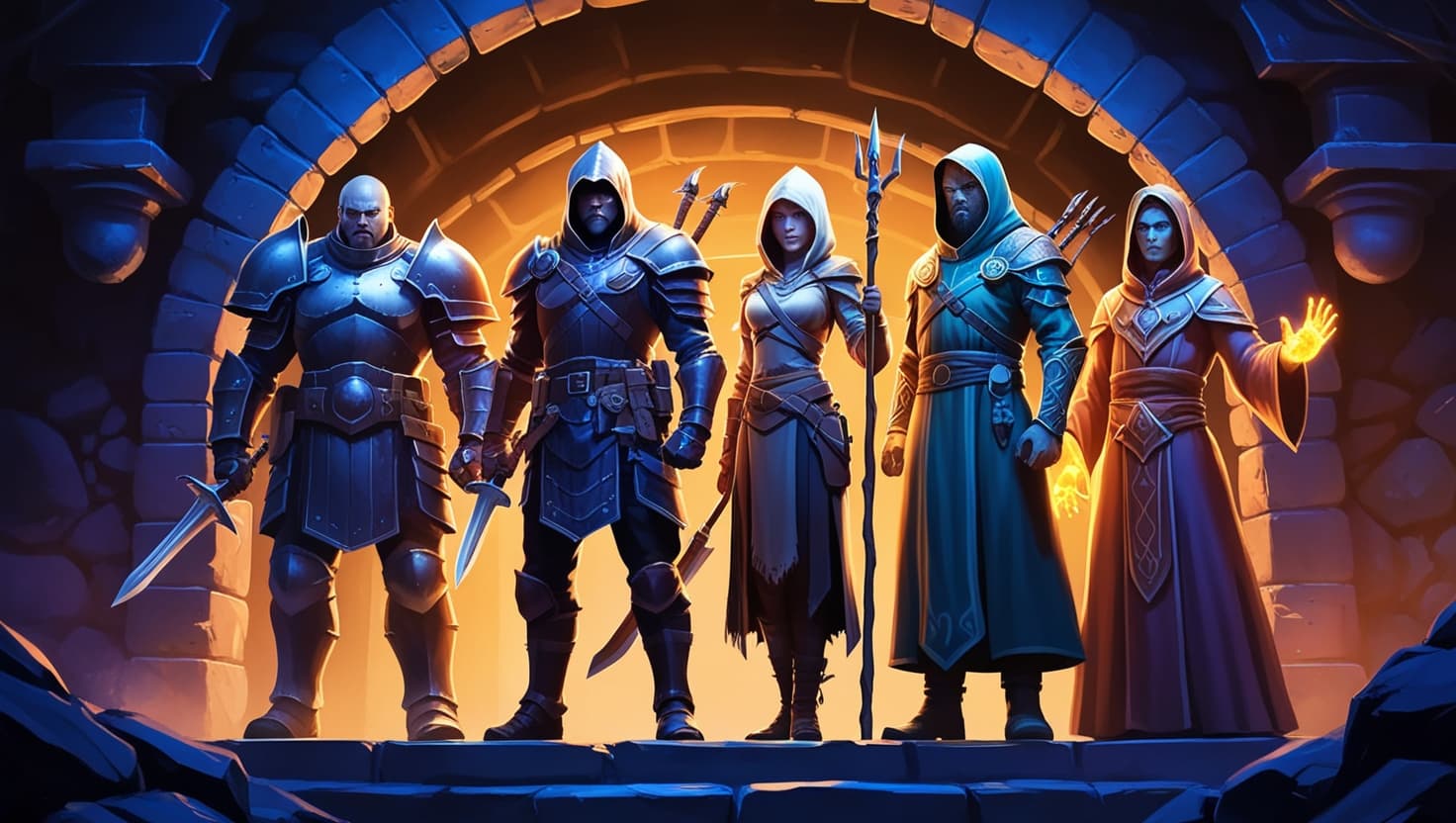
Best D&D Class for Beginners: Picking Your First Character Without the Analysis Paralysis
Fourteen tabs open. Three Reddit threads bookmarked. A YouTube video paused on someone's tier list. And you still don't know what class to play.
Character creation in D&D has a dropout problem nobody talks about. According to threads across r/DnD and r/dndnext, "what class should I play" is one of the most common posts from new players - and the answers are rarely helpful. Everyone just recommends their favorite class.
So instead of another "play what sounds fun!" non-answer, here's a ranked breakdown based on mechanical complexity, how much system knowledge you need, and how likely you are to actually enjoy your first few sessions without drowning in rules.
The Tier System: What We're Actually Measuring
Not all "easy" classes are easy for the same reasons. A Barbarian is simple mechanically but limited in what it can do outside combat. A Rogue is more complex but gives you tools for every pillar of play.
We're ranking on three things:
- Mechanical load - how many rules, features, and choices you need to track per turn
- Decision density - how often you face non-obvious choices (spellcasters rank high here)
- Recovery from mistakes - how badly a wrong choice punishes you (picking bad spells vs. picking a bad weapon)
- Fighter - Hit things, take hits, simple and effective
- Barbarian - Rage and smash, lowest decision count per turn
- Rogue - Sneak Attack + skills, great for creative players
- Ranger - Mix of fighting and light magic, forgiving to learn
- Paladin - Tanky with limited spells, strong at everything
- Warlock - Spellcaster with training wheels (2 spell slots)
- Monk - Simple concept, fiddly resource tracking
- Bard - Jack of all trades, requires confidence
- Sorcerer - Fewer spells than Wizard, but permanent choices
- Cleric - Flexible healer, big spell list to navigate
- Druid - Shapeshifting + full spellcasting = lots to track
- Wizard - Most powerful, most punishing for new players
Tier 1: Jump Right In
Fighter
The Fighter exists because not everyone wants to read spell descriptions during combat. You pick a weapon. You pick a fighting style. You attack. That's your first three levels.
The Champion subclass (available at level 3) is probably the single simplest character build in D&D. Your critical hits expand to 19-20, you get a self-heal, and your Action Surge gives you one "take two turns" moment per rest. No spell slots. No resource tracking beyond "did I use Action Surge yet?"
Where Fighter shines for beginners: you're useful immediately, you're hard to kill, and your turn takes 30 seconds instead of 3 minutes.
The knock on Fighters is that they're "boring." That's a veteran player's complaint. When you're learning how initiative works and what an opportunity attack is, boring is a feature.
Barbarian
Even simpler than Fighter in some ways. Rage (bonus action, gives you damage resistance and extra melee damage), then attack. That's most turns.
The catch: Barbarians are one-dimensional outside of combat. If your group does a lot of roleplay, investigation, or social encounters, you'll be sitting there with your +0 Intelligence modifier wondering when the next fight starts.
Reckless Attack (advantage on all your attacks, but enemies get advantage on you too) is the most "beginner" ability in D&D. It removes decision-making entirely - you just swing harder and hope your massive HP pool absorbs the consequences.
Best for: players who want to hit hard, don't want to think about mechanics, and are fine being the muscle.
Rogue
Slightly more complex than the previous two, but arguably more fun for players who want to do more than fight. Rogues get the most skill proficiencies, Expertise (double proficiency bonus on chosen skills), and Sneak Attack damage that keeps your combat relevant without any resource management.
Your combat loop: find a way to get Sneak Attack (attack an enemy next to an ally, or attack with advantage), deal your damage, maybe use Cunning Action to disengage or hide. It's one decision per turn, and the right answer is usually obvious.
Outside combat, Rogues are the skill monkeys. Picking locks, spotting traps, lying to guards, sneaking past encounters entirely. If you're the kind of player who wants to solve problems creatively rather than by hitting them, Rogue is your class.
Rogues only get one attack per turn, so your damage comes in one big Sneak Attack hit rather than multiple smaller attacks. This means missing hurts more - but it also means your turn is fast, which new players appreciate.
Tier 2: A Little More to Track
Ranger
Rangers got a reputation for being weak in early 5e, and that reputation stuck even after the 2024 rules revision made them significantly better. For beginners, Rangers hit a nice middle ground: you fight competently in melee or at range, you get a handful of spells that mostly buff yourself, and your flavor (wilderness survivalist, beast companion) is immediately understandable.
The spell list is small and mostly self-buffs like Hunter's Mark (extra damage on your target) and Cure Wounds. You're not making complex tactical decisions about which spell to cast - you buff yourself and fight.
Paladin
Paladins are the "good at everything" class. High armor class, solid hit points, Divine Smite for burst damage, a small spell list focused on buffs and heals. You're a tank who can also heal, also deal massive single-target damage, and also has a feature (Aura of Protection) that makes your entire party harder to kill.
The complexity bump comes from managing spell slots for both smites and utility spells. But honestly, most new Paladins just smite whenever they crit and cast the occasional Bless. That works fine through level 10.
Warlock
This is the beginner-friendly spellcaster. Where Wizards juggle 20+ prepared spells and Sorcerers manage metamagic resources, Warlocks get two spell slots (three at higher levels) that recharge on a short rest. That's it. Two decisions per combat at most.
Eldritch Blast is one of the best cantrips in the game, which means your "I don't know what to do" default action (blast something) is actually optimal strategy. Your Invocations give you passive abilities rather than more choices to make per turn.
The Hexblade subclass also lets you fight in melee using Charisma, which means you only need one good stat instead of spreading yourself thin.
Warlock's "two spell slots" limitation frustrates experienced players who want more casting flexibility. But for beginners, constraints are liberating. Fewer choices means faster turns and fewer regrets.
Tier 3: You'll Be Fine, But Read Your Features
Monk
Monks seem simple in concept - punch things, move fast - but the Ki resource system creates more per-turn decisions than you'd expect. Should you Flurry of Blows for extra attacks? Spend Ki on Patient Defense for survivability? Save it for Stunning Strike?
Add low hit points and no armor, and Monks require more tactical awareness than Fighters or Barbarians despite looking simpler on paper. Not a bad first class, just trickier than the fantasy suggests.
Bard
Bards are incredible in the hands of someone who understands D&D's social and exploration pillars. Jack of All Trades, Expertise, a solid spell list, and Bardic Inspiration make you useful everywhere.
The issue for beginners: Bard rewards system mastery and creative problem-solving. Your spell list includes a lot of situation-dependent spells (Suggestion, Dispel Magic, Hypnotic Pattern) where knowing the right moment to use them is the whole game. A Bard who doesn't know what their spells do is just a worse Fighter with a lute.
Tier 4: Respect the Learning Curve
Sorcerer
Sorcerers have fewer known spells than Wizards, which sounds simpler until you realize those choices are permanent. Pick a bad spell at level 3 and you're stuck with it until you level up. Metamagic (modify spells by spending Sorcery Points) adds another resource layer and requires understanding what the base spells do well enough to know when to modify them.
If you've played other RPGs or tactical games, Sorcerer is manageable. If D&D is your first tabletop experience, the permanent spell selection will likely cause regret.
Cleric
Clerics prepare spells from a huge list each morning, which is powerful but means you need to know your entire spell list well enough to make good daily choices. You're also frequently the party's healer, which adds pressure to "do the right thing" in combat - pressure that a Fighter or Rogue simply doesn't have.
That said, the Life Cleric subclass is fairly straightforward if you embrace the healer role. Heal people, cast Spirit Guardians, bonk things with your mace. You could do worse. And if you're wondering whether your party actually needs a dedicated healer at all, it's worth reading do you need a healer in D&D 5e? before locking in your class choice.
Druid
Full spellcasting (same list size problem as Cleric) plus Wild Shape, which is essentially a second character sheet you need to understand. Moon Druids at level 2 are absurdly strong - turning into a bear is one of the most powerful things you can do at low levels - but managing beast form stats, knowing when to shift, and tracking concentration spells while shapeshifted adds significant cognitive load.
Wizard
The Wizard is the most powerful class in D&D, and also the one most likely to make a new player feel stupid. You have the largest spell list in the game. You prepare a subset each day. You're squishy (d6 hit die, no armor). A wrong positioning choice can kill you.
The payoff is enormous - high-level Wizards warp reality. But at level 1, you're casting one or two spells per day and throwing cantrips, hoping nothing targets you specifically.
The Real Question: What Do You Want to Do?
Tier lists are useful, but D&D isn't a competitive game. The "best" class is the one that matches how you want to play. If you're unsure how your ability scores should look for a given class, our ability score guide walks through the math step by step, and the ability score calculator can help you figure out where to put those numbers before you commit.
A few diagnostic questions:
"I want to be in the middle of every fight." Fighter or Barbarian. Paladin if you also want utility. Pairing your class with a tough race like Dwarf or Human makes frontline builds even more forgiving for new players.
"I want to solve problems, not just fight." Rogue. Period. Best skill monkey in the game, and Sneak Attack keeps your combat relevant. A Halfling Rogue is a classic pairing - the Lucky trait rerolls those painful natural 1s on Sneak Attack turns.
"I want to try magic without drowning." Warlock. Two spell slots, one great cantrip, invocations you choose once and forget about. Tiefling is a natural Warlock race - the Charisma bonus and innate spellcasting give you more magical options without adding complexity.
"I want to support the team." Cleric or Bard, but know that support classes require understanding what your allies need, which means understanding the system.
"I want maximum power and I'll put in the work." Wizard. But actually read your spells before the session. All of them.
Avoid multiclassing on your first character. It sounds cool ("Fighter/Warlock!") but it delays your class features, complicates your progression, and most multiclass builds don't come online until levels 8+. Play a single class first. Multiclass on your second character.
The Advantage of Low-Stakes Practice
One of the reasons class choice causes so much anxiety is commitment. In a traditional campaign, you're locked into your character for months. Choose wrong and you either live with regret or have the awkward "can I reroll?" conversation with your DM.
AI DM platforms flip this entirely. On StoryRoll, you can spin up a campaign in under a minute, test a class for a session, and start fresh with something else tomorrow. We've seen players go through three or four classes in a week before landing on the one that clicks.
That's not a bug - it's how character creation should work. You shouldn't need to theory-craft on Reddit for hours to make a choice you can only validate through play.
For your first character: Fighter, Rogue, or Barbarian. All three let you participate fully from session one without reading a textbook. Fighter if you want to be reliable, Rogue if you want to be clever, Barbarian if you want to be unkillable.
If you're set on magic, Warlock is the answer. Two spell slots and Eldritch Blast will carry you further than you'd expect.
Skip Wizard, Druid, and Sorcerer for now. Not because they're bad - they're some of the best classes in the game. But they reward system knowledge you don't have yet, and struggling with mechanics during your first sessions is the fastest way to stop having fun.
The secret nobody tells beginners: your class matters way less than showing up consistently. A Champion Fighter who shows up every week will have more fun than a perfectly optimized Wizard whose player quit after session three because combat took too long.
Pick something. Play it. You'll know what you want to try next. And if you want to flesh out who your character actually is before session one, the backstory generator can give you a starting point.
Frequently Asked Questions
What is the best D&D class for a complete beginner?
Fighter (Champion subclass) is the consensus pick for complete beginners. It has the lowest mechanical complexity, the highest survivability, and the fastest combat turns. You'll spend your time learning D&D rather than learning your class.
Should beginners play spellcasters in D&D?
Most experienced players recommend against it for your very first session. Spellcasting adds spell slots, preparation (for some classes), concentration tracking, and longer turns. If you really want to cast spells, Warlock is the gentlest introduction - you only have two spell slots and one excellent cantrip.
What's the difference between Fighter and Barbarian for new players?
Fighters are more versatile - they work with any weapon, any fighting style, and scale well at all levels. Barbarians are simpler in combat (Rage + Attack) but limited outside of it. Pick Fighter if you want flexibility, Barbarian if you want to turn your brain off and smash.
How important is subclass choice for beginners?
At levels 1-2, it doesn't matter at all - you don't have a subclass yet. At level 3 when you choose, pick the simplest option: Champion (Fighter), Berserker or Totem Warrior (Barbarian), Thief (Rogue). You can always make a more complex choice on your next character.
Can I try different classes without starting a new campaign?
In traditional D&D, not really - you're committed to your character. But AI DM platforms like StoryRoll let you create new campaigns instantly, making it easy to test multiple classes and find your fit before committing to a long-term game.
Written by Anthony Goodman
Founder of StoryRoll. Building AI-powered tabletop RPGs.
Related Posts
D&D Ability Scores Explained: The Complete Beginner's Guide to Your Character's Stats
Strength, Dexterity, Constitution, Intelligence, Wisdom, Charisma. Six numbers that define everything your character can do. Here's what they actually mean, how modifiers work, and how to assign them without breaking your build.
How to Build a D&D Character in 2026: Complete Beginner's Guide
Building your first D&D character doesn't have to be intimidating. This step-by-step guide walks you through race, class, ability scores, background, equipment, and personality, everything you need to show up ready to play.
Best D&D Character Builds for Beginners (2026): 6 Proven Builds That Just Work
Stop staring at the character sheet. These six beginner-friendly D&D builds come with race picks, ability scores, and a level 1-5 roadmap so you can start playing tonight.