Do You Need a Healer in D&D 5e? Mostly No - Until You Really, Really Do
"We don’t need a healer. 5e is balanced for vibes now." That sentence has launched a lot of brave party comps and at least one avoidable funeral.
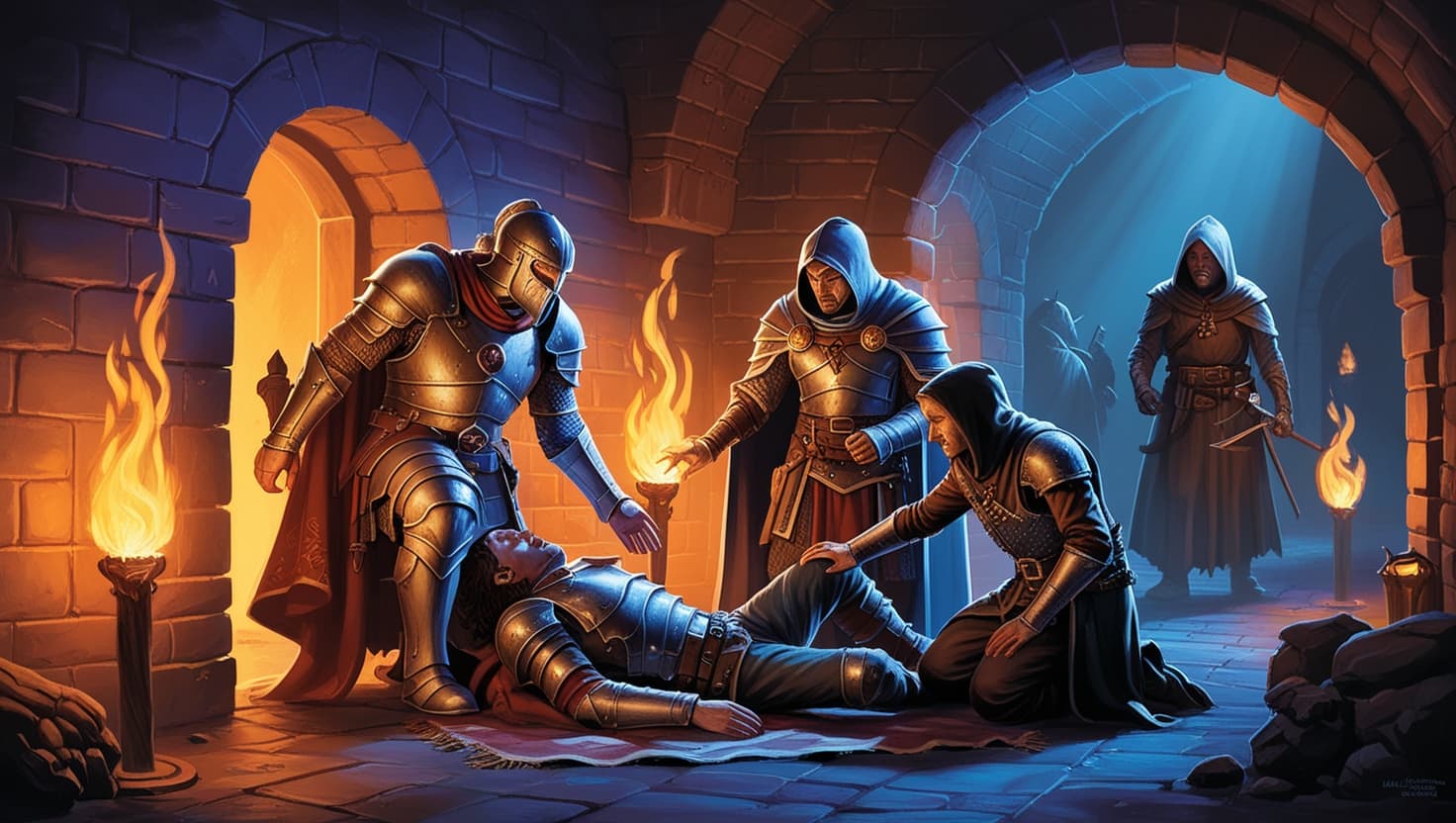
Do you need a healer in D&D 5e? Usually no. You can finish whole campaigns without a Life Cleric, without anyone playing medic, without turning every fight into an MMO raid. But "no dedicated healer" is not the same as "healing doesn’t matter," and plenty of tables learn that the hard way when the Rogue is making death saves in round two and the whole party suddenly starts respecting Healing Word.
The real answer is boring in the best way: most 5e parties need recovery tools, not a healbot. If your group can pick up downed allies, survive attrition, and clear nasty conditions, you’re fine. If not, the lack of a healer stops being a cool contrarian take and starts feeling like unpaid overtime for your DM.
Do You Need a Healer in D&D 5e for Normal Play?
No. A standard four-person party in 5e does not need one character whose whole job is healing.
That surprises new players because older RPG logic still hangs around. People imagine the classic tank-healer-DPS triangle, then panic when nobody wants to play Cleric. For a deeper dive on how roles actually work in 5e, see our party composition guide. But 5e doesn’t reward constant in-combat healing very much. Monster damage usually outpaces the amount a spell can restore. A 3rd-level Cure Wounds roll feels nice until an Ettin immediately erases it with one swing.
What 5e does reward is getting people off the floor. That's why Healing Word is such a monster of a spell. Bonus action, 60-foot range, and it turns "our Paladin is unconscious" into "our Paladin is conscious enough to smite again." It is less hospital medicine and more fantasy defibrillator.
Short rests also do a ton of hidden work. A Fighter with Second Wind, a Warlock who gets slots back, and a party willing to spend Hit Dice can look much sturdier than a group with a "main healer" who burns every slot trying to keep everyone topped off. Long rests are even more forgiving. If the campaign cadence allows them, parties recover from an alarming amount of bad decision-making.
That’s the big shift. In 5e, healing is support infrastructure. It is not the center of combat.
If one character can cast Healing Word and one other character carries potions, most mid-casual 5e groups are already in the safe zone.
Do You Need a Healer in D&D 5e if You Have Good Prevention?
This is where the argument flips.
A lot of parties that say they "don’t need a healer" are actually stacked with damage prevention. They just don’t call it that. A Paladin with Aura of Protection prevents failed saves. A Wizard with Web or Hypnotic Pattern prevents enemy turns. A Lore Bard using Cutting Words prevents hits. A Battle Master using Menacing Attack to keep a target pinned down is preventing damage too.
Prevented damage is better than healed damage for one simple reason: healed damage still cost you a turn, a spell slot, or a panic spike.
Take a very normal 5th-level party:
- Paladin with Lay on Hands and Aura of Protection
- Wizard with Shield, Counterspell, and Web
- Rogue who deletes weakened targets with Sneak Attack
- Bard with Healing Word and Bardic Inspiration
That group does not have a dedicated healer. It also barely needs one. The Paladin anchors the front line, the Wizard controls space, the Bard cleans up emergencies, and the Rogue shortens fights before attrition stacks up. Compare that to a messy party with a Life Cleric, two melee characters who overextend, and a Sorcerer who keeps getting cornered. The second group technically has "a healer" and often feels less stable.
I’ve seen this in StoryRoll too. In 50+ AI-run sessions testing different four-character lineups, the parties that lasted longest were not the ones with the highest raw healing output. They were the ones that reduced enemy actions. A Bear Totem Barbarian holding a doorway, a Wizard landing Slow, and a Bard using Healing Word only when someone actually dropped outperformed cleric-heavy parties that tried to brute-force recovery after bad positioning.
Spicy take: if your table thinks healing is the main defensive plan, your table probably has a tactics problem.
Do You Need a Healer in D&D 5e for Small Parties?
Now we get to the annoying part.
Small parties feel the lack of healing much harder. A three-player group or duet campaign can absolutely run without a healer, but the margin for error shrinks fast.
Why? Action economy and role compression.
In a five-player party, one person goes down and the table can still function. In a three-player party, one person goes down and you just lost a third of your turns, a third of your hit points, and probably one of your core jobs. If the downed character was the frontliner, now the backline gets folded. If the downed character was the controller, the enemies stop being polite. If the downed character was the only one carrying healing potions because everyone else "forgot," well. Great work, team.
This is why smaller groups benefit so much from hybrid classes:
- Paladin instead of pure Fighter
- Bard instead of a purely selfish blaster
- Druid instead of a narrow specialist
- Ranger with Goodberry instead of another damage-only martial
A Moon Druid can tank with Wild Shape, heal between fights, and still bring battlefield control. A Celestial Warlock can fire Eldritch Blast all day and still rescue an ally with Healing Light. A Paladin can stabilize a fight just by existing in heavy armor and then dump 10 points of Lay on Hands into the person who ate a crit from a Bugbear Chief.
When I tested two-player and three-player sessions in StoryRoll, no-healer parties were viable, but only if the AI DM adapted pacing and encounter count. Fewer back-to-back combats. More opportunities to short rest. More consumables in loot. Without those adjustments, attrition piled up fast, especially in adventures that assume four or five characters.
- 4-5 players: No dedicated healer is usually fine
- 3 players: Bring at least backup healing
- 2 players or solo: Use a healer hybrid, sidekick, or extra consumables
- Beginner groups: Healing covers mistakes. Veterans can get greedier
- Dungeon crawls: Healing matters more than in social or intrigue campaigns
Do You Need a Healer in D&D 5e When the Campaign Is Brutal?
Sometimes yes. Not because the rules demand it, but because the campaign does.
A low-resource crawl through Tomb of Annihilation feels very different from a city campaign where the party can sleep in a nice bed after every dumb idea. If your DM runs long adventuring days, punishes long rests, and likes monsters with conditions, healing support climbs from "nice to have" into "please, for the love of Pelor, somebody prepare Lesser Restoration."
Here are the campaign types where no-healer parties start sweating:
Attrition-heavy dungeon crawls Repeated fights chip away at hit points, spell slots, and Hit Dice. A party without healing can survive one big encounter. Six medium encounters with traps, poison, and chip damage is where it gets ugly.
Condition-heavy monster rosters Hit points are only part of the problem. Ghoul paralysis, Shadow Strength drain, Basilisk petrification, mummy rot, and a simple Hold Person can wreck a group that has no recovery tools. This is the part people forget when they say healing is overrated. Sometimes you don’t need more HP. You need the ability to fix what just happened.
Beginner tables New players misposition. They forget disengage exists. They blow resources too early. They attack the animated armor instead of the Cult Fanatic concentrating on Hold Person. A forgiving support chassis helps a lot.
Melee-heavy groups Four characters who all want to stand next to the Troll are volunteering for a rough evening. Melee parties take more punishment. That doesn’t mean they need a Cleric, but it does mean they need a recovery plan.
One of the better examples is Curse of Strahd. A party can absolutely survive Barovia without a dedicated healer. But if nobody can restore HP at range, nobody can clear conditions, and nobody can recover between fights besides hoping for a nap, Strahd starts feeling less like a villain and more like HR correcting your staffing mistake.
What Actually Replaces a Healer in D&D 5e?
If you’re skipping the dedicated healer, you need substitutes. Not vibes. Actual substitutes.
1. Emergency healing At least one source of ranged or bonus-action pickup healing matters more than big burst healing. Healing Word is the gold standard. Lay on Hands is excellent. Celestial Warlock’s Healing Light is fantastic because it doesn’t eat spell slots.
2. Efficient out-of-combat recovery Goodberry is still absurd value. Prayer of Healing is slow but efficient. Short rests plus Hit Dice do heavy lifting if your DM actually lets them happen.
3. Consumables Potions are not glamorous, but they save campaigns. If the party has no healer and still refuses to buy potions, that is not a build choice. That is performance art.
4. Prevention and control Bless, Shield, Absorb Elements, Web, Spirit Guardians, Counterspell, Sentinel, Aura of Protection, temp HP from an Inspiring Leader or Twilight Cleric. All of this cuts incoming damage before it becomes a healing problem. Managing these spells efficiently comes down to understanding your spell slots.
5. Condition management This is the hidden tax. A party can fake its way through hit point recovery. It struggles much more when nobody can answer poison, paralysis, curses, or disease.
The cleanest no-healer parties spread the work around. The Bard keeps Healing Word. The Paladin holds Lay on Hands in reserve instead of spending it on random chip damage. The Druid casts Goodberry before bed. The Artificer hands out infusions and utility. The Wizard prevents three rounds of enemy actions with Hypnotic Pattern and quietly becomes the real medic by making treatment unnecessary.
If your whole plan is "we’ll just kill things before they hit us," that plan works right up until initiative goes badly.
The Best No-Healer Party Setups in D&D 5e
Some no-healer parties are fake no-healer parties. They don’t run a Cleric, but they still have enough backup tools that the label barely matters.
Paladin + Bard + Wizard + Rogue This is one of my favorite four-player shells in 5e. The Paladin tanks and emergency-heals. The Bard carries Healing Word and social utility. The Wizard handles control. The Rogue ends turns early by deleting damaged enemies. Nobody is "the healer," and the party still has answers.
Moon Druid + Fighter + Warlock + Rogue The Druid is doing half the recovery work without feeling like a support bot. Wild Shape soaks damage, Goodberry patches the day, and the Warlock plus Rogue provide steady damage while the Fighter holds the line.
Paladin + Ranger + Sorcerer + Barbarian This one is riskier, but it works if the Ranger takes Goodberry and the Paladin plays responsibly with Lay on Hands. If the Sorcerer packs Counterspell and smart control instead of pure fireworks, the whole group feels sturdier than it looks.
StoryRoll’s AI DM is especially good with these mixed-responsibility parties because it tracks the difference between "no healer" and "no recovery." In one of my test runs, a Paladin-Bard-Rogue-Wizard party went 11 sessions with zero dedicated healer and only one full wipe scare, mostly because the AI kept encounter tempo tight and recognized when the party had already spent its safety valves. That distinction matters more than the class labels.
Frequently Asked Questions
Is a Cleric required in D&D 5e?
No. Clerics are great, and some subclasses like Life Domain and Twilight Domain are borderline rude in how much stability they add, but 5e does not require one. Plenty of strong parties run without a Cleric at all. If you do want to play one, our Cleric guide and Life Cleric build cover how to get the most out of the class.
Is Healing Word better than Cure Wounds?
Usually yes. Cure Wounds restores more hit points, but Healing Word being ranged and a bonus action makes it much better for emergency pickups in actual combat.
What is the best non-cleric healer in D&D 5e?
Bard and Druid are the easiest answers. Paladin is the best healing hybrid because it also tanks and boosts saves. Celestial Warlock deserves more love than it gets.
Can an all-martial party work without a healer?
Yes, but it’s a harder mode campaign. Bring potions, take the Healer feat seriously, and expect attrition to matter more. You also need a DM who understands what that kind of party can and cannot absorb.
What matters more than having a healer?
Action economy. If your group controls enemy turns, focuses fire, and protects concentration, you will feel much safer than a sloppy party with tons of healing.
Most parties do not need a dedicated healer in D&D 5e. They need emergency recovery, decent prevention, and at least one player who understands that going unconscious is not a personality trait. If your table is four or five players with solid control and a backup heal or two, skip the healbot and play what sounds fun. If your campaign is brutal, your party is tiny, or your group is still learning, bring more healing than your pride wants. StoryRoll handles this balance nicely in AI-run games because it can scale pressure around what your party actually brought, not what an old-school party template says you should have brought. That turns "no healer" from a reckless meme into a playable strategy.
Written by StoryRoll
Founder of StoryRoll. Building AI-powered tabletop RPGs.
Related Posts
D&D 5e Concentration Checks: You're Failing Them Before You Even Roll
D&D 5e concentration checks are less about dice luck and more about positioning, spell choice, and damage timing. Here's how to stop dropping your best spells.
Best D&D Classes for Small Parties: Stop Building Like You Have Five Players
Best D&D classes for small parties need to cover multiple jobs at once. Here’s which 5e classes actually hold up in 1, 2, and 3 player groups.
Passive Perception 5e: Most Tables Use It Wrong
Passive perception 5e is not a backup roll button. Learn when to use it, when to roll, and why constant perception checks slow your game down.