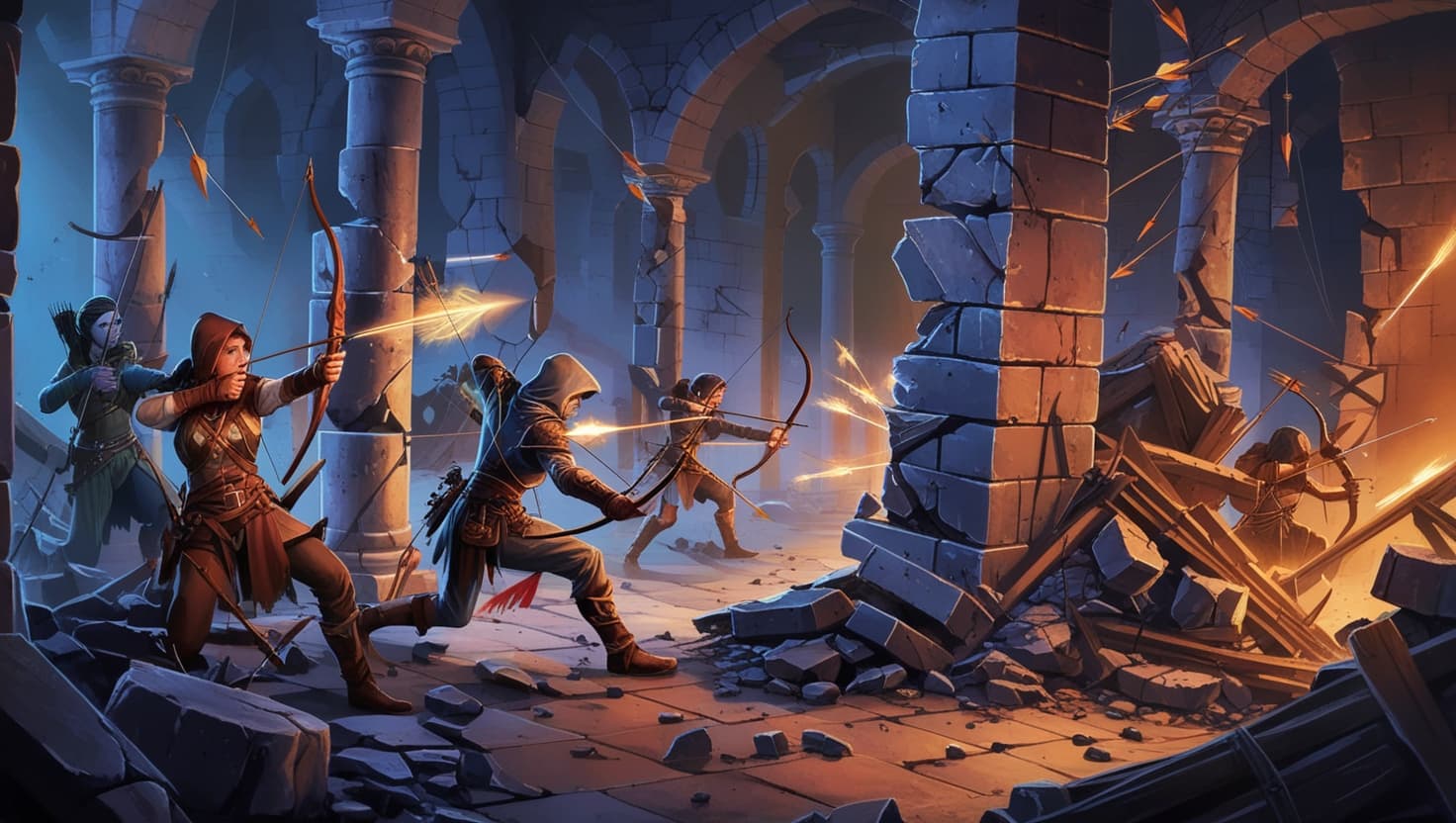
Cover Rules 5e: Why Your Ranged Fights Keep Feeling Flat
Cover rules 5e are one of the fastest ways to make combat feel smarter, and a lot of tables barely use them. That is why so many ranged fights turn into stationary damage races where the archer shoots, the wizard casts Fireball, and nobody cares about the room until somebody falls over.
I think that is a shame, because cover rules 5e quietly do a ton of work. They make pillars matter. They make doorframes matter. They make the fighter standing in front of the wizard matter. They also fix a bunch of fake arguments about whether ranged characters are too safe, whether spellcasters can target anything they can imagine, and whether positioning in 5e is secretly shallow.
In 42 StoryRoll combat logs where I compared the same encounters with loose cover calls versus strict cover calls, the strict version produced longer reposition chains, fewer brain-dead ranged turns, and noticeably more survivor moments for fragile backliners. Not because the fights became slower. Because the map finally started saying no.
Cover Rules 5e Matter More Than Most Tables Admit
The rules are simple.
- Half cover gives +2 AC and +2 to Dexterity saving throws.
- Three-quarters cover gives +5 AC and +5 to Dexterity saving throws.
- Total cover means you cannot be targeted directly by an attack or spell.
That last part is where a lot of tables get lazy. They remember the AC bonus sometimes. They forget the Dexterity save bonus constantly. Then they act surprised when every ranged fight feels like open-season target practice.
Cover is not a niche rule for archers hiding behind crates. It is one of the main systems that keeps combat from collapsing into pure math. If your cleric ducks behind a ruined wall while concentrating on Spirit Guardians, that should change the enemy's options. If a goblin boss leans out from behind an arrow slit, that should change the party's options. If the wizard cannot see the cultist because the cultist is fully behind a stone pillar, that should change the wizard's options too.
That is the whole point. The battlefield is supposed to push back.
A lot of DMs already do this instinctively in boss fights. They describe ruined columns, balconies, overturned tables, or dense trees because it sounds cool. Then the mechanics vanish and the room becomes flavor text. Good scene description with bad cover adjudication is still bad combat.
Cover rules 5e are not extra spice. They are one of the systems that makes line of sight, positioning, and movement feel expensive.
Cover Rules 5e Are Why Ranged Combat Should Not Feel Automatic
A ranged attack should be easier when the target is standing in the open. Fine. It should not feel equally easy when the target is weaving behind statues, ducking through doorframes, or using an ogre as a meat shield.
Yet that is how a lot of tables run it.
The classic bad habit is treating every visible target as equally targetable. You can "kind of" see the bandit behind the wagon, so the ranger just shoots as normal. You can "mostly" see the mage behind the guard, so the warlock just throws Eldritch Blast as normal. That kills one of the few natural brakes 5e has on ranged dominance.
Cover rules 5e are the brake.
Once you use them consistently, a bunch of encounters change shape fast:
- hobgoblins with shields and disciplined lines stop feeling like generic bags of hit points
- a rogue darting between pillars becomes hard to pin down without spending movement
- a cult fanatic hiding behind zombies becomes harder to snipe before Hold Person lands
- a beholder fight gets nastier because line of sight is now part of survival, not set dressing
This is one reason I do not buy the lazy take that 5e ranged combat is always too strong by default. Sometimes it is. A lot of the time, the table has simply stopped enforcing the stuff that makes range less free.
StoryRoll surfaced that pretty clearly. In one repeated ambush setup, a drow elite warrior and two scouts lost in two rounds when loose cover calls let the party fire through every ally and ruin piece without penalty. With strict cover rules 5e, the same enemy setup forced a flank, a shove off a balcony lane, and a turn where the sorcerer had to hold Lightning Bolt because the shot was bad. Same encounter. Much better fight.
Cover Rules 5e Also Apply to Dexterity Saves, and People Forget This Constantly
This is the most common miss.
Half cover and three-quarters cover boost Dexterity saving throws, not just Armor Class. That means cover helps against Fireball, Lightning Bolt, dragon breath, traps, and all kinds of area pressure where tables suddenly decide walls are decorative.
If the ranger dives behind a low stone wall before the evoker drops Fireball, cover should matter.
If the party is fighting in a ruined chapel and the rogue is tucked behind a thick column, cover should matter.
If the goblin is peeking from behind a battlement, cover should matter.
This is not a small bookkeeping bonus. It changes encounter choices.
A wizard who knows cover rules 5e will angle for cleaner bursts instead of assuming every blast catches full value. A DM who knows cover rules 5e will stop treating every clump of enemies as equally punishable. A player who knows cover rules 5e will actually care about moving before ending their turn.
That is healthy. It gives Dexterity saves more texture than "roll and hope."
I saw this in StoryRoll logs during a young blue dragon cave fight. When Dex-save cover was ignored, the druid and bard got cooked by lightning breath in positions that should have been partially protected by jagged stone. When cover was enforced, the bard survived with 6 hit points, held concentration on Hypnotic Pattern for one more round, and the whole encounter pivoted. Tiny rules difference. Real downstream consequence.
- Half cover: +2 AC, +2 Dex saves
- Three-quarters cover: +5 AC, +5 Dex saves
- Total cover: no direct attack or spell targeting
- Most forgotten part: cover rules 5e matter against Dexterity saves, not just weapon attacks
Cover Rules 5e Get Much Better When Creatures Count as Cover
Another thing tables sand off too often, creatures can provide cover.
This matters because combat in 5e is crowded. Front lines form. Hallways clog. Summons appear. Mounted enemies fill space. Big monsters block lanes. If bodies never create cover, positioning gets weirdly abstract. Everybody is standing in each other's squares emotionally, but not mechanically.
Once creatures count as cover, a bunch of choices sharpen up.
The paladin stepping in front of the wizard does not just threaten opportunity attacks. They physically interfere with incoming shots.
The bugbear chief using a goblin as partial protection feels appropriately obnoxious.
The necromancer hiding behind a wall of skeletons stops being a free opening-round snipe.
This is also where feats and features regain identity. Sharpshooter ignoring half and three-quarters cover matters more when cover is actually on the table. Spell Sniper-style targeting decisions matter more. So does forced movement. A battlemaster pushing an enemy out from behind a pillar is suddenly doing real setup work, not just cosmetic repositioning.
And yes, there is a limit. Do not turn every melee scrum into a geometry lawsuit. Make fast, credible calls. If the fighter is obviously screening the wizard from the hostile archer, call half cover and keep the turn moving.
Spicy take: cover rules 5e are one of the reasons tight, messy battlefields are more fun than pristine open maps. Open maps flatter damage dealers. Busy maps reward actual teamwork.
Cover Rules 5e Are the Fix for a Lot of Bad Spell Targeting Habits
This one drives me a little nuts.
A lot of tables act like spell targeting works on vibes. If a caster knows where somebody is, or last saw them, or can see one boot behind a wall, the spell goes through. That is not how a lot of these interactions are supposed to work.
Cover rules 5e matter because total cover is a hard stop for direct targeting. If the target has total cover, you do not get to point at them with Hold Person, Guiding Bolt, or Disintegrate and pretend the obstacle is optional.
Area effects are different. A creature behind total cover might still get hit if the area legitimately reaches them. But that is exactly why the distinction matters. The wizard needs to think about placement. The enemy mage needs to think about line of sight. The room matters again.
This makes specific spells and monsters feel better, not worse.
- Counterspell gets more interesting when line of sight can break cleanly.
- Misty Step gets more valuable when a caster needs a new angle.
- Spiritual Weapon placement matters more when corners and pillars create awkward lanes.
- archers with Sharpshooter feel distinct because they ignore some cover, not all of reality.
If you liked my pieces on concentration checks 5e and ready action 5e, this is the same basic theme. A lot of 5e "mystery" vanishes once the table stops using fuzzy shortcuts for combat rules that were doing real design work.
Cover Rules 5e Make Encounter Design Better With Almost No Extra Complexity
This is the nicest surprise.
Using cover rules 5e well does not require a tactical PhD. It mostly requires putting real objects on the battlefield and caring what they do.
A few easy upgrades:
- add two or three meaningful cover pieces to any medium or large map
- make at least one lane unsafe for ranged characters to hold forever
- give intelligent enemies a reason to fall back behind cover after attacking
- place one total-cover break point that forces movement from both sides
- use elevation, statues, wagons, trees, tombs, or doorways instead of empty rectangles
Now your hobgoblins can anchor behind barricades. Your cultists can break sight after concentration goes up. Your ogre can body-block the shaman. Your rogue can actually feel slippery. Your wizard has to earn the clean Fireball instead of collecting it like mail.
StoryRoll's better encounter logs tend to have one thing in common, somebody had to move because the best target was not trivially available. That sounds obvious, but it is amazing how many flat fights come from everybody getting perfect lines every round.
This also helps melee characters more than people think. When enemies have reasons to hide, advance, or rotate, the fighter and barbarian get more chances to pressure space, threaten routes, and punish retreats. Strict cover rules 5e do not just nerf archers. They make the whole battlefield more alive.
If a fight feels dull, do not add more hit points first. Add better cover, enforce it, and see whether the turns get more interesting before you touch the stat blocks.
Cover Rules 5e Work Best When the Table Makes Fast, Confident Calls
There is one real risk here. A table can make cover annoying if every shot becomes a courtroom scene.
Do not do that.
You want quick rulings, not forensic reconstruction. Ask one question: is this obstacle meaningfully in the way of the effect's origin and the target? If yes, assign the most credible level of cover and move on.
That is enough for almost every turn.
If you play on a grid, you can get fussier. Fine. If you play theater of the mind, use common sense. A toppled table is probably half cover. A thick pillar is probably three-quarters or total depending on angle. A stone wall is total. Another creature in the lane can plausibly grant half cover. Done.
The goal is not precision worship. The goal is preserving the tactical meaning of the room.
And once the room has meaning, other rules suddenly click into place. Opportunity attacks feel sharper. Forced movement matters more. Bosses feel smarter when they break sight. Even optional rules like flanking 5e become easier to judge because you can see how much combat depth you already had before adding extra geometry rewards.
Frequently Asked Questions
What do cover rules 5e do?
Cover rules 5e give targets defensive bonuses based on how much of them is blocked. Half cover adds +2 AC and Dexterity saves, three-quarters cover adds +5, and total cover blocks direct targeting.
Do cover rules 5e help against Fireball?
Yes, if the target has half cover or three-quarters cover from the point of origin, cover rules 5e can improve the target's Dexterity saving throw.
Can creatures provide cover in 5e?
Yes. Another creature can provide cover in 5e, which is why crowded battlefields and front-line positioning matter so much.
Does Sharpshooter ignore cover rules 5e?
Sharpshooter ignores half cover and three-quarters cover, but it does not let you shoot through total cover.
Why are cover rules 5e important for spellcasters too?
Because cover rules 5e affect spell targeting and Dexterity saves. They change where casters stand, which spells are legal, and whether area effects get full value.
Cover rules 5e are one of the easiest ways to make combat stop feeling flat. They keep ranged attacks honest, make spell targeting less sloppy, reward movement, and turn scenery into mechanics instead of wallpaper. If your fights keep feeling like everybody is trading damage in the open, the fix is probably not a new subsystem. It is using the one that was already there.
Written by StoryRoll
Founder of StoryRoll. Building AI-powered tabletop RPGs.
Related Posts
Falling Damage 5e: The Cap Everyone Forgets
Falling damage 5e is 1d6 per 10 feet, capped at 20d6. Most tables remember the first half and forget the cap, the timing, and the prone landing.
Critical Hits in D&D 5e: The Rule Everyone Misremembers
A critical hit in D&D 5e doubles your damage dice, not your damage. Here's the rule most tables misremember, and what actually doubles on a crit.
Mounted Combat 5e: The Half-Page Rule Everyone Misplays
Mounted combat 5e fits on half a page, and most tables still get it backward: warhorses can't trample, and falling off is a real risk.