Ready Action 5e: Why This 'Smart' Play Often Wastes Your Turn
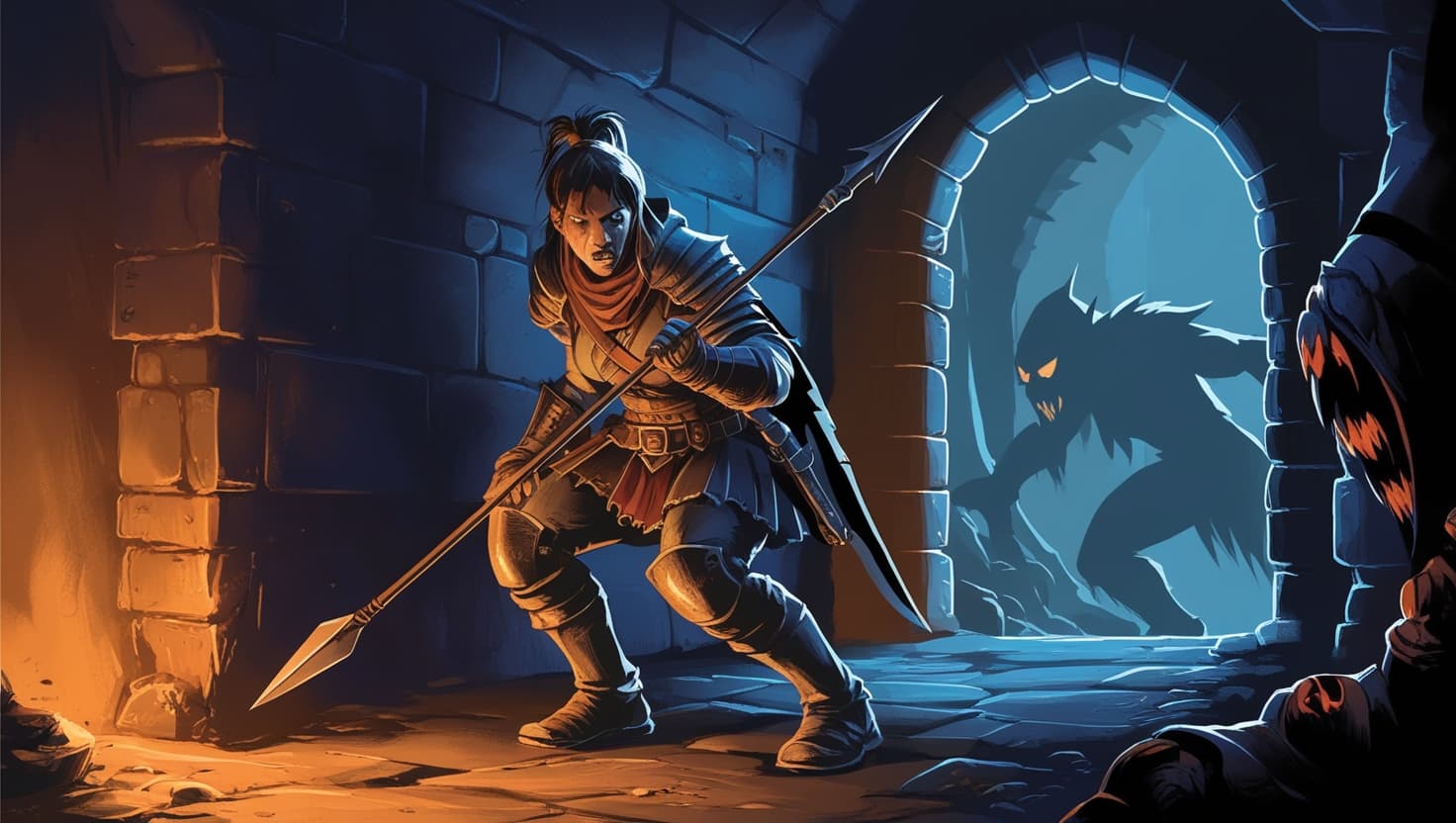
Ready action 5e looks like the move smart players make. You picture the fighter lowering a spear at the doorway, the wizard timing Hold Person for the exact second the cult leader steps out, the rogue waiting for the hobgoblin to break cover. Cinematic stuff.
At real tables, ready action 5e is often a trap. Not because the rule is bad, exactly. Because players use it when they should have just attacked, moved, dashed, dodged, or cast the spell right now instead of trying to out-clever initiative.
That mistake shows up in StoryRoll logs too. Across 40+ AI-run encounters where characters had a plausible ready-action option, the worse outcomes usually came from over-preparing. Parties that readied too often ended rounds with unused reactions, delayed damage, and enemies that simply chose a different line. The battlefield moved on. The clever plan did not.
Ready Action 5e Sounds Tactical, But It Usually Costs Too Much
This is the part people underestimate.
Ready action 5e costs your action now and your reaction later. That is already expensive. Then you add the hidden cost: if the trigger never happens, you got nothing. No damage. No shove. No spell. Just vibes and regret.
That trade only makes sense when timing matters more than throughput.
Most of the time, it does not. If the ogre is already in range, hit the ogre. If the bugbears are about to rush your front line, sometimes Dodge is better. If the goblin boss is half-cover peeking from behind a ruined wall, moving for line of sight can beat waiting for a maybe.
The rule gets even rougher for martial characters. A level 5 fighter using ready action 5e is often giving up Extra Attack for one weapon swing later. That is brutal. A Paladin readying one hit instead of taking two attacks with a possible Divine Smite is not making a subtle tactical trade. They are usually just taking a pay cut.
Same problem for monsters. If an ogre can smash now, smashing now is usually correct. If a gladiator can pressure the wizard this round, "I wait until somebody moves" is often fake sophistication.
Ready action 5e is strongest when the trigger is likely, the timing matters, and the fallback cost is acceptable. If you cannot explain all three, you probably should not ready.
Ready Action 5e Breaks People the Moment They Forget It Is Not Time Travel
This is the second big problem.
Players treat ready action 5e like it lets them pause the turn order and script the future. It does not. You are making a bet inside a moving fight.
That matters because the trigger has to be specific enough to run cleanly. "If anything bad happens, I shoot" is not a trigger. "If the cult fanatic comes through that doorway, I shoot" is a trigger. One works. One starts a five-minute rules argument while the ranger stares into the middle distance.
And the battlefield changes fast. The target might die before the trigger. The target might choose a different route. Your ally might shove the enemy prone. The wizard might cast Web and make the whole original plan irrelevant. Combat is full of branch paths. Ready action 5e only pays off when the branch you predicted actually happens.
I think this is why the rule feels better in people's heads than on the table. In fiction, the held shot lands at the dramatic second. In 5e, the necromancer sometimes just ducks back behind the pillar and your turn evaporates.
StoryRoll's encounter traces make this painfully obvious. In one recurring test setup, a rogue repeatedly readied a crossbow shot for "when the hobgoblin captain leaves cover." That paid off less than half the time. In the better runs, the rogue either repositioned immediately or attacked the goblin archer already exposed. Clean damage now beat fancy damage later.
Ready Action 5e Is Worst When Players Use It to Solve Boring Problems
This is my spiciest take: a lot of ready action 5e decisions are really just indecision wearing a tactical hat.
Players use it because they do not like uncertainty. They are afraid of wasting a spell slot, missing a shot, or moving into the wrong square. So they delay.
But 5e already has tools for uncertain turns.
If you need to stay alive, Dodge exists. If you need position, move. If you need to help an ally, Help exists. If you need distance, Dash exists. If you need to control space, cast Web, Spike Growth, or Spirit Guardians and make the map annoying on purpose.
Ready action 5e is not the generic "play safe" button. It is a timing tool. Using it as a default caution move slows combat and often lowers party output at the same time.
You can see this with doorway fights. Newer players love to say, "I ready an attack for the first enemy who comes through." Fair enough. But if you already control the choke point, attacking the creature at the doorway, grappling it, or placing Cloud of Daggers can be better than waiting for a cleaner movie scene.
Same with spellcasters holding concentration spells. A wizard who readies Hold Person for the bandit captain to step into range is gambling both tempo and resources. If the captain never steps there, the wizard spent their turn to do nothing. If the wizard instead drops Web where the captain wants to go, now the problem belongs to the captain.
- Good ready action 5e use: covering a narrow trigger, protecting a doorway, syncing with an ally, punishing a visible movement path
- Bad ready action 5e use: avoiding commitment, fishing for a perfect shot, replacing Dodge or movement, hoping the enemy reads your script
- Best question to ask: what do I gain by waiting that I cannot gain right now?
Ready Action 5e Actually Shines in a Few Specific Cases
This is where the rule earns its keep.
Ready action 5e is good when immediate action is weaker than timed action for a clear reason.
One, covering exits and choke points. If ghouls are about to rush a tunnel and you cannot reach them yet, readying an attack for the first ghoul through the opening makes sense. The trigger is clean. The path is obvious. You are forcing the enemy to eat steel the moment it commits.
Two, combo timing. A rogue waiting for the Battle Master to knock a target prone can make sense. A caster waiting for the cleric to push enemies into a line before casting Lightning Bolt can make sense. Timing matters there because the setup changes the value of the action.
Three, anti-peek punishment. If a cult mage keeps stepping out, casting, and hiding again, ready action 5e can punish that rhythm. Same for a beholder minion peeking from cover, or a drow elite warrior baiting line of sight in a corridor fight.
Four, protecting concentration or fragile allies. If your cleric is holding Spirit Guardians and the whole party just needs one clean round to keep enemies off them, a fighter or paladin readying for the first creature that closes can be worth it.
Five, narrative standoffs. This is the one place I think tables should loosen up a bit. If the party is in a high-tension parley and everyone is waiting for the assassin to twitch first, ready action 5e can create exactly the right pressure. It is a roleplay tool with teeth.
In StoryRoll tests, these narrow use cases were where the rule paid off. Readied attacks performed best in corridor fights, ambush reversals, and cover duels. They performed worst in open rooms where enemies had too many alternative routes.
Ready Action 5e Gets Better When You Write Better Triggers
A clean trigger fixes half the frustration.
Bad trigger: "If they do something suspicious, I attack."
Good trigger: "If the priest starts casting a spell, I shoot him."
Bad trigger: "If anybody comes near me, I move away."
Good trigger: "If the troll ends movement within 10 feet of me, I move behind the paladin."
The best ready action 5e triggers have three traits:
- one creature or event
- one clear response
- no room for negotiation once it happens
This matters for pace. Messy triggers turn into DM arbitration. Clean triggers feel crisp and lethal.
I would go further than the rules text here: if a player cannot state the trigger and the response in one sentence, I think the readied action is probably too fuzzy to be worth resolving in combat speed.
That is not anti-creativity. It is mercy.
And if you are playing with an AI GM, clarity matters even more. In StoryRoll, the best ready-action outcomes came from explicit statements like, "If the owlbear enters the doorway, I attack with my glaive." The worst came from squishy language like, "I wait for the right moment." So does everybody else, man.
Ready Action 5e Is Better as a Scalpel Than a Lifestyle
That is the whole rule in one sentence.
Use ready action 5e when timing is the point. Do not use it because the turn feels awkward and you want the future to rescue you.
A lot of good 5e play is just accepting imperfect turns. Attack the wrong target instead of no target. Move to stronger terrain instead of waiting for a perfect lane. Cast Bless now instead of hoping the enemy lines up later. Kill the goblin that exists instead of planning around the bugbear that might.
The players who get the most from ready action 5e are not the ones who use it constantly. They are the ones who barely use it, then deploy it exactly when the fight has one hinge point that matters.
That is also where StoryRoll helps. In repeated AI-run combat tests, the strongest parties were not the most reactive. They were the ones that recognized hinge turns fast. Hold the corridor. Punish the peek. Protect concentration. Then go back to normal, aggressive 5e.
Ready action 5e is good, but narrow. It is not the all-purpose smart-player button people make it out to be. If you use it to cover a choke point, sync a combo, or punish a predictable movement line, it can swing a fight. If you use it because you are nervous about committing, it usually wastes your turn.
The practical rule is simple: if acting now is almost as good as acting later, act now. Save ready action 5e for the moments where timing changes everything. If you want to test those timing calls in live AI-run encounters, StoryRoll is a good place to do it without making your home table sit through fifteen experimental hallway standoffs.
Frequently Asked Questions
Does ready action 5e let you cast any spell later?
Not cleanly. Ready action 5e lets you ready a spell, but you cast it now and hold the energy until the trigger happens. That means the slot is committed whether the trigger happens or not. If your concentration breaks first, the spell is wasted.
Can a fighter use Extra Attack with ready action 5e?
Usually no. Extra Attack says it works when you take the Attack action on your turn. A readied attack is usually one attack made with your reaction, not a full Attack action on your turn.
Is ready action 5e good for rogues?
Sometimes. A rogue can get value from readying a shot for a clean Sneak Attack trigger, especially if an ally is setting something up. But rogues also hate wasting turns, so bad triggers feel awful.
Is ready action 5e better for ranged characters?
A little, mostly because ranged characters can punish peeks and corridors without giving up positioning as often. But the same rule applies: if the target is already available, just shoot.
Should beginners use ready action 5e often?
No. Beginners usually get more mileage from learning when to attack, Dodge, move, disengage, and focus fire. Ready action 5e is useful, but it is a specialist tool, not a default combat habit.
Written by StoryRoll
Founder of StoryRoll. Building AI-powered tabletop RPGs.
Related Posts
Mounted Combat 5e: The Half-Page Rule Everyone Misplays
Mounted combat 5e fits on half a page, and most tables still get it backward: warhorses can't trample, and falling off is a real risk.
Diagonal Movement 5e: The Grid Rule Almost Nobody Agrees On
Diagonal movement 5e has two official answers, and most tables are quietly using the wrong one for their own map. Here is what the rules actually say.
Surprise Round 5e: Why It Isn't a Real D&D 5e Rule
There's no such thing as a surprise round in D&D 5e. The surprised condition restricts one creature's own turn, and the 2024 rules changed what that restriction actually does.