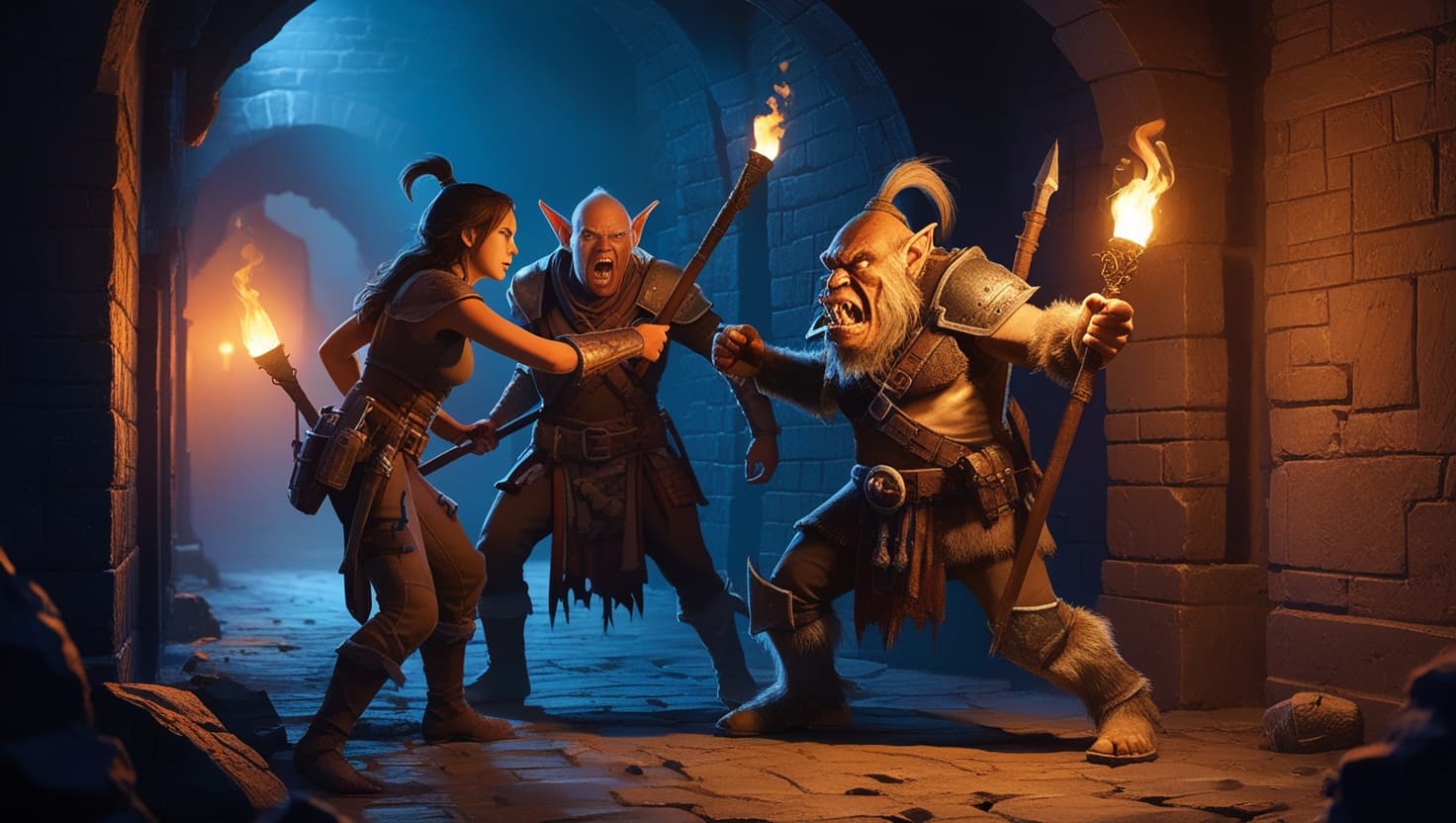
Flanking 5e: Why This 'Helpful' Rule Makes Combat Worse
Flanking 5e sounds great on paper. Melee characters get rewarded for teamwork, positioning matters more, and combat should feel tactical. That is the pitch. At a real table, flanking 5e usually turns into two people jogging around an ogre until everyone has permanent advantage and half the encounter design gets quietly kneecapped.
I do not think flanking is broken because it is too strong in a vacuum. I think it is bad because it makes combat less interesting. It flattens decisions. It cheapens class features. It teaches players to chase geometry instead of asking better tactical questions.
That has shown up in StoryRoll tests too. In AI-run fights with flanking enabled, melee turns got more predictable fast. Creatures circled for advantage, front lines collapsed into little conga lines, and smart features like Pack Tactics, Reckless Attack, or Faerie Fire mattered less because flanking was already doing the job for free.
Flanking 5e Is an Optional Rule, Not a Sacred Cow
First, the rule itself.
Flanking 5e is optional. It lives in the Dungeon Master's Guide, not the Player's Handbook. If two allies are on opposite sides or corners of an enemy, they gain advantage on melee attacks against that creature. That is it. No resource cost. No setup beyond position. No real cap on how often it happens.
A lot of groups treat optional rules like official upgrades. They are not. Some optional rules add flavor. Some add complexity. Some fix a table-specific problem. Flanking is one of those rules that looks more tactical than it plays.
That matters because people talk about flanking 5e like it is the default way combat is supposed to work. It is not. Core 5e combat was built around advantage being meaningful and a little bit scarce. When you hand it out through routine positioning, you change the value of a lot more than movement.
If your table has never used flanking 5e before, the default answer should be "skip it until we have a reason." Optional rules should solve a problem, not create a new one because the map looked lonely.
Flanking 5e Makes Advantage Too Cheap
This is the real issue.
Advantage is one of 5e's strongest currencies. Barbarians pay for it with Reckless Attack. Kobolds are balanced around Pack Tactics. Battle Masters spend resources to control positioning. Spells like Faerie Fire, Guiding Bolt, or Hold Person matter because they create windows where advantage changes the fight.
Flanking 5e undercuts all of that. If the Fighter and Paladin can get advantage just by standing in the right spots, why bother setting up smarter combos? Why cast Faerie Fire on a single bruiser when two melee characters can create a discount version every round? Why should a wolf's Pack Tactics feel special if everybody is basically a wolf now?
This gets ugly in parties built around melee pressure. A Rogue with Sneak Attack, a Paladin with Divine Smite, and a Barbarian with Great Weapon Master do not need much help. Give them routine flanking advantage and suddenly a lot of encounters hinge on whether the monsters can physically stop the party from forming a semicircle.
The result is not deeper combat. It is cheaper combat.
Flanking 5e Warps Movement in Dumb Ways
Good tactical rules create varied movement. Flanking 5e often creates repetitive movement.
You stop thinking about chokepoints, cover, retreat paths, aura ranges, or who is protecting the Wizard. You start thinking, "Can I stand on the other side of that bugbear?"
That sounds tactical until you watch it for a few sessions.
Then you realize every melee turn is doing the same dance. Move around target. Claim advantage. Swing. Repeat. Monsters do it too if the DM plays them honestly. Suddenly your tense fight in a ruined chapel looks like square-dancing for murder nerds.
And yes, there are edge cases where flanking produces cool moments. A Fighter locking down a troll while a Monk slips behind it can feel great. But the average case matters more than the highlight reel. The average case is just board-position tax.
In StoryRoll combat simulations, turning flanking on reduced movement variety. Creatures took fewer defensive lines and more direct wraparound paths. That sounds minor. It is not. Once the map becomes an advantage vending machine, the encounter's terrain matters less than it should.
- What flanking 5e encourages: circling, clustering, routine advantage
- What good 5e tactics encourage: focus fire, terrain use, spell timing, target priority, protecting fragile allies
- What gets worse with flanking: class identity, monster identity, encounter variety
Flanking 5e Makes Some Monsters and Features Feel Pointless
A good optional rule should add texture without erasing other parts of the game. Flanking 5e fails that test.
Think about monsters balanced around positional rewards. Wolves, kobolds, hobgoblins, and lots of intelligent skirmishers are fun because they have a combat identity. A wolf pack that drags someone down with Pack Tactics should feel different from a random bandit patrol.
But if every melee creature gets easy advantage through flanking, that identity blurs.
The same problem hits player features. Reckless Attack is supposed to be a trade. You get advantage, enemies get advantage back. It is a little reckless. That is the point. But when the Barbarian can already get flanking 5e advantage from the Paladin standing opposite the target, Reckless Attack stops feeling like a real choice.
Rogues feel it too. Sneak Attack already wants allies nearby. Add flanking and the Rogue's attack pattern gets even more automatic. It is effective. It is also boring.
One of my favorite little 5e tensions is deciding whether to spend a resource for a better attack now or save it for later. Flanking strips some of that tension out. Not all of it. Enough to matter.
Flanking 5e Hurts Beginner Tables More Than It Helps
This is the part I feel strongest about.
Beginner tables do not need more optional combat geometry. They need cleaner feedback loops.
When new players learn 5e, I want them noticing line of sight, enemy reach, concentration, opportunity attacks, and who can rescue the Cleric if the ghasts get through. I do not want them learning that the main puzzle is "walk behind it." That is not tactical depth. That is one trick pretending to be a system.
Flanking 5e also makes encounter tuning swingier for new DMs. Low-level fights already have fragile math. A Goblin boss can go from annoying to paste in one round because two martial characters found the right angles. Then the DM compensates by adding more monsters, which makes the next fight deadlier for the Wizard, and now everybody is fixing problems caused by a rule nobody actually needed.
If you are running Lost Mine of Phandelver, Dragon of Icespire Peak, or a first homebrew campaign, skip flanking at the start. Let players learn how strong shove, cover, difficult terrain, held actions, and simple focus fire already are.
Most tables do not add flanking 5e because their combat lacks tactics. They add it because "advantage for teamwork" sounds friendly. Friendly rule. Bad result.
Flanking 5e Works Better as a Smaller Bonus
If your group loves the fantasy of surrounding an enemy, I get it. Positioning should matter. I just do not think full advantage is the right reward.
A few better versions:
Flanking 5e as +2 to hit
This is the cleanest fix. Positioning matters, but it does not overwrite every other source of advantage. Faerie Fire stays valuable. Reckless Attack stays meaningful. Pack Tactics still feels like a monster feature instead of public infrastructure.
Flanking 5e as advantage once per round
This keeps the cinematic payoff without making every attack from every melee character feel pre-solved. One character cashes in the position, then the table has to create a new edge.
Flanking 5e as a rider, not advantage
You can make it do something like +5 feet of forced movement on a hit, no opportunity attack from the flanked creature this round, or a small damage rider for the first attacker. Those options feel tactical because they create distinct outcomes instead of repeating the same bonus.
My preference is still no flanking at all for most groups. But if a table wants it, the +2 version is the least annoying. It rewards setup without turning every melee encounter into a coupon code.
When Flanking 5e Actually Helps
I am not going to pretend flanking 5e is always terrible.
There are tables where it can help:
- grid-heavy groups that genuinely enjoy positional mini-games
- parties with mostly martial characters and very little magical advantage generation
- DMs who want combat to run faster and do not mind flatter decisions
- one-shots where immediate readability matters more than long-term depth
That last one is real. In a convention game or short one-shot, flanking can give newer players a simple way to feel clever quickly. Fine. I still would not use it for a long campaign unless the whole group actively prefers that style.
And if you are running StoryRoll, I would still lean toward skipping baseline flanking. The platform already gets a lot of mileage out of terrain pressure, class features, and smarter enemy behavior. Positional tactics are better when they create a specific edge, not auto-advantage for showing up with a buddy.
My Rule for Flanking 5e at Real Tables
Here is the short version.
If your combat already feels repetitive, flanking 5e will usually make it more repetitive.
If your players are ignoring positioning entirely, fix the encounter design first. Use narrow bridges, archers behind cover, spellcasters who punish clustering, enemies with Sentinel, or monsters that threaten the back line. Those changes teach better habits than handing out advantage for ring-around-the-owlbear.
5e combat gets better when advantages feel earned and situational. A Rogue timing Sneak Attack after the Cleric lands Guiding Bolt. A Barbarian choosing Reckless Attack because the party needs damage now. A Druid pinning enemies in Spike Growth while the Fighter protects concentration. Those moments feel good because they are not free.
Flanking 5e makes too many good moments free.
Frequently Asked Questions
What is flanking in 5e?
Flanking in 5e is an optional rule from the Dungeon Master's Guide that grants advantage on melee attacks when two allies are on opposite sides of a target.
Is flanking part of the default 5e combat rules?
No. Flanking is optional, not default.
Why do some DMs dislike flanking 5e?
Because it makes advantage too easy to get, reduces movement variety, and weakens the value of class features or spells that are supposed to create advantage.
What is a better alternative to flanking advantage?
A +2 bonus to hit is a common alternative. It rewards positioning without flattening combat around permanent advantage.
Should I use flanking 5e in my campaign?
Only if your table truly enjoys the style it creates. Most long campaigns are better without it, especially beginner groups and parties with strong melee damage already.
Flanking 5e is one of those rules that sounds tactical and plays repetitive. It makes advantage too cheap, turns movement into a geometry puzzle, and steals spotlight from class features that were supposed to matter. If your table wants more positional play, use a smaller reward like +2 to hit or a once-per-round rider. If you want combat that stays sharp over a long campaign, skip flanking and make terrain, enemy roles, and spell timing do the work instead. StoryRoll fights hold up better that way too.
Written by StoryRoll
Founder of StoryRoll. Building AI-powered tabletop RPGs.
Related Posts
Mounted Combat 5e: The Half-Page Rule Everyone Misplays
Mounted combat 5e fits on half a page, and most tables still get it backward: warhorses can't trample, and falling off is a real risk.
Diagonal Movement 5e: The Grid Rule Almost Nobody Agrees On
Diagonal movement 5e has two official answers, and most tables are quietly using the wrong one for their own map. Here is what the rules actually say.
Surprise Round 5e: Why It Isn't a Real D&D 5e Rule
There's no such thing as a surprise round in D&D 5e. The surprised condition restricts one creature's own turn, and the 2024 rules changed what that restriction actually does.