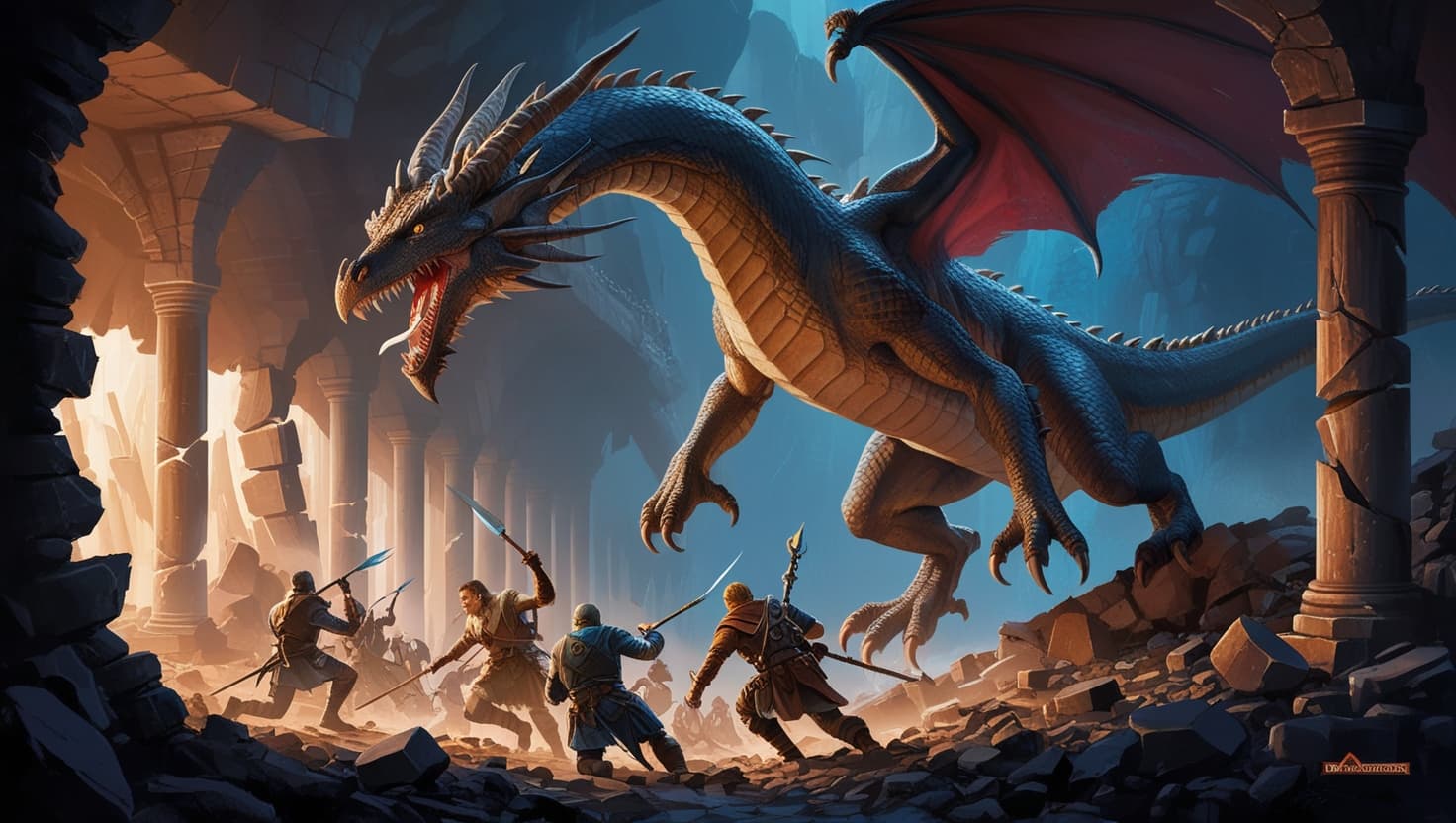
Legendary Actions 5e: Why Your Boss Still Feels Easy
Legendary actions 5e are supposed to stop your big villain from getting dogpiled into paste. Sometimes they do. Sometimes the ancient dragon still gets stunned, surrounded, and turned into a fancy leather coupon before round three. That is the part a lot of tables do not admit.
Legendary actions 5e are not a magic boss-fight patch. They solve one specific problem, action economy, and they only solve it if the actions are worth spending. A lich that burns legendary actions on weak cantrips while the paladin, battlemaster, and moon druid delete its hit points is not scary. It is just a high-CR cautionary tale.
I like the rule. I also think a lot of DMs overrate it. In StoryRoll combat tests, solo bosses got much harder once legendary actions were paired with movement, forced repositioning, or pressure on concentration casters. When the boss just used them for one extra swipe, the fight still folded fast. Same stat block. Different outcomes. That gap is the whole article.
Legendary Actions 5e Fix One Problem, Not the Whole Fight
Legendary actions 5e exist because one monster usually loses to four or five player characters on sheer turn volume.
That problem is simple. Your adult red dragon may be stronger than any one hero, but the party gets more attempts to move, burst, heal, restrain, counterspell, and dogpile. If the dragon only acts once per round, the table gets a giant window to solve it before it can matter again.
Legendary actions 5e close that window a little. The monster can tail attack after the fighter's turn, move after the cleric's turn, maybe wing attack after the rogue's turn, and suddenly the round feels alive instead of frozen between initiative counts.
Good. Necessary, even.
But legendary actions 5e do not fix everything that makes boss fights flat. They do not automatically solve bad terrain. They do not stop the wizard from landing Wall of Force if the monster cannot answer it. They do not protect a solo vampire from being focus-fired if its legendary options are too weak to break formation.
That is where a lot of encounter advice goes fuzzy. People say, "Just give the boss legendary actions," like they are sprinkling parmesan on an overcooked fight. No. The boss still needs a plan.
If you want a clean way to think about it, legendary actions 5e buy tempo. They do not buy intelligence, durability, or encounter texture.
Legendary Actions 5e Feel Weak When the Boss Spends Them on Junk
This is the most common failure mode.
A lot of official monsters have at least one legendary action worth using and one or two that are basically filler. If you spend those points on the filler because it looks fair or because you are "saving the good one," the party gets a much easier fight.
Take a dragon.
- A tail attack is fine damage.
- A detect action is often dead air once combat is underway.
- A wing attack that deals damage, knocks creatures prone, and repositions the dragon is a real momentum swing.
Those are not equal choices.
Same with a lich.
- A cantrip as a legendary action is okay.
- A frightening gaze or paralyzing touch at the right time is fight-shaping.
- Movement to break line of sight and force the party to reposition can matter more than another little damage packet.
The trap is spending legendary actions 5e like you are rotating through a menu to be polite. Bosses are not tasting flights at a brewery. They should spend actions on the options that make the round worse for the party.
StoryRoll made this painfully obvious in repeated solo-boss tests. An adult black dragon using legendary actions mostly for extra damage still lost fast to concentrated burst and healing support. The same dragon using wing attack to break the line, punish clustering, and threaten the back line bought itself another full round and changed the encounter shape completely.
If your legendary monster has a movement or reposition legendary action, and you never use it, you are probably leaving the strongest part of the stat block on the table.
Legendary Actions 5e Need to Hit the Right Targets
Legendary actions 5e get scarier when they attack plans, not just hit points.
A lot of boss fights feel easy because the boss keeps swinging into the barbarian while the real problem sits ten feet behind him concentrating on Bless, Web, or Hypnotic Pattern. You can read my concentration checks 5e breakdown for the rules piece. The encounter piece is even simpler. If the boss never pressures concentration, the party's best spells stay online too long.
That is why target selection matters more than raw DPR.
A few examples:
- Hit the cleric holding Spirit Guardians, not just the fighter standing closest.
- Move after the rogue's turn so the paladin loses the clean smite lane.
- Save the shove or wing attack for the moment the druid commits to Moonbeam positioning.
- Force the wizard off the safe tile behind half cover.
Legendary actions 5e are extra turns in miniature. Use them to break the party's shape.
This is also where specific 5e features come back into the picture. A paladin with Aura of Protection, a battlemaster with Trip Attack, a sentinel barbarian, and a lore bard holding Cutting Words can make a boss feel tiny if the boss keeps choosing the nearest target and never attacks the engine keeping the party stable.
Spicy take: most "easy boss fights" are not actually a CR problem. They are a decision problem.
Legendary Actions 5e Work Best When They Change Positioning
This is the part people underrate.
Legendary actions 5e are strongest when they make the battlefield unstable.
Damage matters. Sure. But movement, forced movement, and angle-breaking matter more in a lot of real encounters. A wing attack, teleport, shadow step, burrow shift, or even a move-without-opportunity-attacks effect can do three important things at once:
- break flanking setups
- open line of sight to fragile targets
- force the party to spend movement fixing the map instead of dealing damage
That last one is huge. Every step the party spends recovering formation is a step not spent winning.
This is one reason I dislike easy geometry rules like flanking 5e. They flatten movement. Good legendary actions 5e do the opposite. They make positioning feel unstable and expensive.
Think about a beholder drifting out of sight after a player's turn. Think about Strahd climbing a wall and forcing the melee characters to re-route. Think about an ancient bronze dragon wing-attacking the rogue prone, flying thirty feet, then forcing the ranger to choose between the healer and the shot.
Those moments feel boss-like because the map changes when the boss acts.
- Weak legendary actions 5e use: chip damage into the tankiest target
- Strong legendary actions 5e use: reposition, break concentration, punish clustering, attack support pieces
- Best legendary actions 5e use: change the next player's turn before it happens
Legendary Actions 5e Still Need Friends, Lairs, or Terrain
Solo monsters are cool. Pure solo monsters are often bad encounter design.
Legendary actions 5e help a boss survive the action economy problem, but they do not erase it completely. A solo creature still has one body, one concentration lane if it casts, and a limited number of places it can threaten at once.
So if you want boss fights that actually hold up, give the boss something else to work with.
That can mean:
- lair actions
- regional hazards
- minions or bodyguards
- elevation and cover
- objectives that split the party's attention
- environmental pressure like lava vents, collapsing bridges, necrotic fog, or ritual circles
A beholder over a chasm is scarier than a beholder in an empty square room. A lich with wights, pillars, and a raised dais is scarier than a lich standing on flat stone waiting to get mugged. A dragon in a vertical cave with lava fissures is scarier than the same dragon parked on a grid where every martial can base it by round one.
StoryRoll tests showed this pretty clearly. The boss fights that held together longest were not the ones with the highest CR. They were the ones where the battlefield forced tradeoffs. The players had to decide whether to chase the boss, hold the bridge, protect the downed bard, or disrupt the ritual clock. Once the room asked better questions, legendary actions 5e mattered more because they were part of a moving system, not the whole show.
Legendary actions 5e make a boss more active. Terrain, pressure, and side threats make that activity matter.
Legendary Actions 5e Should Be Spent Between the Most Important Turns
Timing is where decent boss fights become sharp boss fights.
Legendary actions 5e happen at the end of another creature's turn. That means the best time to spend them is usually not random. It is right after the turn that changed the fight most.
Good trigger moments:
- after the cleric finishes setting up Spirit Guardians
- after the rogue ends a turn in a greedy damage lane
- after the wizard burns a big control spell and is suddenly exposed
- after the paladin commits position and cannot easily pivot
Bad trigger moments:
- dumping actions after a low-impact turn just because you can
- spending the boss's last point before the wizard's scary turn if the wizard is clearly the real problem
- using a big reposition action when the party is already badly positioned and you could punish harder on the next trigger
This is not about perfect optimization. It is about understanding that legendary actions 5e are reactive tools. They are strongest when they answer what the party just did.
A classic example is the adult dragon holding wing attack until two melee characters have fully committed and the sorcerer has stepped out to maintain line of sight. One legendary action turns a clean party formation into a mess. That is a boss move.
Compare that to spending a tail attack after the ranger's minor damage turn because it felt efficient. Fine, I guess. Also forgettable.
Legendary Actions 5e Are Better as Identity, Not Just Math
The best legendary actions 5e do not just add throughput. They express what the monster is.
A vampire should feel predatory and evasive. A lich should feel controlling and inevitable. A dragon should own space. A beholder should distort angles and safety. If the legendary actions only say "extra attack," the stat block technically works but the fight loses flavor.
That identity piece matters because memorable boss fights are not just hard. They are legible. The party should feel what makes this monster different.
A few examples I love:
- dragons using wing attack to dominate physical space
- vampires moving through the environment like the room belongs to them
- liches punishing grouping and line-of-sight mistakes
- mind flayers breaking formations before a bigger control turn
That is also why homebrew legendary actions are often better than timid use of stock ones. If your boss is a death knight leading infernal cavalry, its legendary action might command a hellish charge, snuff magical light, or drag a marked enemy ten feet closer. Now the mechanics and the fantasy line up.
And yes, if you are building that kind of fight in StoryRoll, the same principle holds. The best AI-run boss encounters feel different because the boss behavior has a point of view, not just more swings per round.
Frequently Asked Questions
What are legendary actions in 5e?
Legendary actions in 5e are special extra actions certain powerful monsters can take at the end of another creature's turn, up to a set number each round.
How do legendary actions 5e recharge?
Legendary actions 5e usually refresh at the start of the monster's turn, which means the creature spends them across the round and gets them back before acting normally again.
Can legendary actions 5e save a bad solo boss fight?
Only partly. Legendary actions 5e help with action economy, but a weak map, bad target choices, or poor support design can still make the boss collapse.
When should I spend legendary actions 5e during combat?
Spend legendary actions 5e after the turns that changed the fight most, especially when you can break concentration, reposition, or punish greedy placement.
Do legendary actions 5e need lair actions or minions too?
Often yes. Legendary actions 5e are stronger when the boss also has terrain, side threats, or lair pressure that splits the party's attention.
Legendary actions 5e are good, but they are not enough by themselves. They fix the raw turn-count problem. They do not fix weak target selection, flat terrain, or bosses that spend their best reactions on filler. If your boss still feels easy, the answer is usually not "add more hit points." It is "use legendary actions to break the party's plan, move the map, and make the monster feel like itself." That is when boss fights stop feeling like damage spreadsheets and start feeling like trouble.
Written by StoryRoll
Founder of StoryRoll. Building AI-powered tabletop RPGs.
Related Posts
Darkvision 5e: The Disadvantage Nobody Applies
Darkvision 5e doesn't erase the dark. It still gives disadvantage on sight-based Perception checks, and it isn't blindsight.
Falling Damage 5e: The Cap Everyone Forgets
Falling damage 5e is 1d6 per 10 feet, capped at 20d6. Most tables remember the first half and forget the cap, the timing, and the prone landing.
Critical Hits in D&D 5e: The Rule Everyone Misremembers
A critical hit in D&D 5e doubles your damage dice, not your damage. Here's the rule most tables misremember, and what actually doubles on a crit.