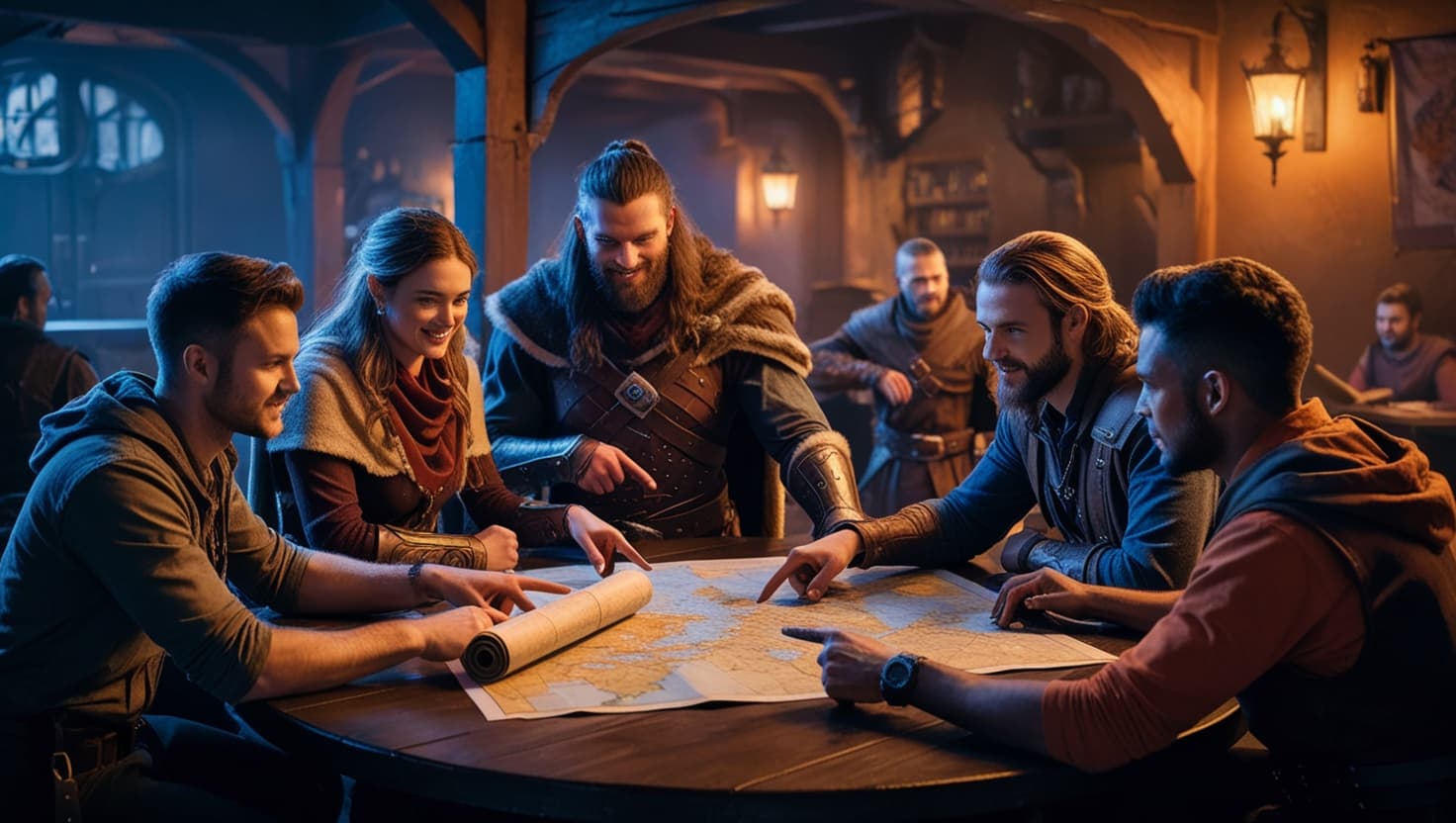
The Ultimate D&D Session Zero Checklist (Copy & Use)
Every campaign that dies in the first three sessions has something in common: they skipped session zero. One player built a chaotic evil loner. Another expected a lighthearted comedy campaign while the GM planned grimdark horror. Nobody discussed scheduling, so the game died when the group couldn't find a second date.
Session zero fixes all of this. It's the meeting before the adventure where everyone gets on the same page about what kind of game you're playing, how you're playing it, and what happens when things go wrong. This checklist covers everything you need to discuss, organized so you can print it, share it with your group, and check items off as you go.
How to Use This Checklist
Run through each section with your group during session zero. Not every item will apply to every table - skip what doesn't fit and add anything specific to your group. The goal isn't to bureaucratize D&D. It's to have the important conversations once, up front, so you never have to have them mid-combat.
1. Campaign Expectations
These are the big-picture questions that shape every session after this one.
- Campaign tone: Is this heroic fantasy, grimdark, comedy, political intrigue, dungeon crawl, or something else? Everyone should agree on the general vibe
- Themes and content: What themes will the campaign explore? War, exploration, mystery, horror? Are there themes anyone wants to avoid?
- Campaign length: Are you planning a multi-year epic, a 10-session arc, or an open-ended sandbox? Setting expectations prevents burnout
- Difficulty level: How lethal is this game? Can characters die permanently? Is the GM pulling punches or playing monsters to win?
- World setting: Homebrew or published? Forgotten Realms, Eberron, Wildemount, or something custom? How much lore should players know going in?
- Starting level and progression: What level do characters start at? How fast will they level - milestone or XP?
- Player agency vs. narrative rails: Is this a sandbox where players drive the story, or a structured narrative with a clear plot? Most campaigns are somewhere in between - agree on where
If your group can't agree on tone, it's better to find out now than three sessions in. A player who wants serious political drama and a player who wants Monty Python can coexist, but only if both know what to expect.
2. House Rules
Every table has them. Document yours so there are no surprises.
- Critical hits: RAW (double dice), max damage + roll, or something else?
- Critical fumbles: Do natural 1s have consequences beyond missing, or just a miss?
- Resurrection rules: Is resurrection magic available? Does it have additional costs or consequences?
- Flanking: Does flanking grant advantage, +2, or nothing?
- Encumbrance: Are you tracking carry weight, using a simplified system, or ignoring it?
- Rations and survival: Do you track food, water, and exhaustion during travel, or hand-wave it?
- Variant rules in play: Feats, multiclassing, optional class features from Tasha's?
- Inspiration: How does the GM award it? Can you hold multiple?
- PvP: Can players attack each other? Steal from each other? Under what circumstances?
- Metagaming policy: How strictly are you separating player knowledge from character knowledge?
- Rule disputes: How are disagreements resolved at the table? GM ruling in the moment, look it up between sessions?
3. Character Creation Guidelines
Character creation is the most important part of session zero because it's where individual decisions meet group needs.
- Ability score method: Standard array, point buy, or rolling (4d6 drop lowest)? If rolling, does everyone roll at the table? Our ability score calculator supports all three methods.
- Allowed sources: PHB only, PHB + supplements, all official content, homebrew with approval?
- Allowed races and classes: Any restrictions based on the world setting?
- Starting equipment: Standard equipment or starting gold?
- Backstory expectations: How detailed should backstories be? One paragraph, one page, or a full history? (If players need a starting point, the backstory generator can help.)
- Backstory connections: Should characters know each other before the campaign starts? How do they meet?
- Party composition: Does the group need a healer? A frontliner? Or is "play what you want" the policy?
- Character secrets: Are secret backstories allowed? Does the GM know all secrets even if other players don't?
- Character alignment: Is alignment enforced? Are evil alignments allowed? What does "chaotic neutral" actually mean at this table?
- Backup characters: Should players have a backup character ready in case of death?
Build characters together, not in isolation. When players create characters at the same table, backstory connections happen naturally. The Rogue and the Cleric discover they grew up in the same town. The Wizard and the Fighter realize they served in the same war. These connections give the party a reason to stay together beyond "we all met in a tavern." For tips on making the most of your character at the table, check out our guide on how to be a better D&D player.
4. Safety Tools
Safety tools aren't about restricting creativity. They're about making sure everyone at the table can enjoy the game without encountering content that genuinely upsets them.
- Lines: Hard limits - topics that will never appear in this campaign, period. Examples: graphic violence against children, sexual assault, real-world hate speech. No explanation needed. If someone names a Line, it's a Line
- Veils: Topics that can exist in the story but happen "off-screen." Romance might happen, but it fades to black. Torture might occur in the narrative, but it's described in summary, not detail
- X-Card / safety phrase: An out-of-game signal that means "stop this scene and move on, no questions asked." Can be a physical card, a phrase, or a hand signal
- Open Door policy: Any player can leave the table (physically or virtually) at any time without judgment. Sometimes you just need a break
- Retcon willingness: If a scene accidentally crosses a boundary, is the group willing to retcon (undo) it and move on?
- Check-in process: How does the GM check in with players about comfort levels? After intense sessions? Periodically? Only when someone raises an issue?
5. Scheduling and Logistics
More campaigns die from scheduling than from dragons. Lock this down early.
- Session frequency: Weekly, biweekly, monthly? What day and time?
- Session length: 2 hours? 3 hours? 4+? Set expectations so players plan their evening
- Minimum attendance: How many players need to be present to run a session? What happens to absent players' characters?
- Cancellation policy: How much notice for cancellations? Who decides to cancel - GM or group consensus?
- Late arrival: What happens if someone is 15 minutes late? 30 minutes? Do you start without them?
- Platform: In person, virtual (Roll20, Foundry, Discord), or hybrid?
- Between-session activities: Are downtime activities, shopping, or RP handled between sessions or at the table?
Session Zero Quick Stats
- Recommended length: 60-90 minutes
- Campaigns that skip session zero: ~60% collapse within 5 sessions (informal community surveys)
- Most common session-zero omission: Safety tools and content boundaries
- Most impactful discussion: Scheduling and cancellation policy
- Best format: In-person or video call (not text chat)
- Follow-up: Share written summary within 24 hours
6. Communication Preferences
How your group talks between sessions matters more than most people realize.
- Group chat platform: Discord server, group text, WhatsApp, email?
- Between-session RP: Is in-character texting or messaging allowed? Encouraged?
- Rules questions: Ask in the group chat, DM the GM privately, or save for the table?
- Feedback channel: How do players give the GM feedback? Public or private? When?
- Session recaps: Who writes them - the GM, a rotating player, or nobody?
- Spoiler policy: If players research monsters or modules, is that acceptable or off-limits?
The Complete Checklist (Copy-Ready)
Here's the full checklist in a compact format you can copy into a document, print, or share with your group:
SESSION ZERO CHECKLIST

CAMPAIGN EXPECTATIONS
□ Campaign tone (heroic, grimdark, comedy, etc.)
□ Themes to explore / themes to avoid
□ Campaign length (multi-year, 10-session arc, sandbox)
□ Difficulty and lethality
□ World setting (homebrew / published)
□ Starting level and progression method
□ Player agency vs. structured narrative

HOUSE RULES
□ Critical hits and fumbles
□ Resurrection rules
□ Flanking
□ Encumbrance and survival tracking
□ Variant rules (feats, multiclassing, Tasha's)
□ Inspiration
□ PvP policy
□ Metagaming policy
□ Rule dispute resolution

CHARACTER CREATION
□ Ability score method
□ Allowed sources and content
□ Race and class restrictions
□ Starting equipment method
□ Backstory expectations and connections
□ Party composition discussion
□ Character secrets policy
□ Alignment policy
□ Backup characters

SAFETY TOOLS
□ Lines (hard limits)
□ Veils (off-screen content)
□ X-Card or safety phrase
□ Open door policy
□ Retcon willingness
□ Check-in process

SCHEDULING
□ Session frequency and day/time
□ Session length
□ Minimum attendance
□ Cancellation and late arrival policy
□ Platform (in-person / virtual / hybrid)
□ Between-session activities

COMMUNICATION
□ Group chat platform
□ Between-session RP policy
□ Rules questions process
□ Feedback channel
□ Session recap responsibility
□ Spoiler policy
How StoryRoll Handles Session Zero
StoryRoll handles session zero automatically by letting you set campaign tone, difficulty, and house rules before your first session. When you create a campaign, you choose your genre, set the difficulty level, define content boundaries, and configure house rules - all through a guided setup that covers the same ground as a traditional session zero.
The AI Game Master remembers every preference you set. If you chose "no graphic violence," the narration respects that boundary every session. If you set flanking to grant advantage, the combat system applies it automatically. If you said character death is permanent, the AI plays monsters accordingly.
For solo players, StoryRoll's campaign setup replaces session zero entirely. You don't need to negotiate with a group because the AI adapts to your preferences. For groups, the campaign creator sets the baseline and other players join knowing exactly what kind of game they're walking into.
The scheduling problem - the number one campaign killer - disappears when your Game Master is available 24/7. No coordinating five schedules. No cancelling because the GM is sick. No three-month gaps between sessions. Your campaign runs when you want it to, as often as you want it to.
Start your campaign on StoryRoll - session zero included.
Session zero isn't overhead. It's insurance. Every hour you spend aligning expectations saves ten hours of table drama, character conflicts, and the slow death of a campaign nobody wants to play anymore.
This checklist covers the conversations that matter. You won't use every item for every group, and that's fine. The value is in having the list so nothing gets forgotten. Print it, share it, and check things off as your group talks through them. The campaign you save will be your own.
If your table has never done a session zero, try it for your next campaign. If your table always does session zero, use this checklist to make sure you're not missing anything. Either way, your first actual session will be better for it.
Frequently Asked Questions
What is a session zero checklist?
A session zero checklist is a structured list of topics to discuss with your D&D group before starting a new campaign. It covers campaign expectations, house rules, character creation guidelines, safety tools, scheduling, and communication preferences. Using a checklist ensures no important conversations get skipped.
Do you need a session zero for every campaign?
Yes. Even experienced groups who've played together for years benefit from session zero when starting a new campaign. Expectations change between campaigns - a group that loved a lighthearted adventure last time might want something darker next. Five minutes of alignment saves weeks of frustration.
What's the difference between a session zero and session one?
Session zero is a planning meeting - no dice, no combat, no actual gameplay. You discuss expectations, create characters, and align on rules. Session one is where the adventure begins. Some groups combine them (session zero for the first hour, then jump into play), but separating them gives both conversations the time they deserve.
How do you run a session zero online?
Use video chat (Discord, Zoom) rather than text. Hearing voices makes consensus-building easier and catches tone that text misses. Share your screen with the checklist visible so everyone can track progress. Use a shared document for the final decisions so players can reference them later.
What if a player doesn't want to participate in session zero?
A player who won't participate in session zero is telling you something important about how they'll engage with the campaign. It's worth a private conversation to understand why. Some players find the planning tedious (keep it shorter), some have social anxiety about group discussions (offer to do it one-on-one), and some genuinely don't care about the details (which is fine, but they need to accept the group's decisions).
Written by Anthony Goodman
Founder of StoryRoll. Building AI-powered tabletop RPGs.
Related Posts
How to Run a Session Zero: The Guide Your Campaign Actually Needs
Session zero sets the tone for everything that follows. Here's how to run one that prevents table drama, aligns expectations, and builds a party that actually makes sense together.
What Is Session Zero? A Beginner's Guide to the Most Important Pre-Game Tradition
Session Zero is the pre-game conversation that saves campaigns from imploding. Learn what it covers, why it matters, and how AI is reinventing it for modern players.
D&D Encounter Balancing Guide for New Game Masters
CR math alone won't save your encounters. This guide covers everything new GMs need to know about balancing D&D 5e encounters - from XP budgets and action economy to reading your table and adjusting mid-fight.