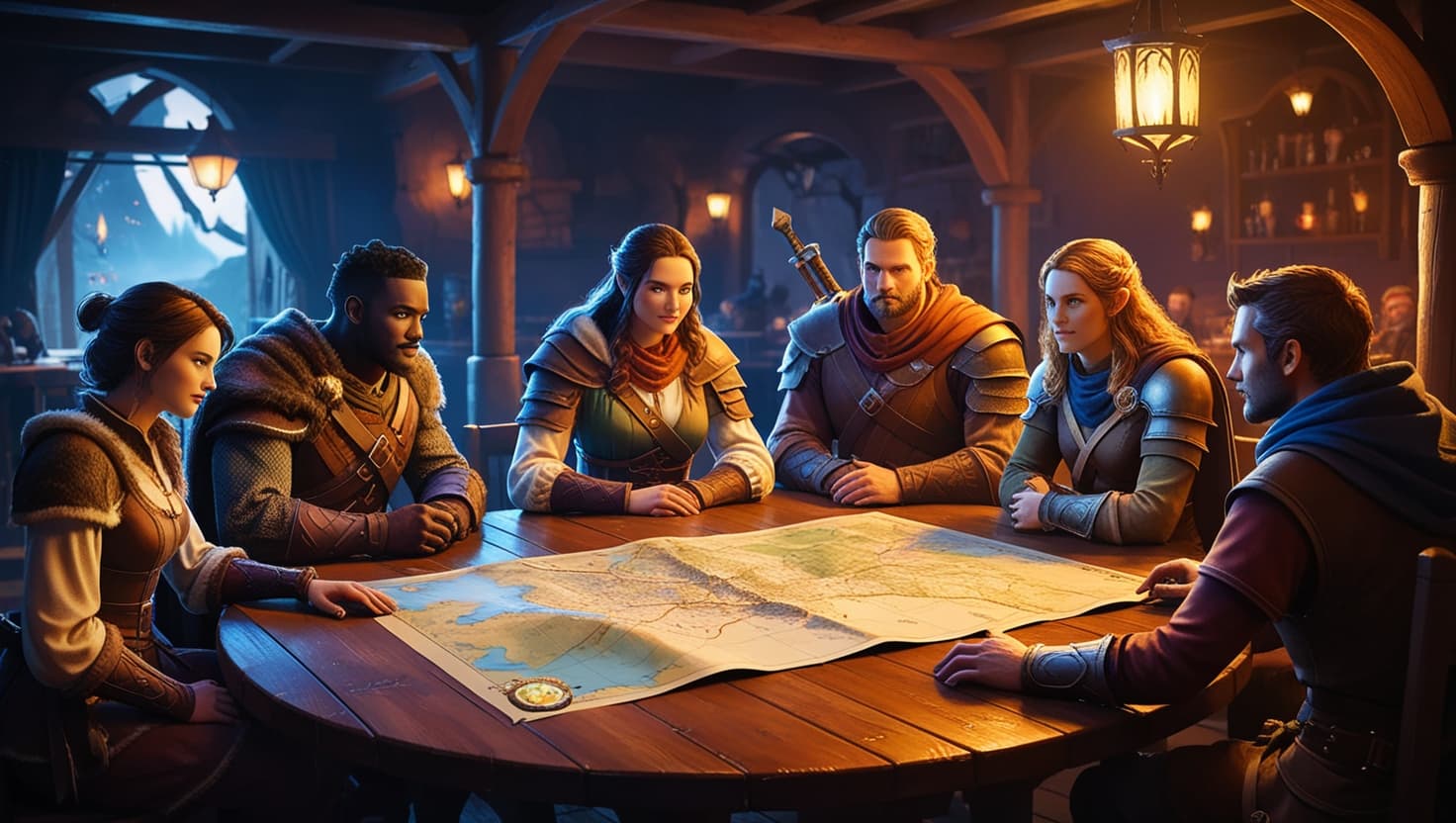
How to Run a Session Zero: The Guide Your Campaign Actually Needs
The campaign that imploded fastest in my experience lasted exactly two sessions. A paladin player wanted high-stakes political intrigue. The rogue's player wanted to steal everything not bolted down. The DM wanted grimdark horror. Nobody mentioned any of this beforehand. Session two ended in an argument about whether pickpocketing a king should be a PvP situation, and we never played session three.
A session zero would've caught all of that in about twenty minutes.
What Is a Session Zero?
A session zero is a pre-campaign meeting where the DM and players align on what kind of game they're about to play. No dice rolling (usually). No combat. Just a conversation about expectations, boundaries, tone, and characters.
The term comes from the idea that your first real play session is "session one," so the setup meeting is session zero. It's been standard advice on r/DMAcademy for years, and for good reason - campaigns that skip it fail at significantly higher rates than campaigns that don't. Not because session zero is magic, but because mismatched expectations are the number one campaign killer, and session zero is where you catch them.
Why Most Campaigns Die Without One
Sixty percent of D&D campaigns reportedly never make it past session five. Scheduling is part of that, sure. But a huge chunk of early campaign deaths come down to players and DMs wanting fundamentally different games.
Common mismatches that session zero prevents:
- Tone conflicts. One player builds a joke character. Everyone else is running a serious political drama. Resentment builds fast.
- Playstyle clashes. Three players want exploration and roleplay. One wants to optimize combat encounters. Neither is wrong, but the DM can't serve both without knowing upfront.
- Boundary violations. A horror-themed campaign involves content that makes a player genuinely uncomfortable. They don't come back.
- Party incoherence. Five characters with zero reason to travel together. The DM spends three sessions trying to force a group dynamic that was never going to happen.
Every one of these is preventable. And the prevention takes about an hour.
How to Run a Session Zero (Step by Step)
Not every session zero needs to be the same. A group of longtime friends starting their fourth campaign together needs less structure than strangers meeting at a game store. But there's a core framework that works for basically everyone.
1. Set the Campaign Pitch First
Before players build anything, they need to know what kind of game you're running. This isn't a full lore dump. It's a pitch - two to four sentences.
Good campaign pitches:
- "You're members of a mercenary company operating in a war-torn border region. Morally gray, survival-focused, low magic."
- "Classic heroic fantasy. You're the chosen ones, the world needs saving, and there will be dragons."
- "Political intrigue in a Renaissance-inspired city. Combat happens but it's not the focus. Expect lots of NPC conversations and faction politics."
Bad campaign pitches: "I dunno, it's D&D, we'll figure it out." That's how you get a paladin, a chaotic evil warlock, and a joke bard in the same party with no shared motivation.
If you need help developing your campaign concept, we've got a full guide to writing a D&D campaign that covers worldbuilding and narrative structure.
2. Discuss Tone and Content Boundaries
This is the part people skip because it feels awkward. Don't skip it.
You don't need to make it a therapy session. You need to establish:
- What rating is this game? PG-13 action-adventure? R-rated grimdark? Knowing this saves arguments later.
- What's off the table? Some tables don't want graphic violence. Others don't want romance. Some are fine with both. Ask.
- Safety tools. The X-Card (tap or hold up a card to skip a scene, no explanation needed) and Lines & Veils (lines are hard no's, veils are things that happen offscreen) are the two most common. Use at least one.
You don't need to ask people to share their trauma to establish boundaries. A simple "anything you'd rather we keep off the table?" works. Players can also message the DM privately before or after the session.
The DMs who resist safety tools tend to argue that they "know their group." Maybe. But people's boundaries change, new players join, and the cost of having a safety tool nobody uses is literally zero. The cost of not having one when someone needs it is a player who never comes back.
3. Build Characters Together
This is the fun part, and it's drastically better when done as a group instead of in isolation.
When players build characters at home alone, you get five protagonists with no connections to each other. When they build together, they naturally create relationships. "Oh, you're playing a cleric? Maybe my fighter was saved by your order." "Your rogue is from the capital? My wizard studied there - maybe we know each other."
Things to establish during group character creation:
- Why is each character adventuring? Not their tragic backstory. Their motivation right now.
- How do the characters know each other? Pre-established relationships are stronger than "you meet in a tavern."
- Party role coverage. Not mandatory, but it's worth a quick check. Four sorcerers and no healer is a choice, but it should be a deliberate one.
- Character secrets. If someone wants a secret backstory element, they should tell the DM privately. Surprises for other players are fine. Surprises for the DM are not.
For character backstory tips specifically, check out our backstory guide.
4. Cover the Logistics
Boring but essential. Campaigns don't die from bad storytelling nearly as often as they die from scheduling conflicts.
- Schedule - Same day each week? Biweekly? What happens when someone can't make it? (Most groups: play if 3+ can make it, cancel if fewer.)
- Session length - 3 hours? 4? Set a hard stop time. Sessions that run "until we're done" always run too long.
- Platform - In-person? VTT? Discord voice with Theater of the Mind? Nail this down.
- House rules - Critical fumbles? Flanking? Milestone vs XP? Better to state them now than argue mid-combat.
- Communication - Group chat for scheduling? Discord server? How do players reach the DM between sessions?
- Absences - Does the absent player's character fade into the background? Does another player run them? Define this before it happens.
5. Do a Quick Taste Test
This one's optional but I strongly recommend it. Run a 30-minute encounter at the end of session zero. Not a full dungeon. Just a single scene - a tavern negotiation, a quick ambush, a puzzle room.
It lets players test-drive their characters. It lets you test-drive your DMing style for this campaign. And it gives everyone a taste of whether the tone you discussed actually works in practice.
If the vibe feels off during the taste test, you can adjust before you've committed to a full campaign. Much cheaper than discovering it in session four.
Session Zero for Online Games
Running session zero over Discord or a VTT platform has a few differences worth calling out.
Camera usage matters more than people think. If your campaign will use cameras, turn them on for session zero. If it won't, that's fine, but establish it now. Switching camera expectations mid-campaign is weirdly contentious.
For online groups - especially ones formed through r/lfg or similar - session zero doubles as a vibe check. You're figuring out whether you actually want to play with these people. That's legitimate. Not every group clicks, and it's better to discover that before anyone preps a 50-page backstory.
If you're setting up an online game from scratch, we have a full guide to playing D&D online that covers platform choices and tech setup.
For groups that can't coordinate a synchronous session zero, a shared Google Doc works well. List the campaign pitch, tone expectations, house rules, and scheduling logistics. Have everyone add their character concepts and comment on each other's. It's not as good as a live conversation, but it's infinitely better than skipping it.
The DM's Prep Before Session Zero
Session zero isn't improv for the DM. You need to walk in with some things already decided.
What you should have ready:
- Your campaign pitch (2-4 sentences)
- The setting basics (world name, tech level, major factions - just enough for character creation)
- Any restricted content (no flying races? no evil alignments? no homebrew classes?)
- Your house rules list
- A list of questions you want to ask the players (what do they enjoy most in D&D? what do they want less of?)
What you should NOT have ready:
- A completed plot. You need to know your players' characters before you can build a story that involves them.
- A detailed world bible. Players need just enough to make informed characters. Everything else can come later.
- Strong opinions about what classes/races players should pick. Restrictions are fine. Steering is annoying.
Our worldbuilding guide covers how much setting prep is actually useful versus how much is DM procrastination disguised as productivity.
What About Solo Players?
Not everyone has a group. If you're running a solo campaign - either with yourself as both player and DM using oracle systems, or with an AI game master - session zero still applies. It just looks different.
For solo play, your "session zero" is deciding:
- What kind of story do you want? (Dungeon crawl? Political intrigue? Wilderness survival?)
- What's the tone? (Heroic? Dark? Comedic?)
- What system are you using for GM-less decisions?
- What's your character's starting situation?
AI dungeon masters like StoryRoll handle a lot of this through their onboarding - you set your character, tone preferences, and campaign style before the first scene generates. It's essentially a built-in session zero. We built it that way deliberately because we'd seen too many AI D&D experiences dump you into a generic tavern with no setup.
For more on solo play options, check out our solo TTRPG guide or our breakdown of how to play D&D alone.
Common Session Zero Mistakes
Making it a lecture. Session zero is a conversation, not a DM monologue. If you talk for 45 minutes and then ask "any questions?", you've done it wrong. Pause after each topic. Ask for input. Let players shape the game.
Skipping boundaries because "we're all friends." Friends have boundaries too. The point of safety tools isn't that you think your friends are dangerous - it's that people don't always volunteer discomfort unprompted.
Over-planning the campaign. I know I said this above but it bears repeating. The whole point of session zero is to get player input before you plan. If you've already written ten sessions of plot, you're not running a session zero. You're pitching a novel.
Not actually listening. If three players say they want exploration and you run a combat-heavy dungeon crawl anyway, the session zero was wasted. Write down what your players tell you. Use it.
Treating it as optional for experienced groups. Experienced players are actually more likely to have strong preferences. A first-timer is happy to go along with anything. A ten-year veteran knows exactly what they want, and if they don't get it, they check out.
Session Zero Checklist
For the skimmers (respect), here's the full checklist in one place:
- Campaign pitch - 2-4 sentences. Tone, setting, stakes.
- Content boundaries - Lines, veils, safety tools. Ask, don't assume.
- Tone agreement - Comedy? Drama? Horror? PG-13 or R?
- Character creation - Together. Motivations, connections, party balance.
- House rules - Critical fails, flanking, death rules, homebrew.
- Schedule - Day, frequency, duration, cancellation policy.
- Platform & tools - VTT, voice, maps, character sheets.
- Absence policy - What happens to missing players' characters?
- Communication plan - Group chat, Discord, between-session channel.
- Taste test - Optional 30-min encounter to calibrate tone.
Try These Free Tools
Make your session zero productive with these free resources:
- Backstory Generator — Help players build backstories during session zero with guided prompts.
- Ability Score Calculator — Walk players through point buy or standard array during character creation.
- Dice Roller — Rolling for stats as a group? Use our 3D roller for the full experience.
Frequently Asked Questions
How long should a session zero last?
Most session zeros run 1 to 2 hours. Groups who know each other well can finish in 45 minutes. New groups or complex campaign setups might push to 3 hours, especially if character creation happens during the session.
Can you play during session zero?
Yes, and many DMs recommend it. A short "taste test" encounter at the end of session zero lets players try their characters and experience the campaign's tone before committing. Keep it to 30 minutes or less.
Is session zero necessary for a one-shot?
Not usually. One-shots are short enough that a 5-minute verbal pitch covers most of what a session zero would address. The exception is one-shots with strangers or sensitive content - a quick boundary check is still worth doing. See our guide to running one-shots for more.
What if a player doesn't want to do session zero?
Red flag. A player who won't spend an hour aligning expectations is signaling that they don't value the group's experience. Have a direct conversation - sometimes they just don't understand the purpose. If they still refuse, that's useful information for deciding whether to invite them.
Should session zero happen in-person even if the campaign is online?
It doesn't need to. Running session zero on the same platform you'll use for the campaign is actually better, since it doubles as a tech check. Make sure everyone's audio works, they can access the VTT, and the voice chat isn't a disaster.
Session zero is the highest-ROI hour you'll spend on a campaign. It catches mismatched expectations, builds party cohesion, and sets ground rules before anyone gets emotionally invested in a character or plot direction. Skip it and you're gambling that five people independently imagined the same game. Run it and you start session one with a group that's actually pointed in the same direction. Not complicated. Just necessary.
Written by Anthony Goodman
Founder of StoryRoll. Building AI-powered tabletop RPGs.
Related Posts
The Ultimate D&D Session Zero Checklist (Copy & Use)
A complete, copy-ready session zero checklist covering campaign expectations, house rules, character creation, safety tools, and scheduling. Use this template to run a session zero that actually prevents problems.
What Is Session Zero? A Beginner's Guide to the Most Important Pre-Game Tradition
Session Zero is the pre-game conversation that saves campaigns from imploding. Learn what it covers, why it matters, and how AI is reinventing it for modern players.
D&D Encounter Balancing Guide for New Game Masters
CR math alone won't save your encounters. This guide covers everything new GMs need to know about balancing D&D 5e encounters - from XP budgets and action economy to reading your table and adjusting mid-fight.