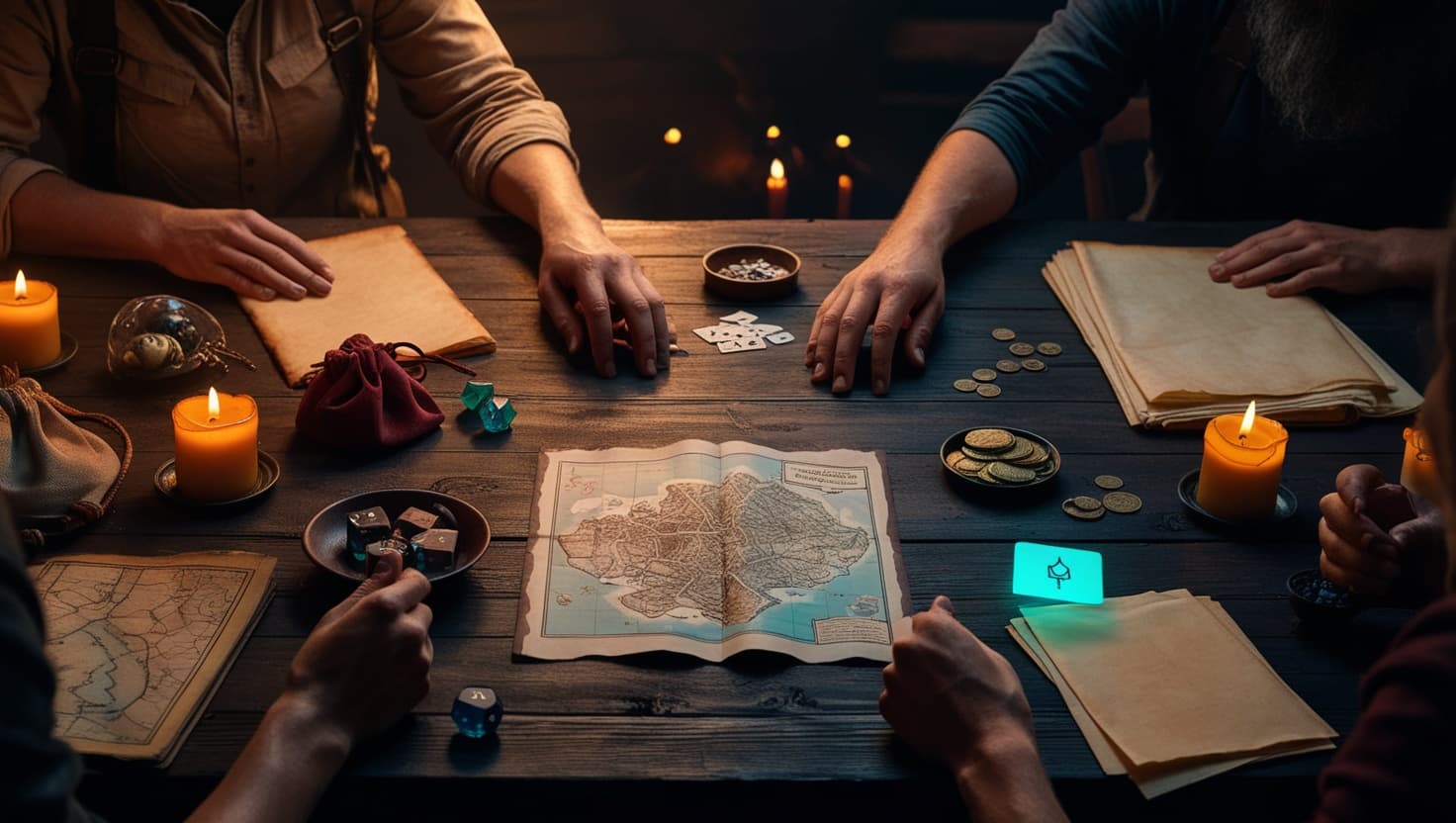
Downtime 5e: Stop Treating Quiet Weeks Like Shopping
Downtime 5e is where D&D quietly admits that adventurers are people and not just mobile damage spreadsheets.
That should be great.
Then most tables turn it into shopping.
The party returns from the tomb. The fighter wants plate armor. The wizard wants scrolls. The rogue wants poison, because rogues cannot be trusted with free time. Someone asks how many days it takes to craft a healing potion. The DM sighs, opens three books, and ten minutes later everyone agrees to skip ahead because the next dungeon sounds easier than the calendar math.
I get why this happens. Downtime sits in an awkward place. It is too important to ignore forever, but too loose to run on autopilot. The rules in the Player's Handbook, Dungeon Master's Guide, Xanathar's Guide to Everything, and the 2024 Bastion rules all point at the same truth: the quiet weeks only matter when they change what happens next.
If downtime is only accounting, skip it.
If downtime creates pressure, relationships, scars, favors, rumors, tools, rivals, or weird personal projects, run it.
Downtime 5e Should Start With Intent, Not a Menu
The worst way to introduce downtime is to hand players a list of activities and ask them to pick one like they are ordering tavern brunch.
Crafting. Training. Carousing. Research. Religious service. Crime. Pit fighting. Buying magic items. Running a business.
Fine activities. Dead format.
Start with intent instead.
Ask each player one blunt question: what is your character trying to change before the next adventure?
That answer tells you which rule to use.
- The fighter wants the blacksmith guild to respect them.
- The wizard wants a copy of Counterspell before the vampire hunt.
- The cleric wants to find out why their temple stopped answering Sending.
- The rogue wants a fence who can move stolen Zhentarim goods without asking irritating questions.
- The warlock wants to dodge their patron for one full week, which is adorable.
Now the activity has a job.
Training is not "gain a tool proficiency eventually." It is "the fighter spends ten days with the old siege engineer who knows where the hobgoblins breached the eastern wall." Research is not "roll Intelligence and receive lore." It is "the wizard digs through a Candlekeep copyist's notes and finds three missing names from the necromancer's pact."
StoryRoll downtime scenes work best this way because the AI can start from character intent instead of a rules menu. When the rogue says they want a buyer for cursed jewelry, the useful output is not a generic fence. It is a fence with a price, a fear, and a reason to remember the rogue later.
If a downtime choice cannot answer "what changes because you did this?", it probably belongs in a sentence, not a scene.
Downtime 5e Needs Complications More Than Rewards
Rewards are easy.
You trained. You crafted. You earned gold. You found a scroll. You made a contact. Nice.
Complications are where downtime becomes D&D.
Xanathar's Guide to Everything understands this better than many tables do. Its downtime activities are not just payouts. They include rivals, costs, mishaps, delays, bad information, offended nobles, criminal attention, and bargains that leave fingerprints on the campaign.
That is the good stuff.
A few examples:
- The bard's carousing makes a friend at court, but that friend now expects public loyalty.
- The artificer crafts a +1 shield, but the missing ingredient belongs to a hag.
- The monk wins pit fights, then gets asked to throw the next one.
- The cleric's religious service restores temple trust, but exposes a schism inside the order.
- The rogue's crime succeeds, but a witness recognizes the party's druid in wild shape.
These are not punishments. They are hooks with receipts.
This is the part a lot of downtime advice misses. The point is not to make every quiet week dangerous. The point is to make quiet weeks produce story texture that combat cannot.
In one StoryRoll test, a player used downtime to train with a retired Purple Dragon knight. The important outcome was not the training bonus. It was the knight recognizing the party's stolen Cormyrean signet ring and quietly asking where they got it. Suddenly a bookkeeping activity had teeth.
That is the bar.
Downtime 5e Should Respect Time Without Worshipping It
Downtime rules love time units.
Days. Workweeks. Gold per day. Ten workweeks. Twenty-five gold pieces. One complication check every so often. Enough numbers to make a goblin accountant feel seen.
Use the structure. Do not let it run the table.
Time matters because it gives choices cost. If the wizard spends two weeks copying spells, the cult gets two weeks closer to finishing the ritual. If the paladin takes a month to train a new proficiency, the frontier town has to survive without them. If the party spends the whole winter building a bastion, then winter should change the map.
But not every activity needs a full procedural pass.
Use this split:
- One sentence: upkeep, simple purchases, lifestyle, harmless flavor.
- One roll: crafting progress, research quality, training milestones, business profit.
- One scene: negotiation, danger, romance, secrets, rivals, or major character stakes.
- One side session: downtime choices that could change the campaign's next direction.
Most downtime should resolve quickly. A few pieces should get the spotlight.
That selection is the craft.
The 2024 Bastion rules are useful here because they turn "what do I do between adventures?" into persistent space and staff. Great. But the same warning applies: a bastion is only interesting when it creates decisions. If the ranger's stable attracts a wounded griffon, play that. If the storeroom produces normal supplies, summarize it and move on.
Nobody came to D&D night to approve imaginary invoices.
Downtime 5e Is Where Character Builds Become Character Lives
Combat shows what a character can do under pressure.
Downtime shows what they care about when nobody is forcing initiative.
That matters because some character choices barely breathe in dungeon time. Tool proficiencies, background features, languages, contacts, guild ties, religious obligations, noble family drama, criminal history, military rank - all of that can disappear if the campaign only moves from fight to fight.
A Criminal Rogue is more interesting when their old crew asks for help. An Acolyte Cleric feels less like a spell list when their temple expects service. A Folk Hero Fighter should be recognized somewhere. A Guild Artisan should know a price, a supplier, and the one rival who keeps undercutting them because fantasy capitalism also has pests.
Specific class features can shine here too:
- A Wizard copying Dispel Magic into their spellbook has a reason to visit libraries, debtors, and rival mages.
- A Ranger with herbalism kit proficiency can craft antitoxin before a yuan-ti expedition.
- A Paladin's oath can create uncomfortable obligations when the city asks for mercy and the party wants speed.
- A Warlock patron can interrupt rest with a favor that sounds optional until it very much is not.
- A Bard's Expertise in Persuasion can build contacts that later open doors no lockpick can touch.
This is where AI-run play can feel more personal than expected. StoryRoll can keep a character's downtime intent attached to future scenes: the teacher who taught the fighter, the fence who bought the cursed necklace, the priest who noticed the cleric's hesitation. That memory turns downtime from "between adventures" into part of the adventure.
Downtime 5e Should Not Become Solo Homework
There is a trap on the other side too.
Some groups overcorrect. They create private downtime docs, solo message threads, shopping forms, crafting spreadsheets, and between-session roleplay channels until the campaign becomes a second job with dragons nearby.
Do less.
Players should not need to submit a quarterly character development report to prove they are engaged.
The clean version is small:
- Each player names one goal.
- The DM assigns time, cost, and risk.
- The table resolves the boring pieces quickly.
- The interesting pieces become scenes.
- Everyone writes down what changed.
That last step matters. Downtime without memory evaporates.
If the rogue made an enemy, record it. If the druid learned the location of a poisoned spring, record it. If the cleric promised free healing to a poor district for a month, record it and make that promise inconvenient later.
This is also where StoryRoll has a practical edge over a notes-only setup. The AI can turn the chosen goal into a short scene, then keep the result in campaign memory. The player does not need to manage a private doc just to remember that their bard owes a favor to a masked violinist named Selka Vey.
That name is too suspicious to waste.
Downtime 5e Works Best When It Points Back to Play
Downtime should never feel like leaving the game.
It should feel like lowering the camera from the dungeon door to the people who have to live with what happened there.
The town reacts. The party spends gold. Enemies reposition. Patrons collect favors. Rumors spread. A magic item gets finished. A contact becomes useful. A bad decision grows mold in the corner until it becomes next session's problem.
Published adventures often leave room for this even when they do not force it. Waterdeep: Dragon Heist practically begs for faction work, tavern ownership, city contacts, and downtime trouble. Dragon of Icespire Peak gives Phandalin enough breathing room for training, job-board rumors, and local relationships. Curse of Strahd makes rest itself feel politically loaded because safety is always temporary.
The mistake is treating downtime as the opposite of adventure.
It is not.
Downtime is where the campaign decides what the last adventure meant and what the next one will cost.
Do not run downtime because the rules say characters had two weeks free. Run it because somebody wants something and the world has a chance to answer badly.
Downtime 5e Can Save Uneven Tables
Not every group gets four perfect hours every week.
People miss sessions. The DM gets tired. Two players can make it and three cannot. The campaign needs to keep some warmth without forcing a main-plot episode that half the table missed.
Downtime is excellent for that.
Run the fighter's training scene. Let the wizard investigate the strange ash from the last dungeon. Give the cleric a temple problem. Let the rogue conduct a small crime that creates a bigger complication later. Use a one-hour side session to resolve the quiet thing that would otherwise become a three-message shrug in the group chat.
This does not replace the main campaign. It protects it.
The best backup sessions do not move the central plot so far that absent players feel punished. They add texture: contacts, rumors, small rewards, debts, emotional beats, and optional hooks. When the full party returns, the campaign feels alive rather than paused.
StoryRoll is useful here because it can run that side scene without asking the human DM to prep a second layer of content. The AI can handle the tavern meeting, the crafting complication, the research clue, or the patron interruption, then bring the result back into campaign memory.
The campaign keeps breathing.
Not loudly. Enough.
Frequently Asked Questions
What is downtime 5e?
Downtime 5e is the time characters spend between adventures doing activities like crafting, training, carousing, researching, buying magic items, running a business, or recovering from trouble.
How do you make downtime 5e more interesting?
Make each downtime choice create a cost, contact, clue, debt, complication, or future opportunity. The goal is not busywork. It is to connect quiet weeks back to playable consequences.
What are good downtime activities in 5e?
Good downtime activities include crafting, training, research, carousing, buying or selling magic items, pit fighting, crime, religious service, business work, bastion management, and personal character goals.
Can AI help run downtime in D&D?
Yes. AI can turn downtime choices into short scenes, track NPC relationships, remember debts, and surface consequences later, as long as the system treats downtime as campaign state rather than filler text.
Should downtime happen at the table or between sessions?
Simple upkeep can happen between sessions, but choices with risk, negotiation, secrets, or campaign consequences deserve table time or a short side session.
Downtime 5e works when it changes the campaign. Start with what each character wants, choose the right amount of resolution, and let complications matter. Shopping can stay quick. The good part is what the quiet weeks reveal: who remembers the party, what they owe, what they built, and what comes knocking when the next adventure starts.
Written by StoryRoll
Founder of StoryRoll. Building AI-powered tabletop RPGs.
Related Posts
Prone in D&D 5e: Why 'Melee vs. Ranged' Isn't the Actual Rule
The prone condition in D&D 5e isn't a melee-vs-ranged rule. It's a distance rule, and the difference changes how reach weapons and close-range shots actually resolve.
Carrying Capacity 5e: The Math Nobody at the Table Actually Does
Carrying capacity 5e is Strength times 15, and almost no table enforces it. Here's the real math, when it actually matters, and why it keeps getting skipped.
Counterspell 5e: The Spell Nobody Casts Right
Counterspell 5e sounds simple until it hits the table: what you're allowed to know before you cast it, how upcasting actually works, and whether a counterspell can itself be countered.