How to Run a Fairy Tale Campaign That Doesn't Turn Back Into a Dungeon Crawl
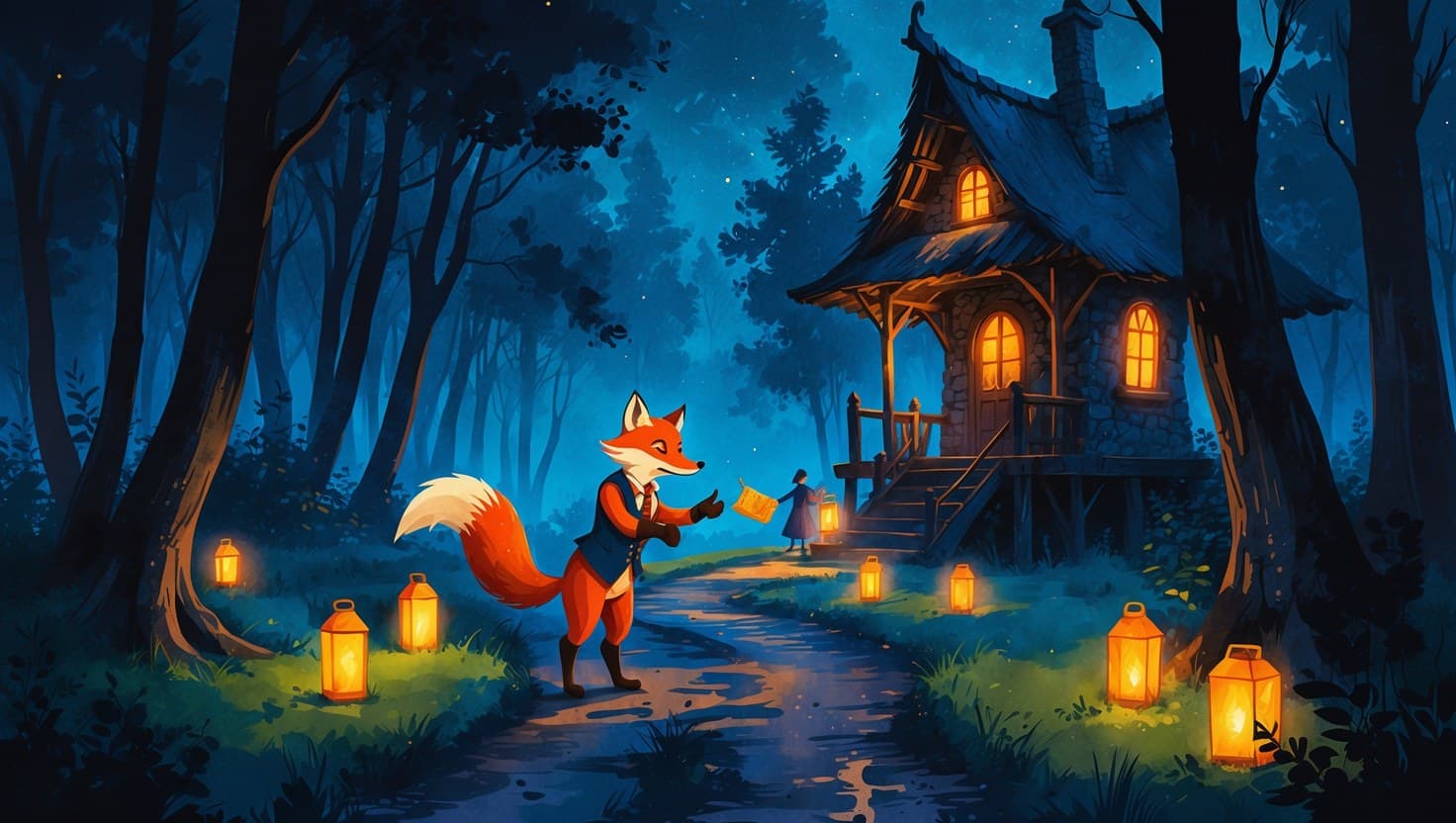
Every fairy tale campaign starts with the same excited pitch. The GM promises something different this time: an enchanted forest, a witch with a house on legs, a fox who talks in riddles and knows too much.
Three sessions later, the party is clearing rooms in a dungeon that happens to have a gingerbread texture pack.
This is the most common way a fairy tale campaign dies. Not from boredom. From gravity. D&D's default physics pull every game toward the same shape: find monster, roll initiative, loot body. If you want the storybook to survive contact with your table, the campaign needs different load-bearing rules, and you have to actually enforce them.
Here is how to run a fairy tale campaign that stays a fairy tale.
A Fairy Tale Campaign Runs on Story Logic, Not Physics
Regular fantasy settings run on cause and effect. Fairy tales run on narrative law. The genre has rules older than any rulebook, and your players already know them from childhood, which is exactly why they work at the table.
Write these into your setting as literal, enforceable laws:
- Promises bind. A spoken oath is a physical force. Breaking one has a visible cost: your shadow leaves, your name fades, the road refuses to carry you.
- Names have power. Knowing a true name gives you power over its owner. Giving yours away is a real price, not flavor text.
- Things come in threes. Three tasks, three brothers, three nights. The third attempt is always the one that matters.
- Hospitality is sacred. Guests and hosts are protected while the bread is shared. Violating that protection marks you.
- Every debt comes due. Nothing magical is free. If the price was not named, it is being saved for later.
The trick is that these laws apply to everyone, including the party. The first time a player realizes their careless "I promise" in session two is now dragging them across the kingdom in session six, the campaign changes. They start listening to the exact wording of everything. That paranoia about language is the fairy tale feeling, and no stat block produces it.
If you already build settings with hard internal rules, this will feel familiar. It is the same discipline covered in our worldbuilding guide, just pointed at narrative law instead of geography and trade routes.
Pick the Tone Before You Pick the Plot
Fairy tale covers a huge range, and tables blow up when players assumed different ends of it. Decide the tone out loud, before character creation.
The four that actually work in play:
- Whimsical. Talking animals, absurd logic, low lethality. The frog minister is late for court. Great for families and palate-cleanser games.
- Classic. Brothers Grimm played straight. Wonder on the surface, teeth underneath. Kind heroes rewarded, cruel ones punished, witches genuinely dangerous.
- Dark fairy tale. The teeth are the point. Bargains cost fingers, the woods keep what they catch, happy endings are earned at full price.
- Comedic. The genre knows it is a genre. Fractured-fairy-tale energy, tropes bent for laughs.
Any of these can carry a full fairy tale campaign. What cannot carry one is four players each privately running a different tone. The player expecting whimsy checks out when the woodcutter's children go missing for real. The player expecting Grimm rolls their eyes at the singing teapot.
Name the tone in session zero, write it at the top of the campaign notes, and let it drive every ruling. When you are unsure how a scene should go, the tone answers.
Structure Chapters, Not Dungeons
Fairy tales are short. That is a feature, and your structure should steal it.
Instead of one sprawling plot, build the campaign as a chain of chapters, where each chapter is a complete tale: a problem, a journey, a bargain or trial, a resolution. One to two sessions each. The miller's daughter needs a name by the third night. The winter queen has taken the sun and someone must fetch it back. Each chapter closes with the tale resolved and a thread left hanging.
This is close to running linked one-shots, and the craft transfers directly. If you have not built one before, start with our guide on how to run a one-shot and then chain them.
Connect the chapters through recurring powers rather than a single villain's master plan:
- The same fox shows up in every tale, always trading information, never lying, never telling the whole truth.
- Debts from chapter one get collected in chapter four, by someone who bought them.
- The witch the party robbed sends her sisters. There are three, obviously.
The campaign-level story emerges from accumulated promises, debts, and grudges instead of a plot the players can stall. This structure also survives scheduling chaos, because a missed session never strands anyone mid-dungeon. If you need seeds, several entries in our campaign ideas for new GMs bend easily toward the storybook.
Encounters That Test Wit Instead of Hit Points
Here is the hard rule that keeps a fairy tale campaign from collapsing into a dungeon crawl: almost every encounter should be solvable without initiative, and the non-combat solution should usually be better.
The wolf on the road can be fought. But the wolf would rather bargain, and the wolf knows the way through the thorns. Kill it and you have a pelt and no guide. Fairy tale encounters are negotiations wearing monster costumes.
Build them from three moves:
- The bargain. The creature wants something odd but specific: a memory of summer, the ribbon from your hair, your next lie. The fun is in the wording.
- The trial. Three tasks, a riddle, a test of kindness disguised as a beggar at the crossroads. Fairy tales test character, so let the trial actually read the character sheet's personality, not its skill list.
- The taboo. Do not look back. Do not eat the food. Do not open the last door. State the rule clearly, make the temptation strong, and let the consequences land when someone breaks it. Someone always breaks it.
Let clever solutions beat intended solutions every time. The moment players learn the singing bone can be bribed with a lullaby, they stop asking "what do I roll?" and start asking "what does it want?" That question is the whole genre.
Riddles and trials fail for the same reasons ordinary puzzles fail: one hidden answer, no feedback, the table stuck while the GM waits for telepathy. The fixes in why D&D puzzles fail apply doubled here, because a fairy tale campaign leans on this kind of challenge constantly.
Magic Items With Strings Attached
Fairy tale treasure is never a flat bonus. It is a deal with the terms printed in very small thread.
- Boots that cross seven leagues in a stride, but only ever toward home.
- A purse that always holds one more coin, minted with a face that watches you spend it.
- A cloak of perfect disguise that works until someone speaks your true name.
- A knife that cuts anything, and cannot be drawn without cutting something.
Two guidelines. First, the drawback is a story hook, not a punishment; the purse's coins are being counted by someone, and eventually they visit. Second, never hand out an item whose limitation you are not willing to enforce in play. An ignored string teaches players the strings are decorative, and the whole economy of bargains collapses with it.
Resist the urge to price items in gold. Fairy tale economies run on trades, favors, and years of service. The moment a magic mirror costs 500 gp, you are back in a regular campaign wearing a costume.
Fairy Tale Campaigns for Kids and Mixed Tables
If you have been looking for a way to bring kids, partners, or curious friends to the table, this is the genre built for it.
Fairy tales are the one fantasy framework every new player already knows. Nobody needs the difference between arcane and divine casters explained. Everyone at the table, age seven or seventy, understands that you do not break a promise to a witch.
A few adjustments make mixed-age tables sing:
- Keep character concepts to one sentence. A brave tailor. A princess who talks to birds. A knight who is secretly afraid of geese.
- Resolve most challenges through ideas, not dice. Ask "what do you do?" and reward whatever is clever or kind.
- Keep chapters short and complete. Kids want the tale to end tonight, not on a cliffhanger three weeks out.
- Let the tone lighten without going toothless. Even for young players, a fairy tale needs a wolf.
The failure mode with adults at a kids' table is checked-out parents. Story logic fixes that too, because the bargain-and-taboo game is genuinely interesting to grown-ups even when the content is gentle.
Running a Fairy Tale Campaign Without a Rules Veteran
The classic blocker remains: somebody still has to play the storyteller, improvise the fox's riddles, track who owes what to which witch, and keep the tone consistent for months. In most groups, nobody volunteers.
This is the gap AI Game Masters turn out to fit surprisingly well, and honestly better than they fit crunchy tactical play. Storybook logic is narration-first, which plays to what the technology is actually good at.
StoryRoll ships a dedicated Fairy Tale mode alongside its D&D, Sci-Fi, and Anime modes, and the design choices mirror this article. Character creation is narrative instead of stat-driven, so "a woodcutter's daughter who bargains too easily" is a complete, playable hero. Sessions are framed as chapters. You pick the tone up front, whimsical through dark fairy tale, and the AI narrator holds it. Scene art arrives in a soft watercolor style that looks like a storybook plate instead of a loading screen.
Picture the classic setup: a player promises a talking heron "any favor, later" in exchange for directions in chapter one. Because the Narrator keeps campaign memory, that promise can resurface two chapters later, in front of the queen, at the worst possible moment. That is the genre working as intended, with no GM prep behind it.
If your group has wanted this kind of game but nobody wanted to run it, that excuse is gone.
FAQ
What is a fairy tale campaign?
A fairy tale campaign is a tabletop RPG campaign built on storybook logic: enchanted forests, talking animals, binding promises, magical bargains, and quests that resolve through wit and character choices as much as combat.
What system should I use for a fairy tale campaign?
D&D 5e works if you lean on the social and exploration pillars, and the Feywild material gives you ready-made tools. Lighter narrative systems work even better because fairy tales care more about promises and choices than initiative order.
How do I keep a fairy tale campaign from feeling childish?
Play the source material straight. The original tales are full of real stakes: debts, curses, exile, and bargains that cost more than they seem. Whimsy sets the scenery, but consequences keep adults invested.
Can kids play in a fairy tale campaign?
Yes, and it is one of the best entry points into tabletop RPGs. The genre already speaks their language, character concepts stay simple, and challenges reward clever ideas over rules mastery or system knowledge.
Can an AI Game Master run a fairy tale campaign?
Yes. StoryRoll has a dedicated Fairy Tale mode where the AI narrator runs enchanted forests, talking animals, and magical quests with simple narrative characters, so nobody at the table needs to know a rulebook.
A fairy tale campaign survives on enforced story logic: promises that bind, names that cost, debts that come due, and encounters that reward wit over damage. Pick one tone, structure the game as complete chapters, and put strings on every gift. Do that, and the storybook holds. Skip it, and you are running a regular dungeon with gingerbread wallpaper.
Written by StoryRoll
Founder of StoryRoll. Building AI-powered tabletop RPGs.
Related Posts
Fairy Tale One-Shot Ideas: 10 Tales You Can Run Tonight
10 fairy tale one-shot ideas built on bargains, trials, and taboos - no homebrew setting bible required. Premises, party sizes, and tips for running each one.
How to Run a Dark Anime Campaign (Without It Turning Into Either Shonen or Shock Value)
A dark anime campaign fails in one of two directions: it plays it safe and becomes shonen with a black coat of paint, or it chases shock value and burns out in three sessions. Here's the middle path.
How to Run a Shonen Campaign (Without It Turning Into a Stat Grind)
A shonen campaign lives or dies on rivals and earned power, not bigger numbers. Here is how to keep the genre's real engine running at the table.