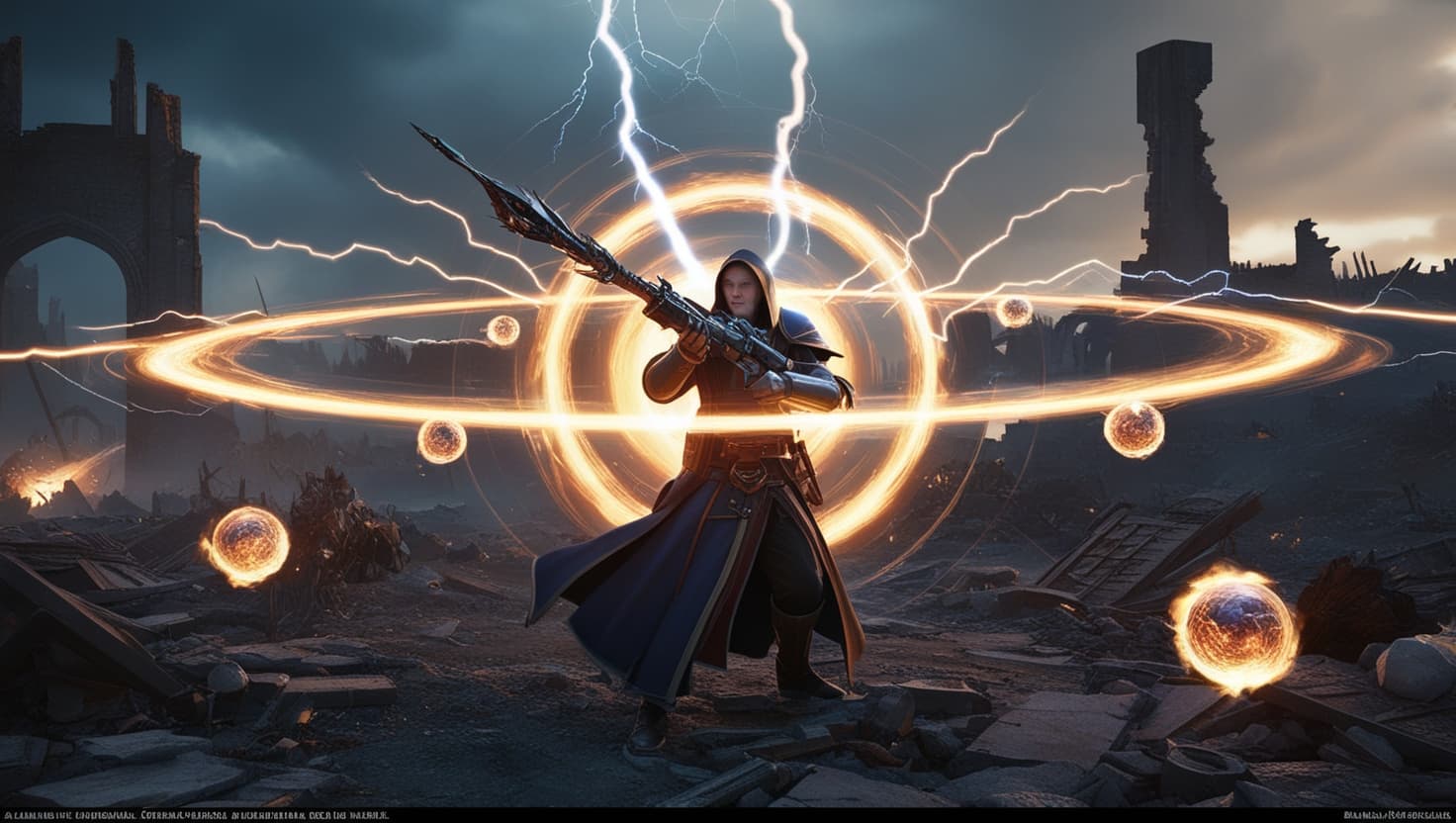
Best Evocation Wizard Build in 5e: The Blaster for AI D&D
There are Wizard subclasses that make you clever. Subclasses that make you tricky. Subclasses that let you bend reality in subtle, elegant ways.
Evocation is not one of them.
Evocation is the Wizard subclass that points at a group of enemies and says "Fireball." And then watches the AI describe exactly how much fire, how much screaming, and how much structural damage follows. It is the most straightforward path a Wizard can walk, and in AI campaigns where the GM narrates every spell with cinematic detail, it is also the most satisfying.
For the complete picture on playing a Wizard with an AI GM, see our Wizard class guide. This guide focuses on building the best Evocation Wizard specifically.
Why Evocation Shines in AI Campaigns
Sculpt Spells eliminates the biggest headache
The number one problem with playing a damage Wizard: your best spells are area effects that hit everyone, including allies. In traditional D&D, this creates table arguments. "You caught my Barbarian in the Fireball?!" "He was in melee range, I had no choice!"
Sculpt Spells ends this forever. You choose a number of creatures equal to 1 + the spell's level. Those creatures automatically succeed on the save and take zero damage. Not half damage. Zero.
AI GMs handle this flawlessly. Cast Fireball into a melee where your Fighter is surrounded by enemies. Tell the AI to sculpt around the Fighter. The AI describes fire consuming every enemy while your ally stands untouched in the eye of the storm. It's dramatic, it's reliable, and it fundamentally changes how you can use AoE spells.
Spell narration is spectacular
AI GMs describe evocation spells with the energy they deserve. A Fireball isn't just "8d6 fire damage." The AI describes the bead of light streaking from your finger, the half-second of silence before detonation, the shockwave, the aftermath. Lightning Bolt traces a line through the narration. Cone of Cold crystallizes the air visibly.
If you play a school of magic that works quietly - Divination, Enchantment - you miss out on the AI's best descriptive work. Evocation gives the AI something explosive to describe every time you cast. For a complete breakdown of every spell in this school, see our evocation spells ranking.
Damage numbers are tracked precisely
AI GMs roll damage accurately, apply saves correctly, and track HP consistently. Your Empowered Evocation bonus (add Intelligence modifier to damage) never gets forgotten. Resistance and vulnerability are always applied. When your spell kills three enemies and leaves one standing at 4 HP, you know the math is right.
When you cast a big spell, describe the casting. "I speak the word of fire and point at the center of the group" gives the AI a hook for dramatic narration. The more you invest in describing your spellcasting, the more cinematic the result.
The Optimal Evocation Wizard Build
Ability scores
Intelligence > Constitution > Dexterity > Wisdom > Charisma > Strength
Intelligence makes your spells harder to resist and adds damage via Empowered Evocation. Constitution keeps you alive and helps concentration saves. Dexterity improves your AC (critical since you have no armor) and initiative (going first to drop AoE before enemies scatter).
Using point buy: 16 Int, 14 Con, 14 Dex, 10 Wis, 8 Cha, 8 Str before racial bonuses.
Best race picks
High Elf - +2 Dexterity, +1 Intelligence, a free Wizard cantrip (take a utility one you wouldn't normally prepare), and proficiency with longswords and bows as backup weapons. The classic Wizard race for good reason.
Variant Human - Take War Caster (advantage on concentration saves, cast somatic spells with full hands) or Resilient (Constitution) for Constitution save proficiency. Both protect your concentration on sustained damage spells like Wall of Fire.
Forest Gnome - +2 Intelligence, advantage on Intelligence, Wisdom, and Charisma saves against magic. That advantage on magic saves is enormous for a squishy Wizard. Minor Illusion as a free cantrip adds utility.
Custom Lineage - +2 Intelligence and a feat. Take Fey Touched for Misty Step (emergency teleport) plus a free 1st-level Divination or Enchantment spell, without spending your prepared slots.
Spell selection: the damage toolkit
Cantrips: Fire Bolt (reliable ranged damage), Prestidigitation (utility), Minor Illusion (creative problem solving), Mage Hand or Light.
1st Level: Magic Missile (guaranteed damage, no save, no roll), Shield (reaction +5 AC), Absorb Elements (halve elemental damage), Mage Armor (AC 13 + Dex).
2nd Level: Scorching Ray (3 rays, single target damage king), Shatter (early AoE, thunder damage is rarely resisted), Misty Step (if you didn't get it from a feat).
3rd Level: Fireball (8d6 in a 20-foot radius - the spell that defines your subclass), Counterspell (shut down enemy casters).
4th Level: Wall of Fire (sustained AoE damage, battlefield control), Polymorph (emergency transform an ally or neutralize an enemy).
5th Level: Cone of Cold (8d8 cold in a 60-foot cone), Wall of Force (invincible barrier).
Quick Build: The Artillery Mage
- Race: High Elf
- Ability Scores: 16 Int (+1 racial), 14 Con, 14 Dex (+2 racial), 10 Wis, 8 Cha, 8 Str
- Must-Have Spells: Shield, Magic Missile, Scorching Ray, Fireball, Counterspell
- Level 4 ASI: +2 Intelligence (to 18)
- Fighting Distance: 120+ feet from enemies
- Playstyle: Open with AoE, sculpt around allies, use Shield when targeted, finish survivors with cantrips
Playstyle Tips for AI Campaigns
Open fights with your biggest spell
Evocation Wizards are at their strongest in round 1, before enemies have scattered. Drop Fireball on the largest cluster, sculpt your allies out, and let the AI narrate the devastation. Many encounters in AI campaigns are effectively over after a well-placed opening AoE.
Stay at maximum range
Your best damage spells have 150-foot range (Fireball) or 120 feet (Fire Bolt, Scorching Ray). Use it. Tell the AI you position yourself at the back, behind cover if available. Evocation Wizards who stand in melee are dead Evocation Wizards.
Manage spell slots aggressively
You are a resource-based class. Every fight costs spell slots that don't come back until long rest. Use cantrips (Fire Bolt: 2d10 at level 5) for weak enemies. Save leveled spells for groups and dangerous targets. Ask the AI for short rests to recover some slots via Arcane Recovery.
Sculpt Spells is your tactical identity
Don't just use Sculpt to avoid hitting allies - use it to enable aggressive positioning. Tell your Fighter to charge into a group of enemies, then drop Fireball on top of them. The Fighter takes zero damage. The enemies take 8d6. This changes your party's tactical options fundamentally.
Prepare utility spells too
Evocation is your damage school, but you're still a Wizard. Prepare Detect Magic, Identify, Comprehend Languages, or Rituals alongside your blasting spells. Branching into other schools makes you more versatile - abjuration spells keep you alive, conjuration spells give you battlefield control, and illusion spells solve problems without spending hit points. The AI creates mysteries, puzzles, and social encounters where these spells shine. Don't be a one-trick blaster.
Empowered Evocation (level 10) adds your Intelligence modifier to one damage roll of any Wizard evocation spell. This applies to Magic Missile (once per casting, to one dart) and to every single-roll AoE like Fireball. At +5 Intelligence, that's a meaningful bump to every spell you cast.
Common Build Mistakes
Ignoring Shield and Absorb Elements. You're a Wizard with d6 hit dice. Without these reaction spells, any attack that reaches you is potentially lethal. Always keep a 1st-level slot in reserve for Shield.
Casting Fireball at everything. Not every encounter needs a 3rd-level slot. Two goblins? Fire Bolt them. Save Fireball for groups of four or more. Resource management separates good Wizards from dead ones.
Forgetting concentration. Wall of Fire is incredible - but only if you maintain concentration. Don't cast concentration spells and then walk into melee range where you'll get hit.
Taking only damage spells. An Evocation Wizard with no utility is a Fighter with worse HP. Prepare at least 3-4 non-damage spells per day. The AI creates situations where Detect Magic, Fly, or Counterspell are more valuable than another Fireball.
Neglecting Arcane Recovery. Once per day after a short rest, you recover spell slots equal to half your Wizard level (rounded up). In AI campaigns with multiple encounters, this is essentially a free Fireball. Use it every adventuring day.
Evocation Wizard is the subclass for players who want to solve problems with overwhelming force - and have the AI narrate every explosion in cinematic detail. Sculpt Spells makes you the best team player in the game despite throwing around the most destructive magic.
Build around Intelligence, pick spells that cover multiple damage types and ranges, and remember that your best positioning is as far from enemies as possible. When you do fire, sculpt your allies out and let everything else burn.
Build your Evocation Wizard on StoryRoll and hear the AI describe your first Fireball. You'll understand immediately.
Try These Free Tools
Optimize your Evocation Wizard with these free resources:
- Spell List Filter — Browse Wizard evocation spells by level to plan your spellbook.
- Spell Slot Tracker — Track prepared spells and slots across multiple encounters.
- Ability Score Calculator — Max your Intelligence with point buy or standard array.
Written by Anthony Goodman
Founder of StoryRoll. Building AI-powered tabletop RPGs.
Related Posts
Best Battle Master Build in 5e: The Tactical Fighter for AI D&D
Battle Master turns every fight into a chess match. Here's how to build one that dominates AI-run campaigns - from maneuver picks to ability scores to the races that make it sing.
Best Beast Master Ranger Build in 5e: Your Companion Finally Works in AI D&D
Beast Master has always had the best fantasy in D&D - and the most frustrating execution. AI Game Masters fix that. Here's how to build a Beast Master that actually delivers.
Best Life Cleric Build in 5e: The Healer That Fights Back in AI D&D
Life Cleric is the best healer in D&D - and in AI campaigns, it's also a frontline tank that keeps the whole party standing. Here's how to build one that does both.