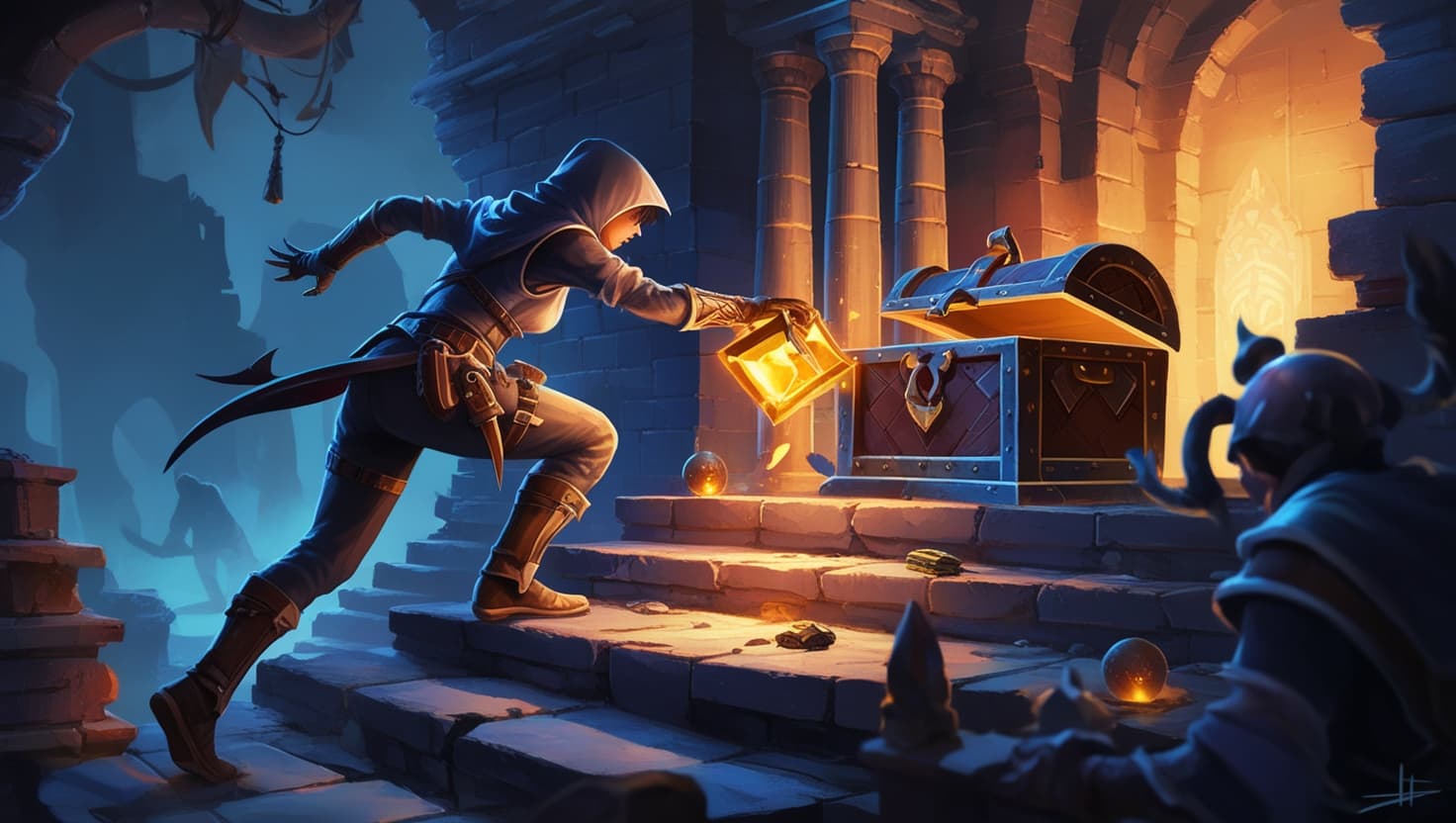
Best Thief Rogue Build in 5e: The Ultimate Explorer for AI D&D
Thief is the Rogue subclass that traditional D&D players underestimate and AI D&D players swear by.
The reason is simple: Thief features are only as good as the environment they operate in. In a traditional game, a GM who designs combat encounters as flat rooms with enemies in them is giving your Thief nothing to work with. Fast Hands doesn't matter if there are no items to use. Second-Story Work is irrelevant if there's nothing to climb.
AI Game Masters don't build flat rooms. They build rooms with rafters, chandeliers, loose flagstones, windows, balconies, crates, and unattended objects on tables. Every environment is a Thief's playground because the AI generates spatial detail by default.
If you want the full picture on playing a Rogue with an AI GM, check our Rogue class guide. This guide focuses specifically on building the best Thief.
Why Thief Excels in AI Campaigns
Environments are always interactive
The single biggest advantage Thief has in AI campaigns is that the AI never creates a boring room. Describe any location to an AI GM and it populates it with objects, surfaces, and details that a Thief can interact with. Taverns have chandeliers to swing from. Dungeons have chains on the walls and loose bricks. Guard posts have keys on belts and manifests on desks.
This means Fast Hands always has targets. Second-Story Work always has surfaces. Your toolkit is never wasted.
Stealth is consistent
Supreme Sneak (advantage on Stealth at half speed) is powerful because AI GMs apply stealth rules consistently. They track lighting, noise, guard awareness, and line of sight without getting distracted. When you invest in becoming invisible, the AI respects that investment every time.
Item interaction opens creative combat
In traditional D&D, using items in combat feels like a waste of your action. Fast Hands fixes that by making item use a bonus action. The AI tracks this correctly and rewards creative item play:
- Throw caltrops behind you as you disengage
- Drink a healing potion and still attack
- Pull a lever or open a door mid-fight
- Use thieves' tools to disable a trap while combat rages
- Pickpocket a key from an enemy you're fighting
Every one of these creates a unique narrative moment the AI narrates in detail.
Stock up on utility items before a dungeon crawl. Caltrops, ball bearings, oil flasks, acid vials, alchemist's fire - these are your bonus action arsenal. Tell the AI what you're carrying and it will remember.
The Optimal Thief Build
Ability scores
Dexterity > Wisdom > Constitution > Charisma > Intelligence > Strength
Dexterity drives everything: attacks, damage, AC, stealth, initiative, and half your skills. Wisdom fuels Perception (the king of skills) and protects against the most common saving throws. Constitution keeps you alive when stealth fails. Charisma helps with social encounters where your charm is as important as your fingers.
Using point buy: 16 Dex, 14 Wis, 14 Con, 10 Cha, 8 Int, 8 Str before racial bonuses.
Best race picks
Lightfoot Halfling - Naturally Stealthy lets you hide behind any Medium creature, including allies in combat. Lucky rerolls natural 1s. Small size rarely matters negatively for a Rogue who avoids strength-based activities. This is the stealth specialist's race.
Wood Elf - 35 feet of movement (more ground to cover while sneaking), Mask of the Wild (hide in light obscurement like foliage or rain), and Perception proficiency. The best pick for wilderness and outdoor campaigns.
Variant Human - Take Alert (+5 initiative, can't be surprised) to ensure you always act first, or Skulker (hide when lightly obscured, missed ranged attacks don't reveal position) for ranged stealth builds. The flexibility of a free feat is always strong.
Goblin - Fury of the Small adds damage once per rest, and Nimble Escape gives you Disengage or Hide as a bonus action - which means your Cunning Action can be used for other things. Small, sneaky, and mechanically efficient.
Skill selection
Rogues get four skill proficiencies plus Expertise on two. For a Thief, prioritize:
Expertise in: Stealth (your primary tool) and Thieves' Tools (you're a Thief - own it).
Proficiencies: Perception, Investigation, Acrobatics, Sleight of Hand. Investigation finds traps and clues. Acrobatics pairs with Second-Story Work for climbing and balance. Sleight of Hand works with Fast Hands for combat pickpocketing and item tricks.
Equipment priorities
- Rapier or Shortsword for melee Sneak Attacks
- Shortbow for ranged Sneak Attack when you can't close distance
- Leather armor (upgrade to Studded Leather when affordable)
- Thieves' tools (obviously)
- Burglar's Pack over any other starting pack
- Consumables: Caltrops, ball bearings, oil flasks, healer's kits (Fast Hands healing), pitons, rope
Quick Build: The Ghost
- Race: Lightfoot Halfling
- Ability Scores: 16 Dex (+2 racial), 14 Wis, 14 Con, 10 Cha, 8 Int, 8 Str
- Expertise: Stealth, Thieves' Tools
- Skills: Perception, Investigation, Acrobatics, Sleight of Hand
- Weapons: Shortsword, Shortbow
- Level 4 ASI: +2 Dexterity (to 18)
- Playstyle: Scout ahead, bypass what you can, steal what you can't, fight only when necessary
Playstyle Tips for AI Campaigns
Scout everything
Thief Rogues are the best scouts in the game. Before your party enters any room, tell the AI: "I sneak ahead to check the next area." With your Stealth expertise, you'll almost always succeed. The AI gives you a detailed layout including enemies, traps, exits, and objects - information your party can use to plan.
Climb first, fight second
Second-Story Work gives you climbing speed equal to your walking speed and extra distance on running jumps. In AI campaigns, there's almost always a high ground option. Rooftops, rafters, balconies, cliff edges - get above the fight and rain shortbow Sneak Attacks from safety.
Tell the AI explicitly: "Is there anything I can climb to get above the combat?" The AI will find something.
Make Fast Hands your signature
Every combat round, you have an action (attack), a bonus action (Fast Hands or Cunning Action), and movement. The players who get the most from Thief are the ones who use Fast Hands creatively every round:
- Round 1: Throw caltrops in the doorway behind you, attack the nearest enemy
- Round 2: Drink a potion, attack, Cunning Action disengage
- Round 3: Pick the lock on the chest mid-fight to grab what's inside, move to cover
The AI narrates each of these as distinct, exciting moments. You're not just fighting - you're doing three things at once.
Use your environment
The AI describes objects and features in every room for a reason. Chandeliers can be cut down. Tables can be flipped for cover. Windows can be escaped through. Curtains can be hidden behind. As a Thief, you interact with the environment faster and better than anyone else. Ask the AI what's in the room, then use it.
Thief Rogues pair excellently with the Healer feat. Fast Hands lets you use a healer's kit as a bonus action, effectively giving your party a bonus-action medic in a class that normally has zero healing. In solo campaigns, this can be a lifesaver.
Common Build Mistakes
Playing Thief like Assassin. Thief isn't about killing in one hit - it's about versatility and environmental mastery. If you want burst damage, play Assassin. Thief wins by doing more things per turn than any other character at the table.
Ignoring consumable items. Fast Hands is only as good as your inventory. If you don't buy caltrops, ball bearings, acid vials, and oil flasks, you're leaving half your subclass on the shelf. Stock up at every town.
Forgetting Second-Story Work. Many Thief players get so focused on Fast Hands that they forget they're expert climbers. Always look for vertical options. High ground means Sneak Attack with a shortbow from safety.
Dumping Wisdom. Perception is the most-called skill check in D&D, and Wisdom saves protect against charm, fear, and the nastiest spells. A Thief who can't spot danger isn't a Thief - they're a victim.
Not asking the AI about the environment. The AI builds detailed environments, but you need to ask about them. "What can I interact with in this room?" is a question you should be asking every single scene.
Thief is the Rogue subclass for players who want to interact with the world, not just the combat system. In AI campaigns, where every environment is packed with climbable surfaces, stealable objects, and interactive details, Thief features fire on all cylinders every session.
Build around Dexterity and Stealth. Stock up on consumable items for Fast Hands. Climb everything. Scout ahead. And ask the AI about your environment - because everything in it is a tool you can use.
Build your Thief on StoryRoll and discover what happens when every room is designed for you to exploit.
Try These Free Tools
Gear up your Thief build with these free resources:
- Ability Score Calculator — Maximize Dexterity and balance your secondary stats.
- Dice Roller — Roll Sneak Attack damage, Thieves' Tools checks, and Stealth rolls.
- Initiative Tracker — Know exactly when you act so you can plan your Fast Hands plays.
Written by Anthony Goodman
Founder of StoryRoll. Building AI-powered tabletop RPGs.
Related Posts
Best Battle Master Build in 5e: The Tactical Fighter for AI D&D
Battle Master turns every fight into a chess match. Here's how to build one that dominates AI-run campaigns - from maneuver picks to ability scores to the races that make it sing.
Best Beast Master Ranger Build in 5e: Your Companion Finally Works in AI D&D
Beast Master has always had the best fantasy in D&D - and the most frustrating execution. AI Game Masters fix that. Here's how to build a Beast Master that actually delivers.
Best Evocation Wizard Build in 5e: The Blaster for AI D&D
Evocation Wizards throw fireballs without apology. Here's how to build one that maximizes damage, protects allies, and thrives in AI-run campaigns.