The Forever DM Problem: Why AI Might Be the Answer
The r/DnD subreddit gets a new "I'm tired of DMing" post roughly every six hours. That's not hyperbole. Go sort by new and count.
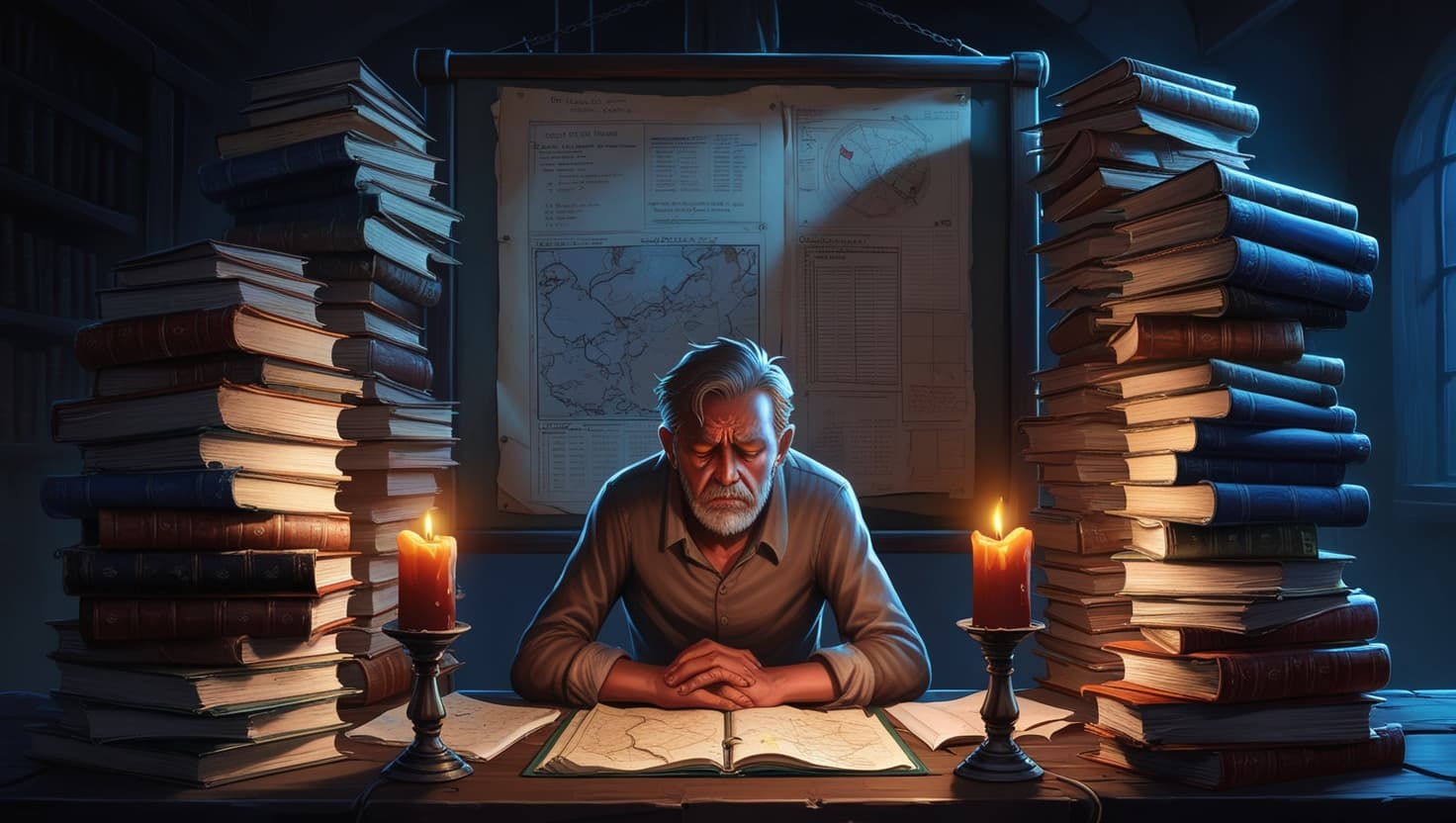
Behind each one is the same story: someone who loves D&D enough to do the hardest job at the table, every session, for months or years, while a character sheet they spent two hours writing collects dust in a desktop folder. The forever DM problem is one of the most universal experiences in tabletop gaming, and underneath the memes there's something worth taking seriously - burnout, resentment, and a quiet frustration that the person who loves D&D the most often gets to enjoy it the least.
What Being the Forever DM Actually Costs
Prep time is the obvious one. Even a "low-prep" session takes an hour or two. A proper one? Four to eight hours for a single evening of play. Encounter balancing, NPC voices, plot threads, maps, music playlists, contingency plans for when your party ignores the quest hook and opens a bakery. And that's before you deal with the scheduling problem that kills most campaigns - you're not just prepping the game, you're herding cats to make sure it actually happens.
Emotional labor is the hidden one. You're managing five different people's fun simultaneously. Mediating spotlight time. Reading the room when combat drags. Handling the player who keeps derailing things - diplomatically, because you're also friends. You're a writer, improv actor, game designer, therapist, and project manager. All unpaid. All in one night.
And then there's the cost nobody talks about: you don't get to be surprised. Ever. You know every twist. You know the dragon is in the cave. You built the maze, so you'll never get lost in it. The sense of discovery that makes D&D magical for players? You traded that away when you sat behind the screen.
The forever DM problem isn't really about finding another DM. It's structural. Traditional D&D requires one person to sacrifice their player experience so everyone else can have one.
"Just Find Another DM" and Other Useless Advice
Finding another DM is hard because DMing is hard. Most players don't want to do it, and that's fair. Massive time commitment, steep learning curve, and your reward is watching other people have the fun you engineered.
Even when someone volunteers, results are mixed. They run a one-shot that's fine but don't commit to a campaign. They try and get overwhelmed after three sessions. Their style clashes with what the group expects, and everyone quietly asks you to come back.
None of that is their fault. DMing takes years to develop, and not everyone wants to invest those years.
So you sit back down behind the screen. Again. Because the alternative is nobody plays at all.
Where AI Dungeon Masters Actually Fit
An AI can't replace your human DM. The improvisation, the emotional intelligence, the way a great DM pivots on a bad read - that's human territory, and probably will be for a long time.
But "can AI replace a DM?" is the wrong question. The right one: can AI give the forever DM a night off?
Increasingly, yes.
AI dungeon masters can run sessions that are genuinely fun. Handle combat encounters. Generate responsive NPCs. Adapt to player choices in real time. Good enough that your group can play on a Tuesday night while you sit on the other side of the screen with a character you actually get to play.
The current generation of AI DM tools varies in quality, but the best ones handle the mechanical side competently and generate narrative that feels responsive rather than scripted. They're not delivering the emotional gut-punch your human DM lands when the villain turns out to be your mentor. But they can run a solid dungeon crawl, a mystery one-shot, or a sandbox session that lets everyone at the table - including the person who's always running things - just play.
The Real Solution Isn't Replacement
The interesting thing about AI DMs isn't replacement. It's changing the economics.
Right now: one person does all the work, or nobody plays. That's a brutal deal. But if an AI can handle even half the sessions - the casual ones, the between-arc one-shots, the weeks when the forever DM is exhausted or traveling - suddenly the load distributes in a way that never existed before.
Picture this: your group plays every two weeks. One session, you run your campaign with all the narrative depth and personal touches only a human DM provides. The other session, an AI runs something lighter. A dungeon delve, a mystery, a one-shot in a different setting. You get to play your character. You get to be surprised by plot twists. You get to roll a natural 20 and feel the rush instead of narrating someone else's.
That's not AI replacing you. That's AI giving you your hobby back. (For the full breakdown: AI DM vs Human DM - an honest comparison. And if you're wondering whether you need an AI that assists your DMing or one that replaces it entirely, see AI copilot vs AI Dungeon Master.)
Start small. Have your group try one AI-run session as a palette cleanser between campaign arcs. No pressure, no commitment. If it works, great. If not, you've lost one evening instead of restructuring your whole schedule.
The Part Where You Actually Get to Play
Every forever DM fantasizes about the same moment. Someone asks "what do you want to do?" and for once, the answer is yours to give. Not as the voice of every NPC. Not as the rules arbiter. As a player, making a choice, genuinely not knowing what happens next.
That's why forever DMs keep building characters they never play. It's the dream.
AI dungeon masters won't make you cry with a character death or land a perfectly timed NPC pun. But they're good enough to give you something you might not have had in years: a seat on the other side of the screen.
Try These Free Tools
If you are stuck behind the screen, these tools can cut your prep time and free up energy for actually enjoying the game:
- Encounter Calculator — Auto-balance encounters by party level so you spend less time on math and more time on story.
- NPC Name Generator — Pull up a fitting NPC name in seconds instead of stalling mid-session.
- Backstory Generator — Finally build out that character sheet collecting dust with a detailed backstory you can use when you get to play.
Frequently Asked Questions
What is a forever DM?
A forever DM is a player who always runs the Dungeon Master role in their D&D group because no one else is willing or able to do it. They prepare sessions, run NPCs, manage rules, and create the world - often at the expense of ever playing a character themselves. The term reflects both the commitment and the burnout that comes with being the group's only DM.
How do I stop being the forever DM?
Options include rotating DM duties (each player runs a one-shot between campaign arcs), using AI dungeon master platforms for some sessions so everyone plays, joining a second group as a player, or playing solo RPGs like Ironsworn during off-weeks. The most realistic approach combines several of these rather than expecting one person to fully take over.
Can an AI dungeon master run a game for my group?
Yes, though with caveats. AI DMs handle mechanics, NPC dialogue, and narrative adaptation well enough for enjoyable sessions. They struggle with long-term emotional storytelling, reading player energy, and complex multi-NPC social scenes. Best used for one-shots, dungeon crawls, and between-arc sessions rather than as a permanent replacement for a human DM.
The forever DM problem is structural, not personal. D&D requires someone to sacrifice their player experience, and until recently there was no way around that. AI dungeon masters don't solve the whole problem - but they solve the part that matters most: giving you a night off. If you've been running every session while a character sheet gathers dust, try StoryRoll for free and see what it feels like to just play.
Still DMing? Make it easier: how to be a better DM, how to run a great one-shot, or how to write a campaign.
Written by Anthony Goodman
Founder of StoryRoll. Building AI-powered tabletop RPGs.
Related Posts
How to Schedule D&D Sessions When Your Group Keeps Cancelling
Your D&D group keeps cancelling because the campaign has no operating system. Here's how to use fixed nights, quorum rules, and backup sessions to keep playing.
The DM Shortage Is Real - And the Data Proves It
50 million people have played D&D. Only 1 in 6 ever DMs. We scraped r/lfg, analyzed the numbers, and mapped the structural crisis keeping millions from playing.
Best AI for D&D in 2026: ChatGPT vs AI Dungeon vs StoryRoll and More
We compared the best AI tools for playing D&D in 2026 - from ChatGPT to purpose-built platforms. Here's an honest breakdown of what each one actually does well.