Anime Power System Ideas: How to Build an Original One (Not a Reskin)
Every homebrew anime campaign has the same origin story. Session one, someone pitches a power system with a cool name and a rough idea of what it does. By session five, it is just "my character's special attack," used the same way every fight, and nobody at the table could explain the rule behind it if asked. The genre didn't get boring. It never had the four things it needed to carry a whole campaign.
This is a framework for building one that does, plus what the anime genre's actual signature powers, the ones people still argue about online years later, get right that most homebrew versions skip. If you're deciding what to run it in first, our shonen campaign guide and the darker end of the genre both lean hard on one doing real work.
What Nen, Stands, and Breathing Styles Get Right
Before building your own, it helps to look at why certain anime power systems have stayed interesting long after the shows that introduced them. They were not just cool to look at. They were built with rules that created tension.
- Hunter x Hunter's Nen ties a power's strength directly to the restriction required to use it. A stronger ability demands a stricter personal rule to activate. The power and its cost are the same mechanic.
- JoJo's Stands give every user a power that is a physical extension of who they are, with one clear ability instead of a open-ended toolkit. The limitation is the point: a Stand that could do anything would mean nothing.
- Demon Slayer's Breathing Styles are a lineage, not a free-for-all. Each style descends from an original, which gives new abilities a place to come from instead of appearing out of nowhere.
The common thread: a trigger, a cost, and a visual identity that makes using the power feel different from everything else that happens in a session. Strip any one of those out and what is left is just a special attack with a name.
None of this requires a fictional IP you can borrow wholesale. The goal is a system built the same way these were, not a system that reuses their names.
The Four Fields Every Original Power System Needs
Whatever your campaign's genre, one that survives past the first few sessions needs these four parts answered before anyone activates it for the first time.
- Term. One name the whole table will say out loud, repeatedly, for the life of the campaign. If it is clunky to say, it will get shortened to something generic within a month.
- Lore. One or two sentences on where the power actually came from, tied to your world's own history or conflict, not a floating magic system that could belong to any setting.
- Activation trigger. What causes it: extreme emotion, protecting someone, a near-death moment, a specific ritual. A power that just turns on whenever a player wants it has no dramatic weight.
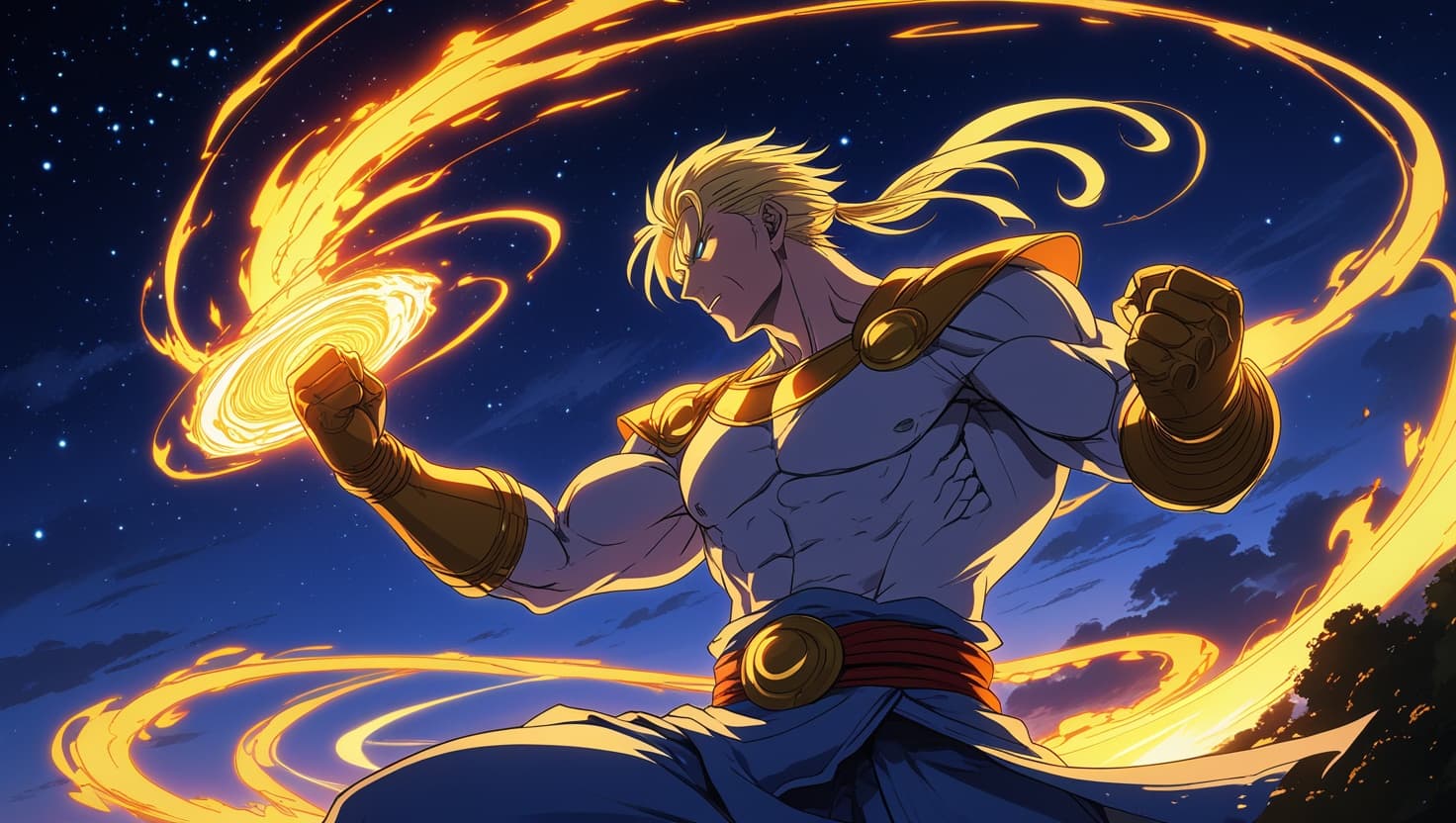
- Visual signature. What it looks like when it happens: aura color, a transformation, an environmental effect. This is what the Game Master (or GM) describes in detail every time it fires, and it is what makes an activation read as an event instead of a stat bonus.
Answer all four before session one, write them down somewhere the table can see, and you have one that can carry a campaign. Skip the trigger or the visual and you get what most homebrew systems end up as: a number that goes up.
Build the Term From Your World, Not From the Genre
The fastest way to make a power system feel original is to pull its name from something specific to your campaign's own setting instead of a genre-standard word. "Mana," "ki," and "aura" are all serviceable, and all instantly forgettable, because they belong to every fantasy setting at once rather than yours specifically.
Look at what your world already has: a founding event, a local legend, a geographic feature, a faction's private vocabulary. A power born from a war your world's history remembers, named after the thing that war destroyed, reads as original even if the underlying mechanic (a strength boost under extreme stress, say) is a familiar shape. The lore is doing the work the name alone can't.
Give It a Real Cost, Not Just a Trigger
A trigger tells you when the power turns on. A cost tells you why it can't turn on all the time. Skip the cost and the power stops being a power and becomes a free upgrade, which is the fastest way to flatten the tension it is supposed to create.
The cost does not need to be complicated. It can be as simple as:
- Physical: it burns the user's stamina fast enough that it can only run for a scene, not a whole session.
- Emotional: it only activates under genuine extreme feeling, not on command, which means a player can't just decide to use it whenever convenient.
- Social: using it in front of the wrong people reveals something the character was hiding.
- Narrative: every use edges the character closer to a consequence the table already knows is coming.
Whichever you pick, the cost should matter to the specific character using it, not just be a flat mechanical tax. That is the difference between a power system the table remembers and one that just sits on a character sheet. Building this alongside the character's actual archetype helps too; our anime archetype guide has a rundown of the roles it usually needs to serve.
Common Mistakes That Collapse a Power System Early
- Reskinning an existing system and hoping nobody notices. Players who watch anime will notice. If the term, trigger, and visual all map one-to-one onto Chakra or Quirks, it reads as a reskin even with a new name slapped on.
- No ceiling. If the power can escalate indefinitely with no stated limit, every fight past the midpoint of the campaign becomes a numbers contest instead of a story beat.
- Everyone gets a different system. One shared power system with different personal expressions gives the table a common vocabulary. Five unrelated magic systems for five characters means nobody, including the GM, can keep the rules straight by session ten.
- The visual description is an afterthought. If the power's visual signature isn't established early, there is nothing consistent to narrate when it activates, and it starts blending into every other combat description.
How StoryRoll's Anime Mode Handles This
StoryRoll's Anime mode builds a version of this framework into world setup itself. When an Anime campaign's world is generated, the Game Master creates one original power system for that specific world: a term, a lore explanation, an activation trigger, and a visual description, all grown from that world's own premise, factions, and conflict rather than picked from a template. The one hard rule: it is barred from ever reusing an existing anime term. No Saiyan, no Quirk, no Jutsu, no Bankai, no Nen. If the result would be recognizable as someone else's IP with a new label, it doesn't ship.
Once a world has one, the Game Master treats it as a recurring character in its own right. It gets named by its own term during dramatic moments, and a power-up gets the extended, cinematic narration a shonen training-arc payoff or a magical-girl transformation sequence actually deserves, instead of being folded into a one-line combat description. The system also reads the campaign's anime sub-genre (shonen, isekai, mecha, or magical girl) and leans its conventions that direction, so a mecha world's signature power feels mechanically and tonally different from a magical-girl one even when both are built from the same four fields underneath.
An anime power system holds up past the first few sessions when it has a term worth repeating, lore pulled from your own world instead of the genre's toolbox, a real trigger, and a cost that matters to the character using it. Borrow the structure anime's best power systems already proved out. Just don't borrow the names.
Looking for a scenario to test one in? Start with a one-shot instead of committing a full campaign to something untested, or read what an AI Game Master actually is if you're new to running anime at the table this way.
FAQ
What makes a good anime power system?
A good one has four load-bearing parts: a term the table can say out loud, lore that explains where it came from, a trigger that decides when it can be used, and a visual signature that makes activating it feel like an event. Miss any one of those and the power either goes unused or stops meaning anything.
How do I make an anime power system original instead of a copy of an existing one?
Ban yourself from naming existing anime terms outright (no Chakra, Quirks, Jutsu, Bankai, or Nen), then build your term from your own world's lore instead of a genre trope. If the name, trigger, and cost are all pulled from your campaign's own setting and conflict, it will not read as a reskin even if the underlying mechanic is familiar.
Does a power system need a cost or weakness to work?
Yes. An anime power with no cost or ceiling collapses the tension immediately, because nothing is ever at stake when a character uses it. The strongest systems in the genre, Nen's proportional constraints among them, get their drama from what it costs the user, not just what it lets them do.
Can an AI Game Master run a custom anime power system?
Yes. StoryRoll's Anime mode generates one original power system for each world during setup, built from that world's own premise, factions, and conflict, and explicitly barred from reusing existing anime terminology. The Game Master then narrates it by name at dramatic moments and gives power-up scenes the extended, cinematic narration they need.
Should every character share the same power system?
In most anime, yes, one signature power with different expressions per character works better than a different magic system for each person. It gives the table a shared vocabulary (everyone knows what "awakening it" means) while still leaving room for each character's version to look and feel different.
What's the difference between a power system and a magic system?
A magic system is usually a ruleset: spell lists, mana costs, schools of magic. An anime power system is closer to a single signature ability with a lore explanation, an emotional or physical trigger, and a visual identity, built to be narrated as a dramatic beat rather than looked up on a character sheet.
Written by StoryRoll
Founder of StoryRoll. Building AI-powered tabletop RPGs.
Related Posts
How to Run an Isekai Campaign (Without It Turning Into Generic Fantasy by Session Five)
An isekai campaign lives or dies on the gap between two worlds, not the status screen. Here is how to keep that gap running instead of going generic.
How to Run a Mecha Campaign (Without It Turning Into a Vehicle Combat Spreadsheet)
A mecha campaign lives or dies on the pilot inside the machine, not the hardware. Here is how to keep the genre's real stakes running at the table.
How to Run a Dark Anime Campaign (Without It Turning Into Either Shonen or Shock Value)
A dark anime campaign fails in one of two directions: it plays it safe and becomes shonen with a black coat of paint, or it chases shock value and burns out in three sessions. Here's the middle path.