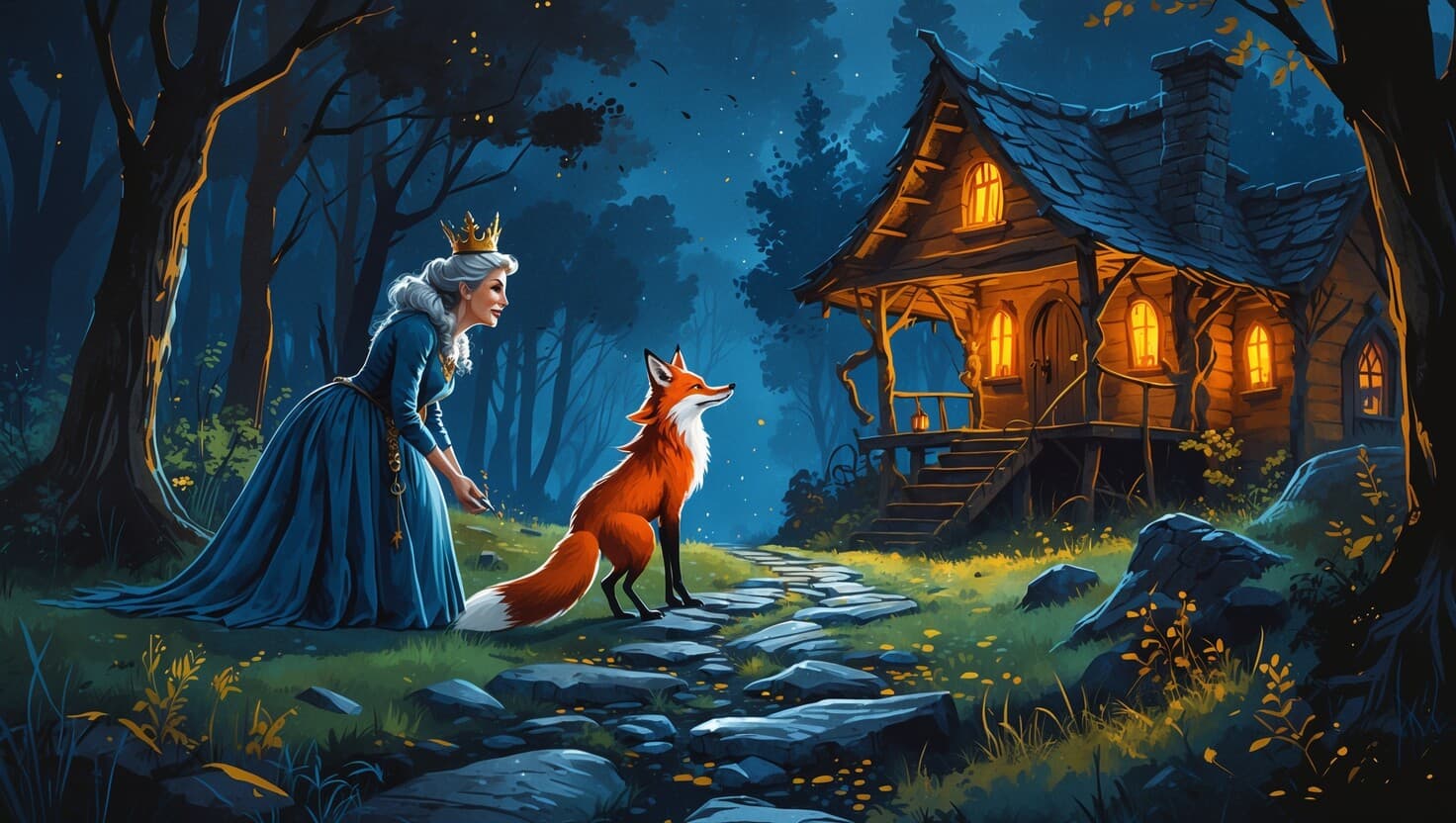
Fairy Tale Villain Ideas: 8 Classic Archetypes and How to Run Them
Search for D&D villain advice and you'll get the same checklist every time: give them a motivation, show their cruelty on screen, make them sympathetic, reveal them slowly. All true, all useful, and none of it fairy tale specific. A dragon with a tragic backstory is still a dragon. A fairy tale villain needs something else: a rule.
The witch doesn't just want to eat children. She wants the exact terms of the bargain honored, down to the letter. The queen doesn't just hate her stepdaughter. She needs the mirror to say she is fairest, every single time, or the whole structure of her identity collapses. They run on a law the party can learn, which is exactly what makes them beatable in a way a stat block alone never is.
Here are 8 classic fairy tale villain archetypes pulled from the folklore that actually invented them, with the bargain or rule each one runs on and how to bring it to your table.
- The Wicked Stepparent - favors one child over another, stakes rise with each slight
- The Deal-Maker - a bargain with fine print nobody reads twice
- The Vain Monarch - needs to hear they are the fairest, strongest, or first
- The Witch in the Woods - a cottage, a debt, a price that was never about hunger
- The Trickster Beast - a fox or wolf who never lies, just never tells the whole truth
- The Usurper - stole a throne, a name, or a face, and needs you to believe it
- The Giant or Ogre - size as control over a toll or a resource, not a monster to grind through
- The Beast Who Isn't One - cursed, not cruel, and the real villain is somewhere else
The Wicked Stepparent
The oldest archetype on this list, and still the most useful one, because the threat is never physical. A wicked stepparent controls resources, attention, or standing, and uses all three unevenly. Cinderella's stepmother doesn't need a weapon. She has the household.
The rule: favoritism has a visible pattern. One child gets the inheritance, the chores, the blame; another gets everything.
The hook: the party's Hero is the disfavored child, or is hired by one, and the stepparent's cruelty escalates only when challenged directly - which means confronting them head-on usually makes things worse before it makes them better.
How to run it: play the stepparent as reasonable in every individual scene. The horror is cumulative, not sudden. Let the Hero win by changing who holds power in the household, not by fighting the stepparent at all - exposure in front of the right audience usually lands harder than a blade.
The Deal-Maker
Rumpelstiltskin is the template: a figure who can solve your exact problem, for a price you will regret later and agree to anyway. The deal-maker never lies and never needs to. The terms are stated plainly, and the mark hears what they want to hear instead.
The rule: the bargain's wording is binding, exact, and always has a loophole the deal-maker didn't advertise.
The hook: a Hero already in debt to the deal-maker from a previous session, or a party racing to learn a name, a true price, or an escape clause before the deadline the deal specified.
The twist: the deal-maker loses to precision, not violence. A name said aloud, a clause read backward, a promise fulfilled in a way that was technically true but not what was meant. Reward players who ask to see the exact terms again.
The Vain Monarch
The queen with the mirror, retold a hundred ways. A vain monarch's power depends on being told something specific and will go to real lengths to keep hearing it - fairest, strongest, first-born, chosen. Threaten that one sentence and you threaten the whole crown.
The rule: the vain monarch's authority is performative. It needs an audience and a confirming voice (a mirror, an advisor, a crowd) to function.
The hook: a Hero who can present a genuine threat to the monarch's claim - more beautiful, more skilled, more beloved - without lifting a weapon, which makes the monarch's panic entirely political instead of martial.
How to run it: let the court around the monarch matter more than the monarch's own stats. Isolate them from their confirming voice and the throne becomes a lot less secure than it looked.
The Witch in the Woods
Not a monster who happens to live in a cottage. A witch's cottage is the trap, built specifically to look safe to whoever is lost, hungry, or desperate enough to knock. Hansel and Gretel's witch, the fairy godmother who turns predatory, the crone at the crossroads - all the same shape, different sugar coating.
The rule: the witch's price is disclosed late and framed as fair. Shelter for a night. A favor for a favor. A name, freely given, that turns out to matter later.
The hook: the party needs something only the witch can provide - a cure, a map out of the woods, a way to break someone else's curse - and the witch is genuinely willing to help, for a price the party agrees to before they understand it.
How to run it: never make the witch obviously evil on first contact. The gingerbread should look exactly as appealing as it's supposed to. Let the horror land when the bill comes due, not before.
The Trickster Beast
The talking fox, the wolf in grandmother's bed, the cat who makes a miller's son a marquis through lies that are also somehow true. A trickster beast villain never states an outright falsehood - it just arranges the truth so the listener draws the wrong conclusion on their own.
The rule: everything the trickster says checks out afterward. The deception is in omission and framing, never in a lie that can be caught.
The hook: the party relies on the trickster's information for several sessions before anyone thinks to question the gaps, by which point they're committed to a plan the beast engineered from the start.
How to run it: when players finally catch the trick, let them replay the conversation in their heads. Every line should hold up under re-reading - that's what separates a trickster from a liar, and it's what makes the reveal satisfying instead of cheap.
The Usurper
A stolen throne, a stolen face, a stolen name - the usurper villain needs everyone to believe the lie is the truth, which makes them obsessive about anyone who remembers otherwise. The real king's loyal huntsman, the true bride replaced at the altar, the goose girl swapped for a false princess.
The rule: the usurper's claim depends entirely on witnesses believing it. Every person who knows the truth is a loose end.
The hook: the party meets someone with proof - an old nurse, a ring, a geese who speak when nobody else is listening - and has to decide whether to act on it before the usurper finds that witness first.
The Giant or Ogre
Size as a structural problem, not a monster to grind down in combat. A giant villain's threat is usually about what they control - a bridge, a beanstalk, a toll road, a captive bride - rather than how hard they hit. Jack's giant guards a fortune nobody else can reach. The ogre at the bridge decides who crosses and who doesn't.
The rule: the giant's power is tied to a location or a possession, not just a body. Remove the beanstalk, the harp, the golden eggs, and the threat mostly evaporates.
How to run it: let clever Heroes solve a giant encounter without a straight fight - sabotage, trickery, or simply outrunning something that's slow because it's enormous. Combat should be one option among several, not the obvious one.
The Beast Who Isn't One
The cursed prince, the bear who was once a man, the monster who turns out to be the actual victim of the story. This archetype works best as a late reveal or a dual-villain structure: the "beast" everyone fears is cursed, not cruel, and the real antagonist is whoever cast the curse and benefits from it staying in place.
The rule: the beast's actions look villainous from outside the curse and sympathetic from inside it. The party's judgment of them should shift as they learn more.
How to run it: resist resolving this one with a fight. The curse breaks through an act of recognition, sacrifice, or a bargain kept - not through damage. Save your actual combat-ready villain for whoever is benefiting from the curse staying active.
Why Fairy Tale Villains Need a Rule, Not Just Motivation
Standard villain advice says: give them a reason, show their cruelty, make them sympathetic. All correct, and none of it explains why a wicked queen feels different from a bandit captain with a grudge. The difference is that this kind of villain's evil has terms. It is bound by something - a bargain, a vanity, a hunger with a pattern - and the party wins by learning those terms better than the villain expects.
This matters for prep, too. You don't need a full stat block and a lair to run a memorable one. You need one sentence describing the rule they operate by, and the discipline to never break that rule yourself, even when it would be convenient. A deal-maker who suddenly lies to save face stops being a deal-maker. A vain monarch who stops caring what the mirror says stops being dangerous in the way that matters.
Remember the oldest trick in fairy tale writing: no villain thinks of themselves as the villain. The stepmother believes she's protecting her own children in a world that won't protect them otherwise. The witch believes the price was always fair, stated plainly, agreed to freely. Play that belief straight, and your table will remember the villain's logic longer than they'll remember any single combat round.
If you want these archetypes to show up with full narrative weight instead of a rules-light placeholder, StoryRoll's Fairy Tale mode runs the bargain's exact wording, the mirror's exact phrasing, and every NPC's memory of what was promised, across whimsical, classic, comedic, or dark fairy tale tones. You describe what your Hero does. The Narrator keeps the villain's rule consistent from the first scene to the last page - including the part where somebody says a name out loud at exactly the wrong moment.
For premises built around these villains, pair this with 10 fairy tale one-shot ideas or the full breakdown of how to run a fairy tale campaign without it sliding back into a dungeon crawl. If you're building the Hero side of the table first, fairy tale character archetypes covers the Trickster, the Youngest Child, and the Wise Crone as player-facing roles instead of antagonists. And general NPC craft - voice, motivation, memorability - still applies once the bargain is set; see creating memorable NPCs for the broader version of this advice.
A fairy tale villain doesn't need a bigger stat block than anything else in your campaign. It needs a rule that never bends - a bargain's exact wording, a vanity that must be fed, a hunger that follows a pattern - and a party clever enough to use that rule as the weapon instead of a sword.
Pick one of these 8 archetypes, write down the one sentence that governs how they operate, and don't break it even when the plot would be easier if you did. That discipline is the entire difference between a forgettable bandit with fangs and a witch your table will still be talking about next year.
FAQ
What makes a good fairy tale villain?
A good fairy tale villain runs on a rule, not just cruelty - a bargain with exact wording, a vanity that can be flattered, a hunger that follows a pattern. Fairy tale antagonists work because the terms of their evil are knowable, which gives the party something to out-think instead of just outfight.
Are fairy tale villains different from regular D&D villains?
Yes. A standard D&D villain usually wants territory, power, or revenge, and the party stops them with a sword. A fairy tale villain operates inside a law - a promise, a riddle, a debt - and the party usually beats them by understanding that law better than the villain expects anyone to.
Can a fairy tale villain be sympathetic?
The best ones are. A stepmother protecting her own children at a rival's expense, a dealmaker who has never once broken a contract, a queen who was promised beauty would be enough - all of these read as monstrous and understandable at the same time, which is more memorable than pure malice.
How do I make a fairy tale villain feel dangerous without turning the game dark?
Keep the danger in the terms, not the violence. A witch who turns people into animals is scarier through what she takes (a name, a voice, a firstborn) than through damage rolls. Dial the tone with StoryRoll's whimsical, classic, or dark fairy tale settings and the same archetype reads as a fable or a nightmare.
What's the twist that keeps a classic fairy tale villain from feeling generic?
Give the villain a rule they never break, then have the party win by using that rule against them instead of around it. Rumpelstiltskin loses because his name gets said aloud, not because someone hits him harder. The twist is always inside the bargain, not outside it.
Written by StoryRoll
Founder of StoryRoll. Building AI-powered tabletop RPGs.
Related Posts
Fairy Tale RPG Character Archetypes: Build a Hero Without a Rulebook
The fairy tale RPG character archetypes that actually carry a story, pulled from the folklore that invented them, and how to build one without a class list.
D&D Worldbuilding: How to Build a Campaign Setting That Actually Gets Used
Most homebrew worlds die in a Google Doc. Here's how to build a D&D campaign setting that survives contact with players - from maps and factions to the stuff you should never prep in advance.
Anime Power System Ideas: How to Build an Original One (Not a Reskin)
Every homebrew anime campaign starts strong and ends up as Naruto with the names changed. Here is how to design an original power system that holds up past session three.