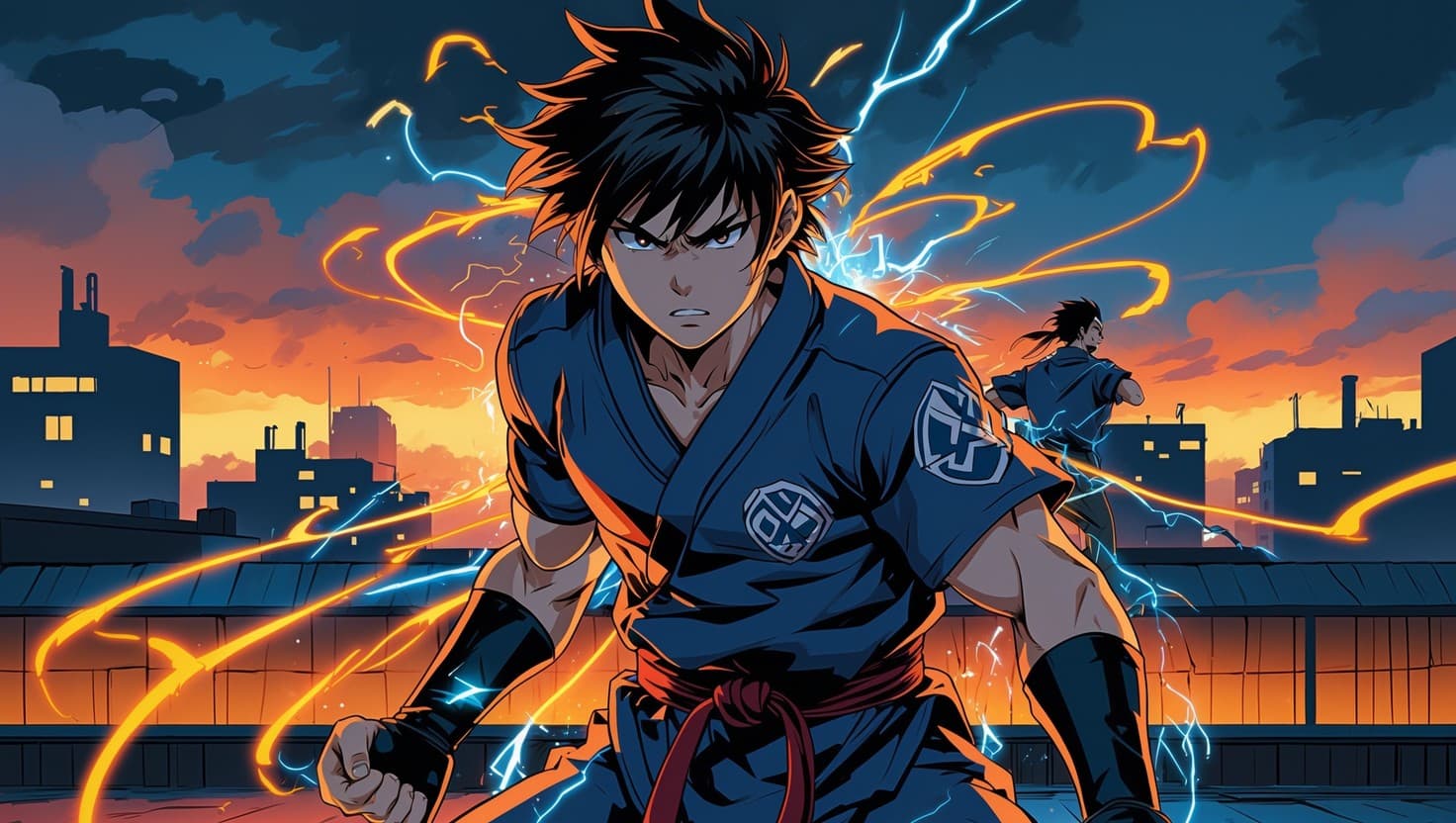
Your Isekai AI Roleplay Doesn't Have a Character Sheet
Ask an isekai or anime AI roleplay app what your character's stats are, and most of them have no answer. Not because the answer is complicated. Because there isn't one.
That's not automatically a flaw - plenty of these apps were built to do something else entirely, and they do it well. But if you've been chatting with an isekai AI character for weeks and you've started wondering why nothing you do seems to actually change anything, this is why: you've been in a conversation, not a game.
The distinction matters more here than in most genres, because isekai and shonen stories are specifically built around stakes and earned growth. A protagonist summoned to another world, or a trainee working toward a rematch, only has a story worth following if failure was genuinely possible along the way.
What "Character Sheet" Actually Means Here
Nobody's asking for a spreadsheet. The question is simpler: does anything about your character persist and change based on what happens?
A real RPG structure means:
- Attributes that move. Your character gets stronger, faster, or more capable in ways the story can point back to.
- Outcomes that aren't guaranteed. A risky plan can fail, and failing changes the scene instead of quietly resolving in your favor.
- Memory that survives more than one exchange. The rival from episode two is still the rival in episode ten, with the history intact.
A quick gut check: if you asked your current AI roleplay character "what have I actually gotten better at," could it give you a real answer, or would it just tell you that you've grown "so much" without anything concrete behind it?
Where Isekai and Anime Roleplay Apps Genuinely Excel
Credit where it's due. Apps built specifically for this audience are good at voice and immersion in ways general-purpose tools aren't. A character stays in character. The world has texture and internal consistency. Dialogue feels tuned to the genre's specific rhythms - the banter, the internal monologue, the dramatic pause before a reveal.
If what you want is a consistent character to talk to, this category solves that problem well. That's a real, legitimate use case, and it's not the thing this argument is about.
Where They Fall Short
The gap shows up the moment you want a choice to matter instead of just being acknowledged.
Ask a chat-style character to fight a rival, and the scene usually resolves however the prose decides it should - often in whatever direction keeps the conversation pleasant. There's no roll standing between your decision and the outcome, which means there's no real chance you lose. A training arc without real stakes is just narration describing growth, not growth you earned through failure and adjustment.
This is the "yes, and" problem showing up in a different genre than usual. A system trained to keep the conversation agreeable will let your plan work more often than not, because disagreement risks the reader closing the app. That's a reasonable choice for pure chat. It's a bad fit the moment you want a story where losing is actually possible, because a genre built on stakes cannot deliver stakes if the outcome was never really in question.
Chat roleplay: responds to what you type, stays in character, keeps the conversation going.
Story generator: adds narrative momentum and pacing on top of chat.
AI Game Master with real mechanics: connects the story to a character that changes, dice that decide outcomes, and consequences that carry forward.
This is the same gap StoryRoll has written about for the D&D audience in AI tabletop RPGs need more than a chatbot in a cloak - it just hasn't been made yet for isekai and anime specifically, even though the audience runs into the same wall.
What Real Mechanics Add to a Shonen or Isekai Story
The genres this audience cares about are, structurally, built on stakes and growth. A shonen protagonist's training arc only lands if they were genuinely weaker before it. An isekai protagonist's first real victory only means something if the fight could have gone the other way.
StoryRoll's Anime mode builds a full narrative structure around that: your story is a Series, your character is a Protagonist, sessions are Episodes, and the overarching plot threads are Arcs. Character creation is narrative rather than stat-heavy, but growth is real and tracked - your Protagonist's Power actually develops through the story instead of the narration simply asserting that it has.
Five tone options cover the range the audience actually wants: shonen for training-arc power fantasy, isekai for the summoned-to-another-world structure, mecha for giant-robot stakes, magical girl for transformation-and-found-family stories, and dark anime for higher-stakes, higher-consequence tellings of any of the above.
None of this requires you to learn a rules system before you start. You describe your Protagonist and what they want, the same way you would in any of StoryRoll's narrative-first modes, and the mechanics work underneath without turning into homework.
Picture a Training Arc, Done Right
Here's roughly what a shonen-tone Episode looks like when growth is actually tracked rather than just narrated.
Your Protagonist loses badly to a rival early in the Series - not a near-miss, a real loss that changes how later scenes treat them. Over the following Episodes, they train, and the story tracks what specifically improved: a technique refined, a weakness addressed. When the rematch comes, the outcome isn't predetermined by the plot wanting a satisfying ending. It's contested, and the earlier loss is part of why the eventual win means something.
That's the difference a character sheet makes, even an invisible one. The training arc has stakes because the first fight actually had a losing outcome, not just a narrated setback that never really threatened anything.
What to Check Before You Pick an App
A short list of questions that separate a chat experience from a real one, regardless of which specific app you're looking at:
- Can a plan actually fail? If every clever idea works, there's no game underneath the prose.
- Does growth get tracked, or just asserted? "You've become so much stronger" is a sentence. A tracked change in what your character can do is a mechanic.
- Does the story remember what happened three sessions ago? Not just the last message - the rival's grudge, the promise you made, the fight you lost.
- Is there anything resembling a roll or a check? It doesn't need to look like a d20. It needs to exist.
- Would the story be different if you'd made a worse decision? If the answer is no, nothing you do is actually a decision.
None of this is a knock on any specific app by name. It's a filter for figuring out, quickly, whether what you're using is built for a story with real stakes or a conversation with a consistent character. Both are valid. Only one of them is a game.
Common Misconceptions About This Comparison
"Mechanics ruin the immersion." Done well, they're invisible. You never see a stat block; you see a fight that could have gone either way, which is more immersive than a fight you already know you'll win.
"I just want to chat with my favorite kind of character." Then a chat-focused app is the right tool, and there's no need to switch. This argument is for the specific reader who's noticed that nothing they do seems to actually change anything.
"Anime settings are too flexible for real rules." The opposite is usually true. Shonen, isekai, mecha, and magical girl are all built on a promise that effort and stakes are real. Mechanics are what deliver on that promise instead of just gesturing at it.
Isekai and anime AI roleplay apps have gotten very good at voice, tone, and consistency. What most of them still lack is a character sheet: attributes that move, outcomes that can go against you, and a story that remembers what actually happened. If you've been chatting for weeks and nothing feels like it's building toward anything, that's the gap. A shonen training arc, an isekai first victory, a mecha pilot's growth - all of it lands harder when the story is a game, not just a conversation.
Start an Anime-mode Series on StoryRoll and find out what your Protagonist is actually capable of.
Try These Free Tools
Useful whether your Protagonist is mid-training-arc or freshly summoned:
- Backstory Generator - Build a Protagonist's origin with hooks the story can actually use later.
- NPC Name Generator - Quick names for rivals, mentors, and everyone your character meets along the way.
- Dice Roller - For the moments where you want a real roll standing between a plan and its outcome.
Frequently Asked Questions
What's missing from most isekai and anime AI roleplay apps?
Game structure. Most are built for immersive character chat: a consistent voice, a rich world, a character who stays in character. What they usually don't have is a character sheet that changes, dice that decide outcomes, or consequences that carry across sessions. That's chat, not a game.
Is that a bad thing?
Not inherently. Chat-style roleplay is genuinely good at what it does, and plenty of people want exactly that experience. It's a mismatch only if you want the other thing: real stakes, a character who can fail a roll and suffer for it, and progression that means something by episode ten.
What does an anime-mode AI Game Master add that a chat app doesn't?
Dice-backed outcomes, a character with attributes that actually change over time, and campaign memory that tracks what happened, not just what the last message said. StoryRoll's Anime mode adds real structure - Arcs, Episodes, a Protagonist with a growth path - to shonen, isekai, mecha, magical girl, and dark anime stories.
Can I still get the immersive character voice I like from chat apps?
Yes, and you should expect it. Voice and personality consistency are table stakes, not a differentiator. The question worth asking is whether the app does anything besides that - whether a choice can fail, whether growth is tracked, whether the story remembers what you did three sessions ago.
Does an anime story need real RPG mechanics to be good?
Not every anime story needs dice. But the shonen power fantasy specifically runs on stakes and growth - a training arc only means something if the character was actually weaker before it. Mechanics are what make that arc earned instead of just narrated.
Related Reading
Written by StoryRoll
Founder of StoryRoll. Building AI-powered tabletop RPGs.
Related Posts
Anime RPG Character Archetypes: Build a Protagonist Without a Rulebook
The anime RPG character archetypes that actually carry a story, matched to shonen, isekai, mecha, magical girl and dark anime, without a homebrew class list.
How to Run a Dark Anime Campaign (Without It Turning Into Either Shonen or Shock Value)
A dark anime campaign fails in one of two directions: it plays it safe and becomes shonen with a black coat of paint, or it chases shock value and burns out in three sessions. Here's the middle path.
How to Run a Shonen Campaign (Without It Turning Into a Stat Grind)
A shonen campaign lives or dies on rivals and earned power, not bigger numbers. Here is how to keep the genre's real engine running at the table.