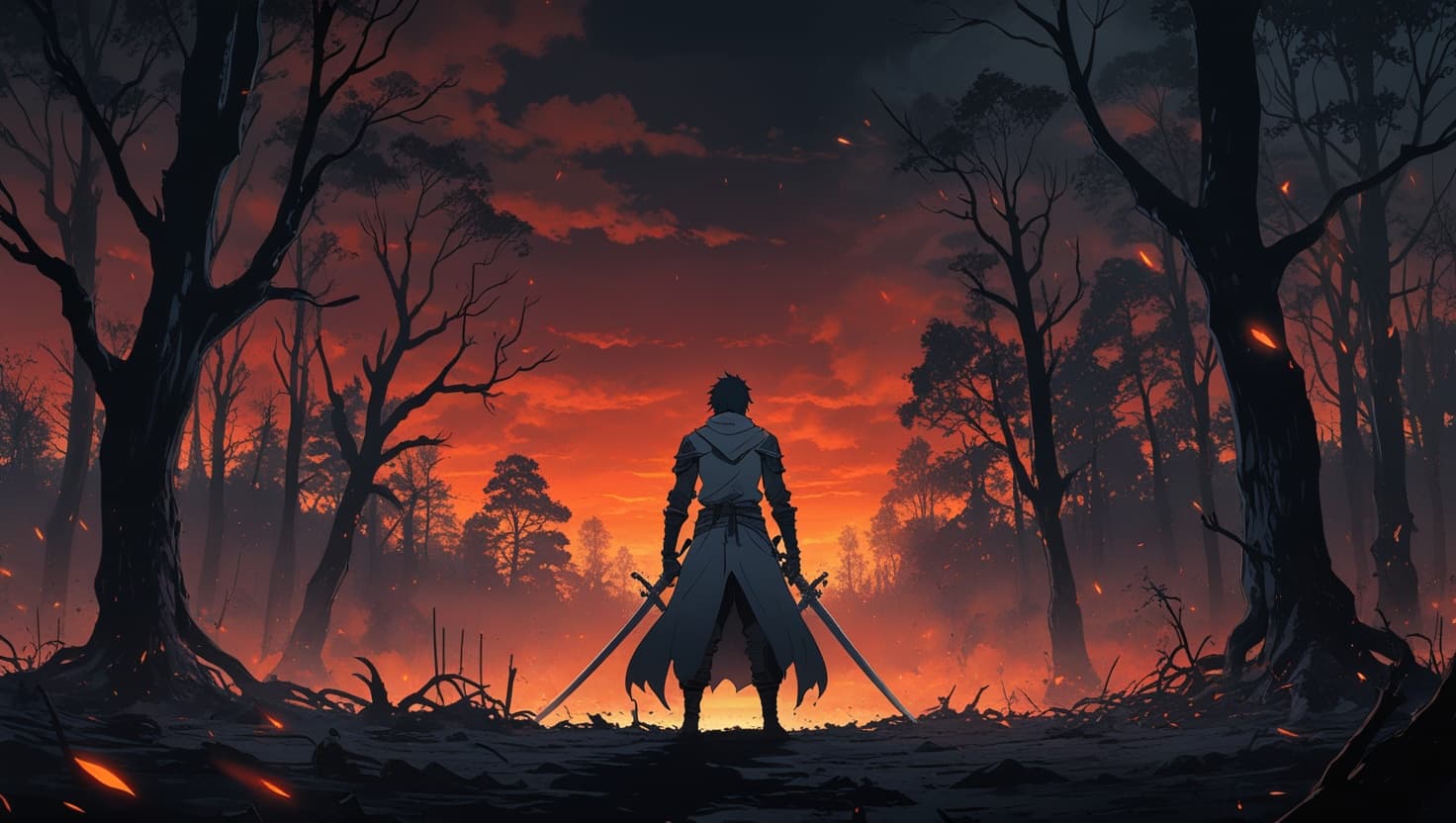
How to Run a Dark Anime Campaign (Without It Turning Into Either Shonen or Shock Value)
Dark anime campaigns fail in two directions, and most tables only notice they've failed once it's too late to fix mid-session.
The first failure is playing it safe: a "dark" campaign that's really just shonen with muted colors and a grim opening narration, where nobody actually stays hurt, no villain is allowed to win a real point, and every loss gets undone by the next session. The second failure is the opposite - chasing shock value, killing characters for effect, and burning through the table's investment in three sessions because nothing that happens means anything beyond "and then something worse happened."
The anime that actually earn the label - the ones people finish and immediately want to rewatch - do neither. They keep characters the audience cares about, and then make that caring cost something real. Here's how to build a campaign that does the same thing at the table.
What Makes a Campaign Actually Dark Anime, Not Just Grimdark
Grimdark fantasy often starts from the premise that the world is simply bleak - cruelty is the default, and the story just documents it. Dark anime starts from a different premise: the characters still believe in something - a bond, a cause, a version of themselves worth protecting - and the story is built around what that belief costs them.
That distinction changes what you build first:
- Warmth has to exist before it can be threatened. A found-family bond, a running joke, a small kindness between two characters who'd never admit to caring - build these in early. Without them, loss has nothing to land against.
- The cost has to be specific, not generic despair. "The world is dark" isn't a story. "This character traded their ability to feel fear for the power to survive the fight, and now they can't feel anything else either" is a story.
- Someone has to keep choosing to fight anyway. The genre's tension comes from characters who could plausibly give up and don't, not from a setting where giving up was never on the table because nothing mattered to begin with.
If a session's "dark" beat could be swapped into a story where nobody involved cared about anything, it's grimdark set dressing, not dark anime. The genre needs the caring intact.
Building Consequences That Actually Stick
The single most common way this kind of campaign quietly turns back into shonen is consequences that don't hold. A character dies and comes back next session. A devastating loss gets narrated over in one line and never mentioned again. The table stops believing anything is actually at stake, and once that trust is gone, the tone collapses no matter how grim the narration still sounds.
Decide these before your first real conflict, not after:
- What kinds of loss are actually on the table. Character death, permanent injury, a corrupted power that comes with a cost, a relationship that can't be repaired - agree on the list in session zero, openly, so the table trusts the stakes instead of feeling ambushed by them.
- How loss gets tracked, not just narrated. A scar that changes what a character can do, a name that gets crossed off a list the party keeps, a location that stays destroyed - give consequences a concrete form the table can point back to later.
- No quiet undoing. If a resurrection, a reversal, or a convenient rescue is going to happen, it needs to cost something proportional to what it's undoing. Free reversals are how a table learns that nothing they see actually matters.
- Session zero: agree openly on what kinds of loss are possible.
- Track it concretely: a scar, a name on a list, a place that stays broken.
- No free reversals: undoing a loss costs something proportional.
- Keep the warmth: at least one bond survives intact for the loss to matter against.
Pacing Dread Instead of Escalating Power
A shonen campaign escalates by making the protagonist stronger. This one escalates by making the cost of strength clearer - what a character has to give up, risk, or become to keep surviving. Confusing the two is the fastest way to lose the tone entirely.
Structure the pressure so it builds instead of spikes:
- Start with a wrong that seems containable. A missing person, a village with an unnatural quiet, a single corrupted creature. Let the party solve it, and let the solution reveal that the real problem is much larger than the opening scene implied.
- Let victories come with a bill. A fight the party wins should still cost something - an ally hurt worse than expected, a method used that the character isn't proud of, information gained that they wish they didn't have. Clean wins undercut dread fast.
- Reserve the full scope of the threat for later. The genre rarely opens with the apocalypse already visible. It opens small and lets the players discover, gradually, how much worse the truth actually is.
Ask after a big win: "what did that cost the character, even though they succeeded?" If the honest answer is "nothing," the campaign is drifting back toward a normal power-fantasy structure.
Villains With a Real Point of View
This kind of campaign's antagonist can't just want power. The genre's best villains operate on logic that makes uncomfortable sense even when nobody at the table agrees with it - the general who believes total victory is the only mercy left, the cult leader who watched the "right" way fail everyone they loved, the former hero who decided the world wasn't worth saving the slow, painful way anymore.
A useful test: could the villain make their case to your protagonist directly, in a scene, and have it land as at least partially reasonable before the protagonist rejects it? If the answer is no, the villain is a plot obstacle wearing a dark anime aesthetic, not an actual antagonist for the genre.
Give the villain scenes that don't involve the party at all - a moment of genuine tenderness with someone they still protect, a memory that explains the turn, a doubt they never voice out loud. The goal isn't to make players agree with the villain. It's to make the eventual confrontation feel like two people who both believe they're right, not good versus a placeholder for evil.
Picture a Session
Here's roughly how a beat like this tends to play out once the pieces above are in place.
Your protagonist finally corners the rogue swordsman who slaughtered their old squad three arcs ago, expecting a straightforward reckoning. Instead, the swordsman explains - calmly, and with details the protagonist can't dismiss - that the squad had already been ordered to burn a village full of people who'd done nothing, and he stopped them the only way he had a chance of succeeding. The fight still has to happen. But the narration doesn't let either side walk away simple, and the win, if it comes, doesn't feel clean.
That scene doesn't require new mechanics. It requires the villain having a real case to make, and the table being willing to sit in the discomfort of a fight that isn't purely good against evil.
Common Mistakes When Running a Dark Anime Campaign
Undoing losses for free. A resurrection, a convenient rescue, or a reversal that costs nothing teaches the table that the stakes were never real, and every future "dark" beat lands softer because of it.
Stripping out the warmth entirely. Constant misery with no bond worth protecting isn't dark anime, it's just grim. The genre needs something the characters - and the table - actually care about losing.
Villains who exist only to be defeated. A villain with no case to make is a placeholder. Give them a point of view the protagonist has to actually reckon with, not just overpower.
Escalating power instead of escalating cost. If the campaign's only lever is "the next threat is bigger," it's drifted into shonen structure. The genre escalates what victory costs, not just what it takes to win.
A dark anime campaign isn't grimdark with anime art, and it isn't shonen with the lights turned down. It runs on characters who still believe in something, consequences that actually stick, and villains whose logic the table has to sit with instead of simply defeat. Agree on the stakes in session zero, track losses concretely, keep at least one bond intact for the tragedy to matter against, and let victories carry a real bill. Get that right and the darkness earns its weight instead of just performing it.
Start a dark anime Series on StoryRoll and find out what your Protagonist is willing to lose.
Where an AI Game Master Helps a Dark Anime Campaign Specifically
The hardest part of running this tone consistently by hand isn't writing one good tragic beat - it's remembering, ten sessions later, that a character's scar from session four should still affect how an NPC treats them, or that the ally who died in the regional arc shouldn't get an off-hand mention that undercuts how much that loss was supposed to matter.
StoryRoll's Anime mode has a dedicated dark anime tone alongside shonen, isekai, and magical girl, and it treats consequences as persistent campaign state rather than narration that has to be remembered by whoever's running the table. Injuries, broken relationships, and story-altering losses carry forward across Arcs and Episodes the same way a rival or a power system does in the mode's other tones, so a cost paid early in the Series is still a cost the narrator remembers late in it. Character creation stays narrative-first, so a protagonist built around a specific belief worth testing - not a stat block - is a complete starting point.
That doesn't replace the table work above - deciding what kinds of loss are on the table, giving the villain a real case, keeping one bond intact on purpose still needs a person to build it. It closes the gap between a consequence mattering in the scene it happens and that consequence still mattering by the finale.
Frequently Asked Questions
What makes a campaign "dark anime" instead of just grimdark fantasy?
Dark anime keeps the genre's emotional throughline - characters who care about each other, moments of warmth, a reason to keep fighting - and then makes the cost of that caring real. Grimdark fantasy often assumes the world is simply bleak; this tone assumes the characters still believe in something, and the story is what that belief costs them.
How do I make consequences feel permanent without the table losing trust in the game?
Decide in session zero what kinds of loss are on the table - character death, permanent injury, a corrupted power, a broken relationship - and tell players honestly before it happens, not after. Permanent stakes only work if the table agreed to them; sprung on players without warning, they read as punishment instead of story.
Won't a dark tone kill the fun at the table?
Not if the darkness has a counterweight. The anime that do this well - the ones people rewatch - pair tragedy with real warmth: a found-family bond, a joke that lands mid-crisis, a small mercy in an otherwise brutal scene. Strip the warmth out and you're left with misery, not drama. Keep it and the tragedy actually lands.
Do villains need a sympathetic reason to work in a dark anime campaign?
They need a reason, full stop - sympathetic or not. A villain who wants power for its own sake is a placeholder. A villain whose logic makes uncomfortable sense, even when the table disagrees with it, is what makes a dark anime campaign's central conflict feel earned instead of arbitrary.
Can an AI Game Master run a dark anime campaign?
Yes. StoryRoll's Anime mode has a dedicated dark anime tone alongside shonen, isekai, and magical girl, and it tracks consequences - injuries, losses, broken relationships - as persistent campaign state across Arcs and Episodes, so a cost paid in session four is still paid in session fourteen instead of quietly resetting.
How is a dark anime campaign different from a horror campaign?
Horror is built to make the table afraid. Dark anime is built to make the table care, then make caring expensive. The tools overlap - both use dread and loss - but this genre still centers on characters the table is emotionally invested in, not on the source of the threat itself.
Related Reading
Written by StoryRoll
Founder of StoryRoll. Building AI-powered tabletop RPGs.
Related Posts
How to Run an Isekai Campaign (Without It Turning Into Generic Fantasy by Session Five)
An isekai campaign lives or dies on the gap between two worlds, not the status screen. Here is how to keep that gap running instead of going generic.
How to Run a Mecha Campaign (Without It Turning Into a Vehicle Combat Spreadsheet)
A mecha campaign lives or dies on the pilot inside the machine, not the hardware. Here is how to keep the genre's real stakes running at the table.
How to Run a Shonen Campaign (Without It Turning Into a Stat Grind)
A shonen campaign lives or dies on rivals and earned power, not bigger numbers. Here is how to keep the genre's real engine running at the table.