How to Run a Magical Girl Campaign (Without It Turning Into Generic Anime Combat)
Most magical girl campaigns die the same way. Session one nails it: a normal kid gets a wand, a mysterious talking mascot, and a transformation sequence everyone at the table actually gets excited about. By session four, it's just fantasy combat with sparkles. The dual identity stopped mattering. The team stopped talking to each other about anything but tactics. The monster-of-the-week is just a stat block with a different paint job.
The genre didn't get boring. The table quietly dropped the parts that made it a magical girl story and kept the parts that make it D&D.
Here's how to run a magical girl campaign that keeps its real engine running.
A Magical Girl Campaign Runs on Identity, Not Initiative
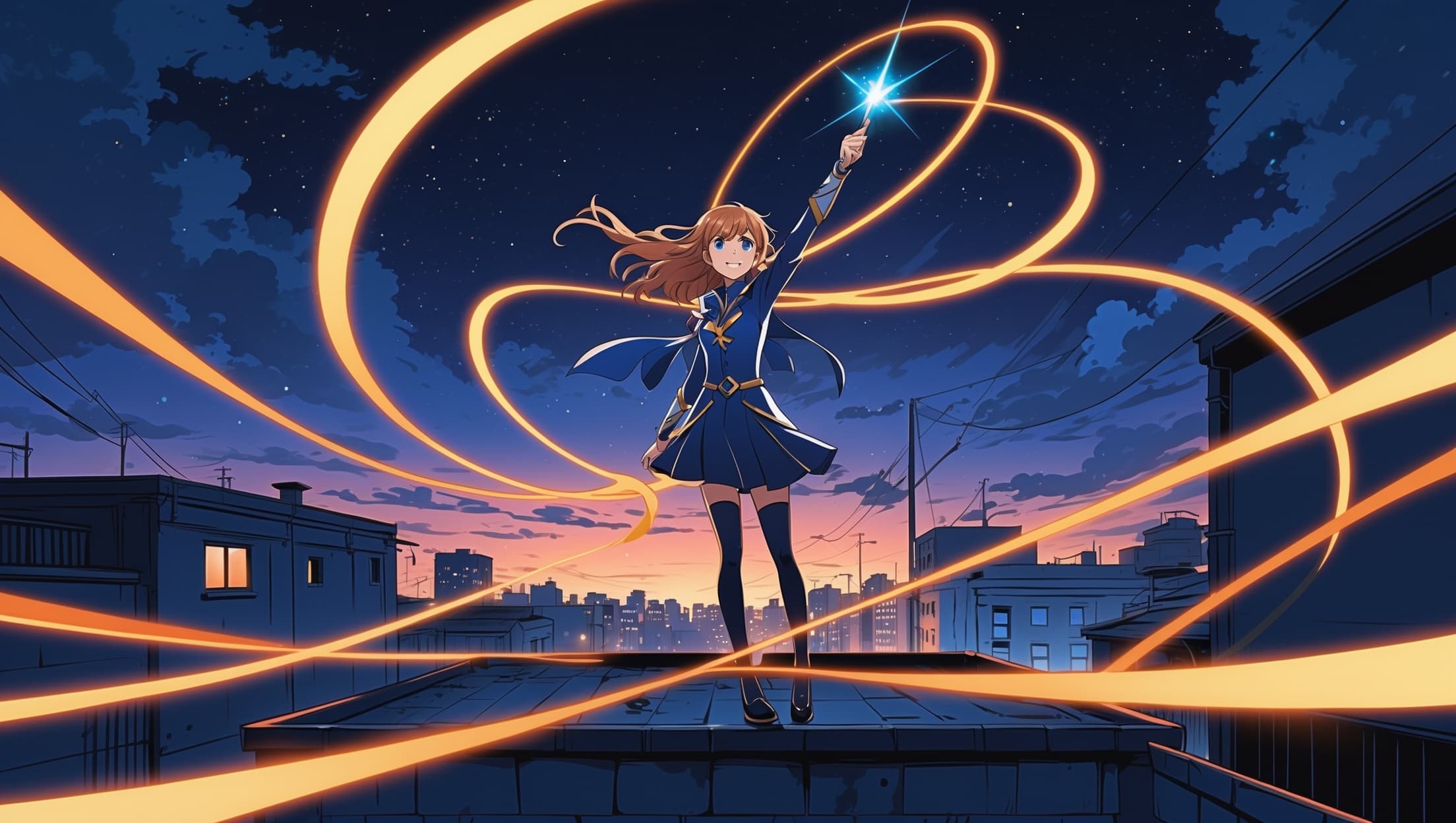
Strip away the transformation sequences and the monster fights, and a magical girl story is about the gap between who a character is at school and who they are on the rooftop at midnight. That gap is the actual plot engine. Combat is where the gap gets tested, not where the story lives.
Build these load-bearing pieces into the campaign before the first fight, not after:
- A civilian life worth protecting. Give every hero a mundane thread - a rival at school, a sick grandparent, a part-time job, a crush who almost saw them transform. If the civilian side is thin, the secret-identity stakes are thin too, and the campaign is just combat with a costume change.
- A cost to the power, not just a flashy activation. Sailor Moon's team runs on friendship and sacrifice. Madoka's runs on grief and consequence. Decide early whether your table's magic costs energy, memory, time, or emotional wear - and let that cost show up in play, not just in the pitch.
- A found-family team, not a party of specialists. The team in a magical girl show argues, forgives, and covers for each other emotionally as much as tactically. Build in table time for that - a scene between fights where two characters just talk - or the team reads as a combat squad instead of a found family.
- A mascot or mentor who explains the rules and lies about something important. Nearly every magical girl show has one: Kyubey, Luna, a talking plush. Give yours a reason to be withholding. That's your season-long tension source before the antagonist even shows up.
None of this requires new mechanics. It requires table time. If every session is combat-to-combat, the genre's real content never gets a scene.
Structure Each Episode Like the Show Does
Magical girl anime has a recognizable episode shape, and borrowing it directly gives you a reliable session template instead of reinventing pacing every week.
- Cold open, civilian life. Start in the mundane world - school, home, a normal problem. This is where the emotional thread for the episode gets planted.
- The trigger. A monster-of-the-week appears, usually tied thematically to whatever emotional problem just got introduced. A monster born from a rival's jealousy. A monster that feeds on forgotten promises. The fight should rhyme with the character drama, not exist next to it.
- Transformation and the fight. This is the spectacle beat. Keep it shorter than you think - two or three exciting exchanges, not a six-round attrition grind. The genre treats combat as climax, not as the bulk of the runtime.
- The emotional resolution. The monster's defeat should resolve (or complicate) the civilian-world problem from the cold open. This is the beat most tables skip, and it's the one that makes the genre feel like itself instead of generic anime combat.
- A thread for the season arc. End with one small thing that doesn't resolve - a mascot's evasive answer, a new symbol, a rival's unexplained absence. That's what turns a string of one-shots into a season.
- Cold open: mundane life, plant the emotional thread.
- Trigger: monster-of-the-week that thematically mirrors the civilian problem.
- Fight: short and spectacular, not a grind.
- Resolution: the fight's outcome answers the civilian-world question.
- Season thread: one loose end that doesn't close yet.
Designing Monsters-of-the-Week That Actually Mean Something
A generic ooze with a magical girl reskin is still a generic ooze. The genre's monsters work because they're metaphors with stat blocks attached.
Build each one from an emotion, not a monster manual entry. A jealousy monster that copies a party member's face and says exactly what that character fears is true. A monster made of forgotten birthday wishes that grows stronger every time a player character lies about being fine. A monster that only the civilian-identity version of a character can talk down, because it isn't looking for a fight, it's looking to be heard.
This does double duty: it gives the emotional-cost mechanic something to bite into, and it means winning a fight can require a character choice - naming the feeling, forgiving someone, telling the truth - instead of just running out of hit points. That's the genre's real difficulty curve, and it's more memorable than another damage roll.
Save your hardest, most personal monster for the character who's been avoiding their civilian-life problem the longest. The genre rewards procrastination with a boss fight.
The Team Dynamic Is the Real Difficulty Slider
In most fantasy campaigns, party friction gets treated as a problem to smooth over. In a magical girl campaign, it's fuel. The team fighting, forgiving, and re-committing to each other is the season's actual arc, running underneath the monster-of-the-week structure.
A few ways to build that in deliberately:
- Give the team a shared vow or oath early, something simple like "we protect this city" or "nobody transforms alone." Let a later episode threaten it directly.
- Rotate who's struggling. Every character gets an episode where their civilian-life problem takes center stage and the team has to show up for them specifically, not just fight alongside them.
- Let betrayal or doubt be survivable. A teammate who briefly sides with the antagonist, or who almost gives up the team's secret, is a genre staple - Sailor Moon's Sailor Mars nearly leaving the team, most magical girl shows have their version of this. It only lands if the team's bond was established solidly enough beforehand to be worth threatening.
Villains: The Mascot's Secret Matters More Than the Big Bad's Stats
The antagonist in a magical girl story is rarely the scariest part. The scariest part is usually what the team's own mentor figure hasn't told them yet.
Give your Big Bad a personal connection to the mentor or mascot - a former student, a sibling, a version of the mascot's own past self. When the reveal lands, it should recontextualize something the mascot said in session one, not just introduce a new stat block to fight. Villains who exist purely as an obstacle waste the genre's best trick: the reveal that changes how you read everything that came before it.
Where an AI Game Master Helps a Magical Girl Campaign Specifically
The genre's hardest part to run consistently isn't the fights - it's remembering which civilian-life thread belongs to which character, tracking a mascot's slowly-revealed lies across many sessions, and making sure the emotional cost of transforming actually shows up instead of getting waved off under table fatigue in week six.
StoryRoll's Anime mode has a dedicated magical girl tone alongside shonen, isekai, mecha, and dark anime, and it tracks campaigns as Arcs and Episodes with a Protagonist whose growth carries forward - the same structural backbone this article describes, built into the mode rather than something you have to enforce by memory every session. If a character's rival thread from session two hasn't paid off by session nine, the narrator has the state to bring it back instead of quietly forgetting it existed. Character creation stays narrative-first, so "the school council president who transforms into a wand-wielding vigilante at night" is a complete, playable hero without a stat block getting in the way of the pitch.
That doesn't replace the table work described above - the emotional beats, the cold opens, the found-family scenes still need someone to actually play them. It closes the gap between "we said this campaign was about identity and found family" in session zero and what's actually still true by the finale.
Frequently Asked Questions
What is a magical girl campaign?
A magical girl campaign is a tabletop RPG campaign built on the anime magical girl genre: ordinary people granted transformation powers who fight monsters-of-the-week while protecting a secret identity and a found-family team, with a season-long threat building underneath.
What makes a magical girl campaign different from a normal fantasy campaign?
The stakes are emotional and relational as much as physical. A magical girl campaign runs on dual identity, team bonds, and a transformation that costs something, not just on hit points and spell slots. Combat is often the least interesting scene in the episode.
Do I need a special RPG system to run a magical girl campaign?
No. Dedicated games like Girl by Moonlight exist, but you can run the genre in D&D 5e or a lighter narrative system as long as you build in the genre's real structure: secret identity, a team, escalating monsters-of-the-week, and a season-ending threat.
How long should a magical girl campaign season run?
Most magical girl anime run 12-26 episodes, and a tabletop season can mirror that: roughly 8-15 sessions structured as standalone episodes with a season-arc thread running underneath, building to a finale that pays off the identity and team stakes set up early.
Can an AI Game Master run a magical girl campaign?
Yes. StoryRoll's Anime mode has a dedicated magical girl tone alongside shonen, isekai, mecha, and dark anime, with real character progression tracked as Arcs and Episodes so growth and consequences carry forward instead of resetting every session.
A magical girl campaign isn't a fantasy campaign with a costume change. It runs on identity, found-family bonds, and monsters built from emotion instead of a monster manual, structured like a TV season instead of a dungeon crawl. Combat is the climax of each episode, not the content of it. If your table's magical girl game has quietly turned into generic anime combat, the fix isn't a bigger monster - it's bringing back the cold open, the team scene, and the mascot who still hasn't told anyone the truth.
If you're building out other corners of the anime genre, see how isekai and shonen AI roleplay compares to a real character sheet, how a fairy tale campaign keeps its own storybook logic from collapsing into a dungeon crawl, and how to build memorable NPCs your mascot and rivals can actually live up to.
Written by StoryRoll
Founder of StoryRoll. Building AI-powered tabletop RPGs.
Related Posts
How to Run a Dark Anime Campaign (Without It Turning Into Either Shonen or Shock Value)
A dark anime campaign fails in one of two directions: it plays it safe and becomes shonen with a black coat of paint, or it chases shock value and burns out in three sessions. Here's the middle path.
How to Run a Shonen Campaign (Without It Turning Into a Stat Grind)
A shonen campaign lives or dies on rivals and earned power, not bigger numbers. Here is how to keep the genre's real engine running at the table.
Anime One-Shot Ideas: 10 Episodes You Can Run Tonight
10 anime one-shot ideas across shonen, isekai, mecha, magical girl, and dark anime - premises, party sizes, and tips for running each one tonight.