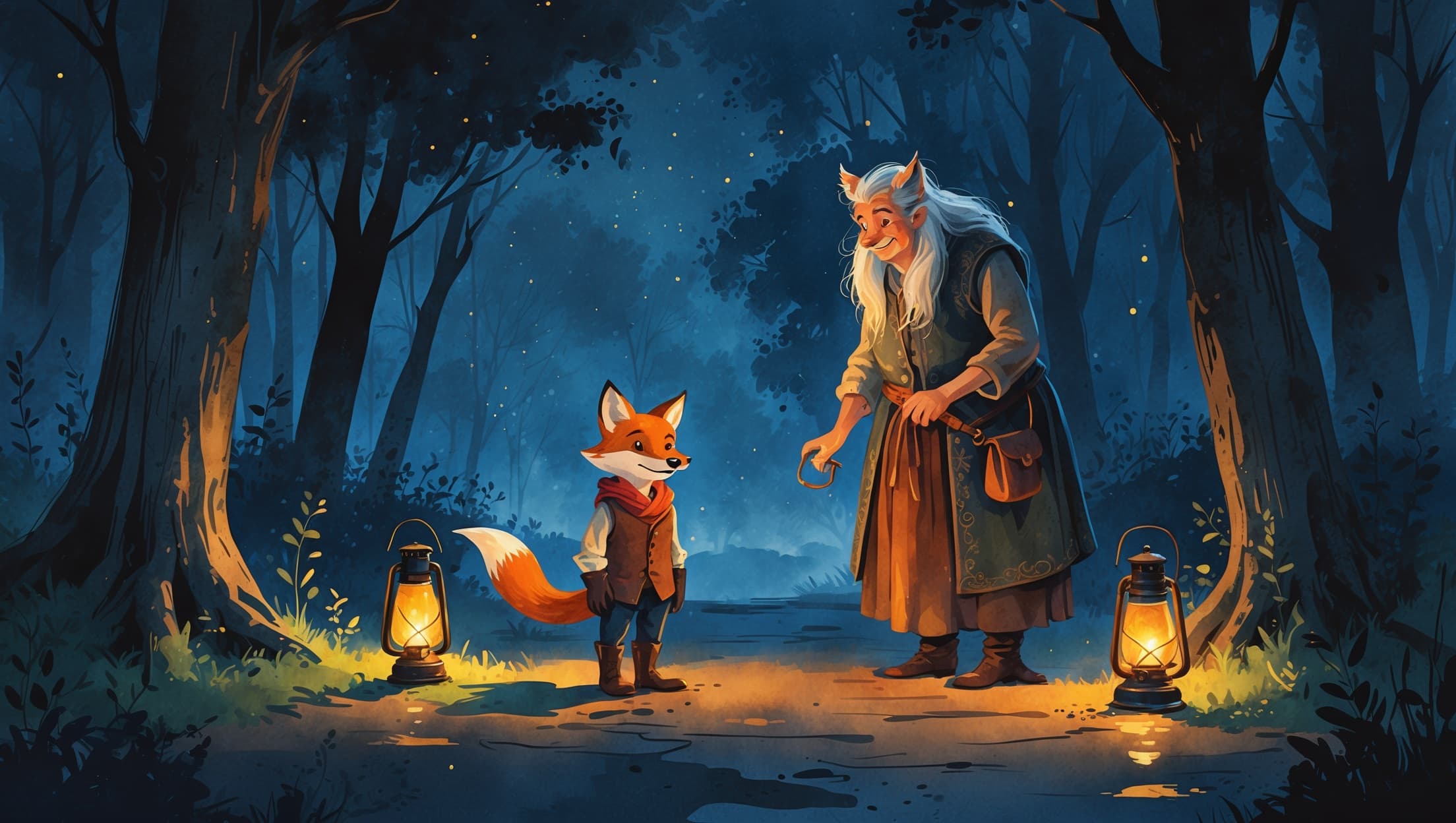
Fairy Tale RPG Character Archetypes: Build a Hero Without a Rulebook
Search for fairy tale character ideas and most results fall into one of two camps: literary breakdowns of Cinderella and Little Red Riding Hood written for an English class, or a general fantasy class list with "Bard" and "Paladin" pasted onto a forest backdrop. Neither one answers the actual question: what kind of hero do you build for a story that runs on promises and threes instead of hit points?
Fairy tale character archetypes are older than any RPG class list, and they already solve this. Here's what they are, pulled from the tales themselves, and how to build one without opening a rulebook first.
The Problem With Fairy Tale Character Building Right Now
The internet's fairy tale archetype content is written for readers, not players. It catalogs the Wicked Stepmother and the Great Mother as figures to analyze in a story someone else already finished. That's useful for a lit class. It doesn't tell you what to actually play at the table tonight.
The other common failure is the reskin: take a D&D class list, swap "Fighter" for "Knight" and "Wizard" for "Enchanter," and call it a fairy tale character. The character still rolls the same dice against the same stat block. Nothing about how the story unfolds actually changed, so the fairy tale ends up feeling like generic fantasy with a gingerbread coat of paint.
A real fairy tale archetype is defined by the story law it triggers, not by a stat block. A Trickster works because tricksters get away with things a Fighter never could. That only matters if the story actually treats promises, threes, and true names as real forces.
The Archetypes That Actually Carry a Fairy Tale
These seven archetypes cover nearly every fairy tale you grew up with, from the Brothers Grimm to Baba Yaga to Anansi. Most parties only need three or four that cover different pillars of the story.
Youngest Child: Overlooked, underestimated, and the one who succeeds through kindness and persistence instead of strength. Cinderella, Jack, the third son who actually stops to help the old woman on the road.
Trickster: Wins through cleverness, riddles, and bent rules instead of force. Puss in Boots, Anansi, Rumpelstiltskin before the bargain goes bad.
Wise Crone (or Wise Fool): Holds the knowledge nobody else has, and doles it out at a price or in a riddle. The witch who helps if you're polite, the hermit who knows the way through the wood.
Guardian: Protects a place, a person, or a boundary, often at real personal cost. The huntsman, the loyal servant, the beast keeping watch over the enchanted garden.
Bargainer: Lives inside the deal. Every scene is a negotiation, and every negotiation has a hidden cost. Rumpelstiltskin after the bargain, the fairy godmother with fine print.
Transformed: Was, or will be, something else. A beast who was a prince, a swan who was a sister, a hero mid-curse. The archetype built entirely around what changes and what it costs to change back.
Shadow: The story's antagonist force - the wicked stepmother, the wolf, the witch in the tower - built to embody the exact thing the Hero has to overcome.
How Each Archetype Plays at the Table
The Youngest Child and the Trickster both win, but differently, and that difference is the whole engine of a fairy tale scene. A Youngest Child succeeds because they stopped to share their bread with a stranger three chapters ago and that kindness comes due exactly when it's needed. A Trickster succeeds because they found the loophole in a bargain nobody else read carefully. Put both at the same table and you get two different answers to every locked door: earn it, or outsmart it.
The Wise Crone and the Bargainer are the archetypes that turn magic into a real cost instead of a spell slot. A Wise Crone who answers questions in riddles forces the party to think instead of just asking the narrator for the plot. A Bargainer character makes every deal in the story mean something, because their own history is a chain of deals that already went sideways.
The Guardian and the Shadow create the physical stakes a fairy tale needs so the promises and riddles actually matter. A Guardian protecting the last door in the witch's house gives the party something to lose. A well-built Shadow isn't cruelty for its own sake - the Evil Queen wants to be the fairest, the Wolf is just hungry, the Stepmother is protecting her own children badly. The best fairy tale villains are recognizable, not cartoonish.
The Transformed archetype deserves its own callout. It's built around a single question that drives the whole character: what does it cost to change back, and who are you while you're still cursed? A beast-prince who has stopped believing anyone could love him plays very differently scene to scene than one who is actively fighting the curse.
Cover different pillars when you pick archetypes for a party - someone who wins through kindness, someone who wins through cleverness, and someone holding the story's stakes. A party of three Tricksters turns every scene into the same kind of scheme.
Matching Archetypes to Your Tone
The same archetype plays differently depending on your fairy tale's tone.
In whimsical or classic tone, the Youngest Child and the Wise Crone carry the story - kindness gets rewarded, riddles get solved fairly, and the Shadow is scary but not truly dangerous. In dark fairytale tone, the Bargainer and the Shadow take the spotlight, because the tension comes from bargains with real teeth and a villain whose logic actually holds up. In heroic tone, the Guardian gets a sharper edge - protecting the boundary becomes the whole plot, not a side detail. In comedic tone, the Trickster is close to a lead role, and a second Trickster in the party usually produces more laughs than conflict.
Pick your tone before you lock in archetypes. A Wise Crone written for a whimsical bedtime-story campaign and a Wise Crone written for a dark fairytale campaign are barely the same character.
Building One Without a Rulebook
None of this requires a class list if the platform treats fairy tale as its own mode instead of a fantasy reskin. StoryRoll's Fairy Tale game mode uses narrative character creation: you describe your Hero and the Archetype they fit - Youngest Child, Trickster, Guardian, whatever the story calls for - and the AI narrator handles consistency without ability scores or spell slots.
That means building a character is a conversation, not a form. You tell the Narrator what your Hero's Archetype is, what promise or bargain they're already caught in, and what they're afraid to lose, and the archetype does the structural work automatically - a Bargainer gets pulled into negotiation scenes, a Guardian gets pulled into scenes where something needs protecting, without anyone tracking a mechanical trigger for it.
If narrative-first character creation is new to you, describe your Hero the way a storyteller would introduce them, not the way you'd fill out a form: "the youngest of three, always underestimated, already owes the fox in the wood a favor she hasn't paid yet" gives the AI everything it needs.
A Sample Hero, Built in Minutes
Picture this: you want to play a Bargainer in a dark fairytale Story. You tell the Narrator: a tailor's daughter who traded her voice to a river spirit for safe passage through the flooded wood, clever with her hands since she can't talk her way out of anything anymore, and still owes the spirit a second favor she hasn't figured out yet.
That's the whole build. No ability scores, no feat chain, no class decision tree. The AI narrator takes it from there - the unpaid favor becomes a thread the story can pull on whenever it needs pressure, the missing voice reshapes how every social scene has to be solved, and the Bargainer archetype keeps every negotiation in the Chapter honest to the character's own history. The archetype did the structural work; two sentences of backstory gave it a reason to matter.
Common Mistakes When Building Fairy Tale Characters
Picking an archetype before a tone. A Trickster built for a whimsical campaign doesn't automatically work in a dark fairytale one. Decide the tone first.
Playing the whimsy without the stakes. The archetypes only work because the original tales had real costs attached - lost time, lost names, lost voices. Strip out the cost and the Youngest Child's kindness stops meaning anything.
Stacking redundant archetypes. A party of three Shadows-in-training and no Guardian means nothing in the story is actually worth protecting. Cover different pillars instead.
Waiting for a rulebook that doesn't need to exist. If your platform supports fairy tale as its own narrative mode, character creation is a five-minute conversation, not a system to master first.
Fairy tale character archetypes work the same way they've worked for centuries: as roles inside a story's promises and bargains, not stat blocks to optimize. That's true whether you're building one for a homebrew fairy tale campaign or describing one to an AI narrator. Pick three or four that cover different pillars, match them to your tone, and give each one a real cost tied to the story's laws. You don't need a rulebook to get there - you need a platform that treats fairy tale as its own genre and lets you describe the Hero instead of building one from a menu.
Start a Story on StoryRoll and build your Hero in the time it takes to describe them.
Try These Free Tools
Useful for any fairy tale Story:
- Dice Roller - Roll for the skill checks and bargains that need a random outcome.
- Initiative Tracker - Keep a scene organized when more than one Hero is in danger.
- Skill Check Reference - A quick lookup for what to roll when the Narrator calls for a check.
Frequently Asked Questions
What are the best character archetypes for a fairy tale RPG?
The archetypes that carry almost every fairy tale are the Youngest Child, the Trickster, the Wise Crone, the Guardian, the Bargainer, the Transformed, and the Shadow. Most tables only need three or four covering different pillars of the story rather than all seven at once.
Do I need to learn a rulebook to build a fairy tale character?
No, not if your platform treats fairy tale as its own narrative mode instead of reskinned D&D. StoryRoll's Fairy Tale mode uses narrative character creation - you describe your Hero and the Archetype they fit, and the AI narrator handles consistency without ability scores or spell slots.
Where do fairy tale character archetypes actually come from?
They come from the tales themselves, not a game designer. The Youngest Child, the Trickster, and the Wise Crone show up across centuries of European, Slavic, and Middle Eastern folklore because they solve a storytelling problem: who gets to win, and how, when strength alone would make the story boring.
Can I combine fairy tale archetypes, like a Trickster who is also a Guardian?
Yes, and the combination is usually more memorable than a pure archetype. A fox who tricks travelers but has quietly protected the same village for a hundred years gives the narrator a built-in tension between what the character does and what they actually want.
Which fairy tale archetype works best for a family or beginner table?
The Youngest Child and the Guardian are the easiest on-ramps. Both come with a clear, low-pressure motivation - prove yourself, or protect someone - that a new player or a child can grab onto immediately without needing to plan a character arc in advance.
How does a fairy tale character differ from a D&D character?
Structurally, a fairy tale Hero describes an Archetype and an Origin rather than a class with levels and a feat chain. There is no ability-score array or spell-slot tracking. The character is defined by the bargain they are caught in and the law of the story they are bound by, and the AI narrator carries the mechanics from there.
Related Reading
Written by StoryRoll
Founder of StoryRoll. Building AI-powered tabletop RPGs.
Related Posts
Anime RPG Character Archetypes: Build a Protagonist Without a Rulebook
The anime RPG character archetypes that actually carry a story, matched to shonen, isekai, mecha, magical girl and dark anime, without a homebrew class list.
Sci-Fi RPG Character Archetypes: Build a Crew Without a Rulebook
Sci-fi character archetypes explained: the roles that actually carry a crew, and how to build one narratively without learning a homebrew rulebook first.
Fairy Tale Villain Ideas: 8 Classic Archetypes and How to Run Them
8 fairy tale villain archetypes pulled from folklore, not a monster manual, with the bargain each one runs on and how to run it at the table.