Help Action 5e: The Rule Everyone Wastes
The party's cleric spends their action feinting beside the fighter, setting up advantage on the fighter's next swing against the bandit captain. Good plan. Then the bandit captain drops to a crit from the rogue before the fighter's turn comes around, and the cleric's whole turn just paid for nothing. Nobody made a mistake exactly. The Help action 5e did precisely what it says it does. It just didn't get to matter.
That's the quiet failure mode of this rule. The Help action reads like a simple assist, spend your turn, give an ally advantage, done. In practice it's a bet on the next five seconds of a fight going the way you predicted, and the bet loses more often than most tables notice, because losing it looks like nothing happening rather than a visible mistake.
Help Action 5e: The Two Rules Hiding Under One Name
The Player's Handbook covers Help once, but it actually describes two different mechanics depending on what you're helping with.
For an ability check, you spend your action assisting an ally with a task you could plausibly attempt yourself, and where two people working together would actually help. If they make the relevant check before the start of your next turn, they roll with advantage. This is the version everyone learns first: boosting someone's Athletics check to force a door, or a Persuasion check to talk down a guard.
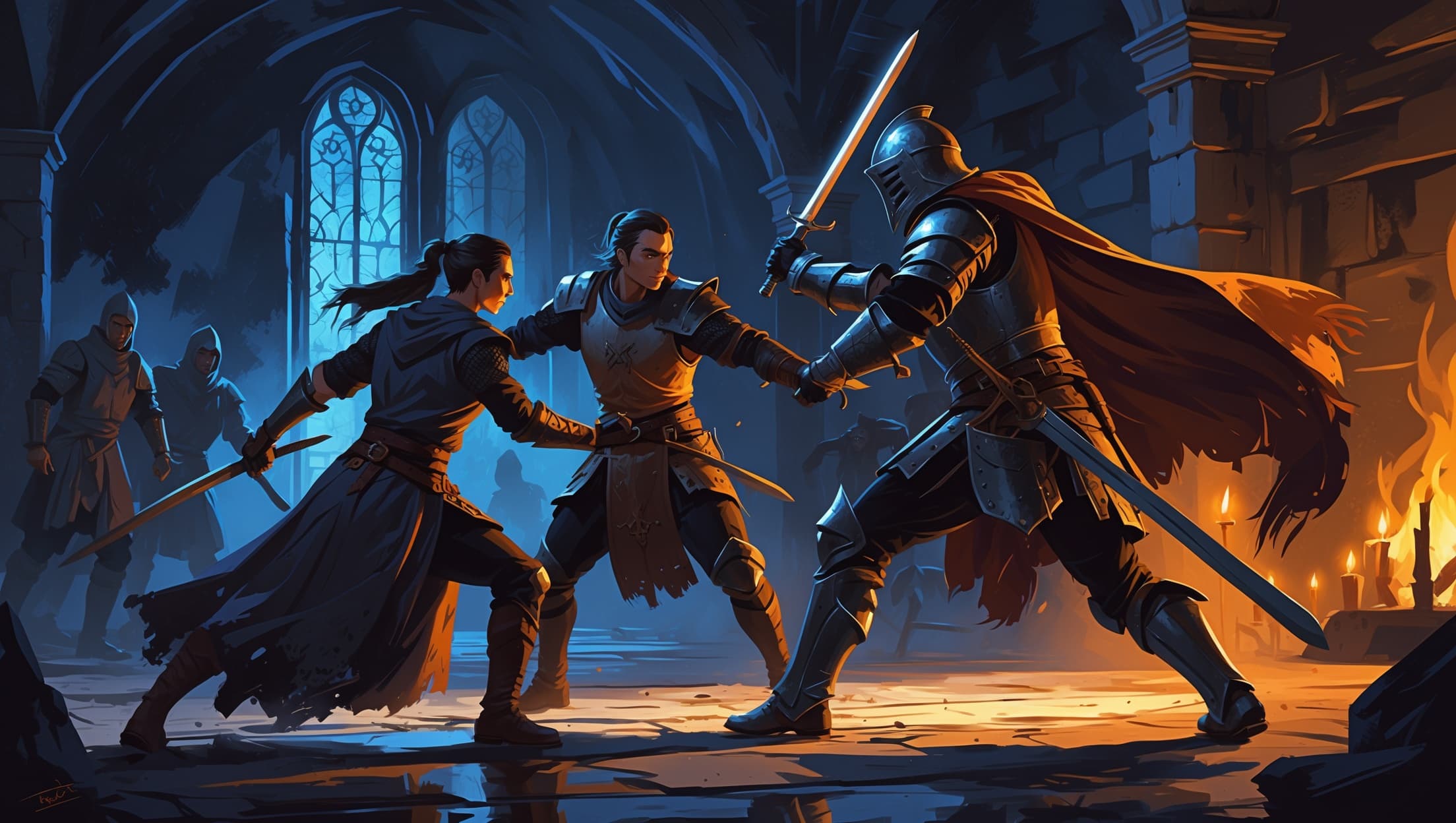
For combat, the rule changes shape entirely. You aid a friendly creature attacking a target within 5 feet of you, feinting, distracting, or otherwise creating an opening. If that ally attacks the specific creature you targeted before your next turn, their first attack roll against it has advantage.
The two versions target different things. Helping an ability check targets the ally you're assisting. Helping in combat targets the enemy you're distracting. Mixing those up is the first place tables get the rule wrong.
Where the Combat Version Actually Breaks
The ability-check version rarely goes sideways, because the ally usually acts on the same turn or shortly after, and the task doesn't change out from under them. The combat version is the one that quietly fails, for three reasons that show up constantly at a real table.
The target has to survive to be attacked. Help sets up advantage against one specific creature. If that creature is already dead by the time your ally's turn comes, either from someone else's attack or a spell, the advantage goes with it. There is no partial credit and nothing to redirect it to.
The ally has to attack that exact target. If your fighter decides mid-round that the second bandit is the bigger threat and swings at them instead, the advantage you set up against the first bandit simply isn't there. The rule doesn't care that you were trying to help; it cares whether the specific attack against the specific creature happened.
It only covers one attack roll. Help grants advantage on the ally's first attack roll against that target, not their whole turn. A fighter with Extra Attack who gets advantage from Help still makes their second attack at normal odds. Players sometimes plan around Help as if it upgrades an entire turn, and it doesn't.
- Ability check version: targets the ally; they get advantage on their next relevant check before your next turn.
- Combat version: targets the enemy within 5 feet of you; your ally's first attack against that specific creature gets advantage.
- Wasted when: the target dies or is no longer the one attacked, before the ally's attack happens.
- Limited to: one attack roll, not the ally's whole turn, and advantage doesn't stack with another source.
The Features That Change Help's Math
A handful of class options make the combat version of Help worth reaching for more often, because they either remove the risk of wasting it or stack advantage into something bigger.
Mastermind Rogues get a limited version of Help as a bonus action instead of a full action, usable at range instead of only within 5 feet. That changes the calculus considerably: a Mastermind can Help and still act that turn, so the "wasted turn" cost mostly disappears. The wrong-target risk is still there, but the price of guessing wrong drops from an entire action to a bonus action.
Bardic Inspiration and Help can stack, since they come from different sources and neither is advantage itself, one's a die bonus, one's advantage on the roll. A bard who inspires an ally and then a rogue who Helps the same attack can turn a coin-flip swing into something close to a sure thing, which is exactly the kind of coordinated turn worth planning around instead of reaching for on reflex.
Familiars are the quiet workhorse here. A Find Familiar owl or cat can take the Help action from outside the fray, at no risk to itself, which is why the combat version of Help shows up constantly on wizard and warlock builds even though those classes rarely want to be standing in melee themselves. The familiar isn't a full character contributing its own attack, so Help is close to free value instead of a competing use of someone's turn.
None of these need to be memorized to run a session cleanly. They matter because a table with a Mastermind Rogue or an active familiar is playing a meaningfully different version of this rule than a table without one, and forgetting that changes how often Help is actually the right call.
Why It Keeps Getting Used Anyway
Mathematically, Help is often the wrong call. Two independent attack rolls from two characters usually put more damage on the board than one attack rolled with advantage, and that gap widens once either character has Extra Attack. A fighter who could just attack twice is frequently better off doing exactly that instead of Helping someone else's single swing.
So why does Help still get used constantly? Because it feels cooperative, and because the math isn't obvious mid-combat when everyone's tracking six other things. A player sees an ally about to face a tough AC and wants to improve their odds, without doing the arithmetic on whether their own attack action would have contributed more. That instinct isn't wrong for the ability-check version, where there's often no substitute for a second set of hands. It's the combat version where the instinct outruns the math most often.
There are real exceptions worth knowing. A support character with a genuinely low attack bonus, someone who's more likely to miss than hit on their own, gets real value turning a shaky roll into a reliable one. A single, must-land attack against a fleeing target with one round left to catch it is another legitimate use. And an ability check that truly can't be done solo, forcing open a portcullis, holding a struggling prisoner still, is what the rule was built for in the first place. The problem isn't that Help is bad. It's that it gets reached for on reflex, in the one version of the rule where a target can vanish before the payoff arrives.
Where an AI Game Master Actually Helps With the Help Action
This rule is a small, specific bet: it holds a piece of state (this target, this creature, until this turn) that has to be checked against everything else that happens in the meantime. A person running the table has to remember who Help was aimed at, whether that creature is still standing, and whether the ally who's about to swing is actually attacking it, all while tracking initiative, HP, and whatever else is happening in the fiction.
StoryRoll's AI Game Master carries that state directly. When a character takes the Help action in combat, the system tracks exactly which creature the advantage applies to and clears it the instant that creature drops or the window closes, the same way it tracks a banked Stealth DC or a readied trigger. If a player's ally goes to attack a different target, the AI doesn't quietly grant advantage that shouldn't apply, and it doesn't need someone to remember to flag that the bandit captain already died two initiative slots ago.
That doesn't make the tactical call for the player. Choosing to Help instead of attacking is still a real decision with a real cost, same as it always was. What changes is that the bet resolves correctly: if the target's gone, the advantage is gone with it, cleanly, instead of lingering as a misremembered bonus three rounds later because nobody double-checked.
Frequently Asked Questions
What does the Help action do in D&D 5e?
The Help action 5e has two versions. For an ability check, you help an ally complete a task and they gain advantage on their next check to do it. For combat, you distract a creature within 5 feet of you, and the next attack roll an ally makes against that creature has advantage.
Does the Help action in combat only work on one attack?
Yes. Help grants advantage on the first attack roll made against the target before your next turn, even if your ally's attack action lets them make multiple attacks. The rest of their attacks that turn roll normally.
What happens if my ally doesn't attack the target I Helped against?
The Help action 5e is wasted. If the ally attacks a different creature, or the original target drops before their turn comes up, the advantage you spent your action to set up simply evaporates. It isn't transferable to another ally or another target.
Is the Help action ever better than just attacking?
Usually not, mathematically. Two independent attack rolls between two characters tend to land more damage than one attack with advantage, especially once either character has Extra Attack. Help earns its keep in narrower situations: a low-accuracy ally who badly needs one attack to connect, an ability check neither character can pass alone, or a moment where the fiction specifically calls for it.
Can you Help a creature that already has advantage?
You can still take the action, but it does nothing extra. Advantage doesn't stack, so granting advantage to an attack roll that already has it from another source wastes the action just as thoroughly as picking the wrong target does.
The Help action 5e is two rules wearing one name: a reliable assist for ability checks, and a fragile bet for combat that only pays off if a specific ally makes a specific attack against a specific target before it disappears. The rule isn't broken and it isn't complicated. It's just state that has to survive contact with everything else happening in a fight, and that's exactly the kind of thing that quietly fails when nobody's tracking it closely enough to notice.
Help isn't the only action that looks simple and turns fragile under real table conditions. The Ready action has the same "it only pays off if the trigger happens" problem, and opportunity attacks fail for the opposite reason: the trigger happens and nobody notices. If you're building a character who leans on Help specifically, the thief rogue build guide covers when a Mastermind's version of the action is worth the turn, and the full combat guide has the rest of the rules that fall apart the same way.
Written by StoryRoll
Founder of StoryRoll. Building AI-powered tabletop RPGs.
Related Posts
Diagonal Movement 5e: The Grid Rule Almost Nobody Agrees On
Diagonal movement 5e has two official answers, and most tables are quietly using the wrong one for their own map. Here is what the rules actually say.
Surprise Round 5e: Why It Isn't a Real D&D 5e Rule
There's no such thing as a surprise round in D&D 5e. The surprised condition restricts one creature's own turn, and the 2024 rules changed what that restriction actually does.
Shove in D&D 5e: The Attack Most Tables Get Wrong
Shove 5e is a free melee attack most tables forget they have, and the two tables that remember it usually run it wrong. Here's the actual rule.