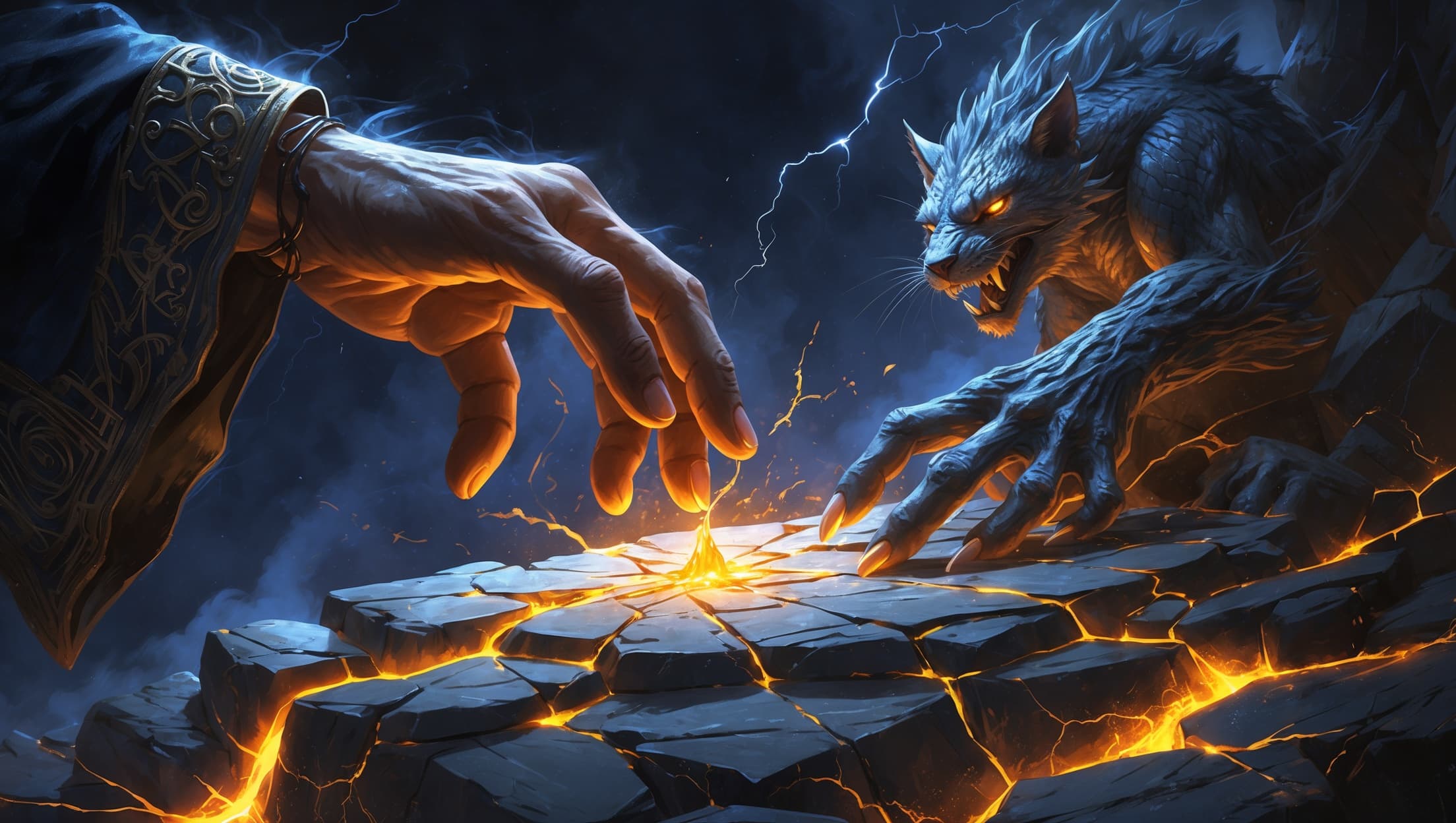
Transmutation Spells Ranked: The Best (and Worst) in D&D 5e
Every other school of magic asks what you can do to the world. Transmutation asks what the world is made of, and then changes the answer. A rope becomes rigid. A statue starts breathing. A Fighter's turn becomes two turns. Nothing about Transmutation is subtle, and that's exactly why it produces some of the most format-breaking spells in D&D 5e.
This is a full ranking of Transmutation spells worth a slot, from the ones you prepare out of habit to the ones that end encounters before initiative finishes rolling. For damage and battlefield control that hit differently than changing what something is, see the best Evocation spells and the best Conjuration spells.
10. Longstrider
1st Level | Bard, Druid, Ranger, Wizard
Longstrider adds 10 feet to a creature's speed for an hour. That's it. No save, no attack roll, no combo piece. It's the most forgettable Transmutation spell on this list, and it's here because "forgettable" and "useless" aren't the same thing.
Ten extra feet of movement, applied before a chase, a retreat, or a long overland trek, quietly solves problems that would otherwise cost an action or a turn. It's the spell you prepare when you have a slot free and nothing better to fill it with, not the spell you build a strategy around.
9. Spider Climb
2nd Level | Druid, Sorcerer, Warlock, Wizard
Spider Climb lets a creature move up, down, and across vertical surfaces and ceilings, hands-free, for an hour. It's narrow. Most encounters don't involve a wall you desperately need to be on. But when the encounter is a wall, nothing else in the Transmutation school touches it.
Sieges, cliffside chases, dungeons designed around vertical movement, and any fight where "the enemy archer is on the ledge" comes up all turn Spider Climb from filler into the answer. It's also concentration-free, which matters more than it sounds like when you're already maintaining a buff.
8. Alter Self
2nd Level | Sorcerer, Wizard
Alter Self gives you a menu: an aquatic adaptation for water breathing and a swim speed, a natural weapon that upgrades your unarmed strikes, or a disguise that changes your entire appearance. You pick one, and it lasts up to an hour, concentration required.
The disguise option is the reason this spell gets prepared over and over. It's not just cosmetic, it changes height, weight, voice, and features convincingly enough to pass casual inspection, which makes it the backbone of a huge number of infiltration and social-stealth plans. It's not flashy in combat, but very few Transmutation spells do as much narrative work per slot.
7. Stoneskin
4th Level | Druid, Ranger, Sorcerer, Wizard
Resistance to all nonmagical bludgeoning, piercing, and slashing damage for an hour is enormous against the wrong encounter. Against a room full of goblins with mundane weapons, Stoneskin effectively halves incoming damage.
The catch keeps it out of the top half of this ranking: it costs 100gp of diamond dust, consumed on cast, and it requires concentration. Against magic weapons or spellcasters, it does nothing. Save it for fights you already know are melee-heavy and mundane, and it earns its slot. Cast it blind, and you've burned a diamond for nothing.
6. Enlarge/Reduce
2nd Level | Sorcerer, Wizard
One target grows or shrinks for a minute, concentration required. Enlarged, a creature deals an extra 1d4 damage with Strength-based weapon attacks and gains advantage on Strength checks and saves. Reduced, they deal less damage but become harder to hit in some situations and easier to conceal.
The enlarge side is the one that sees play, mostly on a martial ally who's already swinging a weapon every turn. A cheap 2nd-level slot for consistent bonus damage across multiple attacks adds up fast, and it stacks cleanly with everything else your party is already doing.
5. Disintegrate
6th Level | Sorcerer, Wizard
10d6+40 force damage on a failed Dexterity save, no damage at all on a success. Against a creature already reduced to 0 HP by that hit, both it and its nonmagical possessions turn to fine gray dust. Nothing left to raise, nothing left to loot, nothing left to identify.
That erasure is a real tactical tool, not just flavor. A villain you need to make sure doesn't come back via Revivify or Reincarnation, a monstrosity too dangerous to leave a corpse for necromancers to find, an enemy who needs to simply stop existing rather than die dramatically: Disintegrate is the answer. The failure state is brutal, though. Half damage on a failed save from most spells this level becomes zero on a successful one here, and 40 damage minimum doesn't happen if the save is made.
4. Reverse Gravity
7th Level | Druid, Sorcerer, Wizard
Everything in a 50-foot-radius cylinder falls upward instead of down for a minute, concentration required, and falls back down (taking fall damage again) the instant the spell ends or the area is left. Unsecured creatures, loose terrain, and anything not nailed down goes with it.
This is a battlefield-ending control spell in the right room. A boss fight in a chamber with a hard ceiling turns into a fall-damage machine gun. An aerial encounter turns into chaos for anything without a fly speed. It's situational by design, since it needs a ceiling or a drop to actually hurt anyone, but when the terrain cooperates, few 7th-level spells do more damage for one slot.
3. Fly
3rd Level | Artificer, Druid, Sorcerer, Warlock, Wizard
A flying speed of 60 feet for up to 10 minutes, concentration required, on a single willing creature (or yourself). That's the entire spell, and it's still one of the best 3rd-level options in the game because of how many problems full three-dimensional movement solves on contact.
Chasms, moats, cliff faces, flying enemies you couldn't otherwise reach, a rapid vertical escape from a collapsing dungeon: Fly ends these instantly, the way a lockpick ends a locked door. It's not a damage spell and it's not a debuff, it's a spell that removes an entire category of obstacle from the session, and that utility rarely goes to waste.
2. Polymorph
4th Level | Bard, Druid, Sorcerer, Wizard
Polymorph turns a willing creature, or an unwilling one that fails a Wisdom save, into a beast of challenge rating 1 or lower for up to an hour, concentration required. The target's game statistics are replaced entirely by the beast's, though its mind, personality, and alignment stay the same.
That single mechanic does three completely different jobs depending on how you point it. Cast it on an enemy and you've turned a dangerous spellcaster into a harmless frog, removing their entire turn from the fight without dealing a point of damage. Cast it on an ally in trouble and you've handed them a fresh pool of HP wrapped in a giant ape or a dire wolf's stat block, a panic button most classes don't otherwise get. Cast it on yourself and you're creatively solving problems using a beast's abilities: swimming, flight, size, senses, whatever the encounter calls for.
The tradeoff is the same in every direction: it's a Wisdom save against unwilling targets, a save many strong enemies are good at, and the effect ends the instant the new form drops to 0 HP, dumping remaining damage onto whatever HP pool is underneath.
Transmuter's Quick Reference
- Concentration Transmutation spells: Alter Self, Enlarge/Reduce, Stoneskin, Fly, Haste, Polymorph, Reverse Gravity - nearly the entire top half of this list needs it, so plan your concentration priority before combat starts
- Polymorph vs. True Polymorph: Polymorph only targets beasts and ends at 0 HP; True Polymorph can target any creature or object and becomes permanent after an hour of concentration
- Disintegrate on a kill: destroys the body and nonmagical gear, but never magic items
- Best low-level pick: Fly (3rd level) for raw problem-solving value per slot
1. Haste
3rd Level | Sorcerer, Wizard
One willing creature's speed doubles, they gain a +2 bonus to AC, advantage on Dexterity saving throws, and an extra action limited to Attack, Dash, Disengage, Hide, or Use an Object. Concentration, up to a minute.
That's not a buff, it's a second character. An extra action means a martial character with an extra-attack feature gets to make their full attack routine twice in a single round. A spellcaster gets to Dash into position and still act, or hold a readied action while also doing something else. The AC bump and Dex save advantage make the target meaningfully harder to hit at the exact moment they're doing double the work.
The one real cost, beyond concentration, is the crash: when Haste ends, the target loses their next turn entirely (no actions, no reactions, movement only). That's a real tempo hit, but it's a bill you pay after getting two turns' worth of value, not before. Nothing else in the Transmutation school, or arguably in the Player's Handbook, delivers this much action economy for one 3rd-level slot.
The Dark Horse: True Polymorph
9th Level | Bard, Sorcerer, Wizard
True Polymorph is Polymorph with every limitation removed and the stakes raised to match. Any creature or any object, not just beasts. Any creature form, not just challenge rating 1. And if you maintain concentration for the full hour, the transformation becomes permanent, no longer requiring concentration and no longer able to be dispelled.
It doesn't crack the numbered ranking because a 9th-level slot is the rarest resource in the game, reserved for once-a-campaign moments rather than regular play. But those moments are legendary. Turn a defeated god into a housecat, permanently. Turn your Fighter into an ancient dragon for the rest of the campaign. Turn a cursed sword into a loyal ally. No other spell in D&D 5e, in any school, offers that much raw narrative and mechanical reshaping for a single cast.
How StoryRoll Handles Transmutation
Transmutation is the school where the rules and the story are most tightly linked, and that's exactly where an AI Game Master either earns its keep or falls apart. A Polymorphed party member isn't just a new stat block, it's a new voice, a new set of limitations, and a new way to describe every action they take until the spell ends or the fight goes wrong.
StoryRoll's AI GM narrates the transformation itself, not just the mechanical swap. Turning into a giant ape reads different from turning into a swarm of rats, and the AI carries that difference into every description that follows: how the world reacts to you, what you can and can't physically do, how your allies describe fighting alongside a creature that used to be their Rogue. When a Polymorphed character drops to 0 HP and reverts mid-fight, the AI narrates that collapse as the dramatic beat it actually is, not a quiet stat correction.
Concentration tracking matters more in Transmutation than almost any other school, since Haste, Fly, Polymorph, and Stoneskin all depend on it. Spell slots and active concentration effects stay visible through the session so a lucky hit that breaks concentration on Haste doesn't just end quietly, it becomes the moment the fight turns. Wizards building around this school pair well with an Evocation build for damage, and Wild Magic Sorcerers get a few Transmutation spells with an extra layer of chaos built in.
Change what something is on StoryRoll and see how far a good Transmutation spell can carry a scene.
Transmutation doesn't have a single identity the way Necromancy (life and death) or Evocation (raw damage) does. It's the school of "what if this were something else," applied to speed, size, shape, and substance. That range is the whole appeal: the same school that gives you ten extra feet of walking speed also gives you a spell that permanently turns anything into anything else.
The best Transmutation spells share one trait: they don't add a new option so much as remove an old limitation. No wall too high, no form too fixed, no turn that only happens once. Prepare a few, and watch how much of the table's problem-solving starts running through them.
Try These Free Tools
Run your Transmutation spells smoothly with these resources:
- Spell List Filter - Filter by Transmutation school to see every shape-and-speed spell available to your class.
- Spell Slot Tracker - Track Haste, Polymorph, and every other concentration slot across a long session.
- Dice Roller - Roll Disintegrate damage, saving throws, and everything else this school throws at the table.
Frequently Asked Questions
What is the best Transmutation spell in D&D 5e?
Haste is the strongest Transmutation spell relative to its level. For a single 3rd-level slot, one ally doubles their speed, gains an extra action, and adds 2 to their AC. Few buffs at any level compete with that action-economy swing.
What's the difference between Polymorph and True Polymorph?
Polymorph (4th level) turns a creature into a beast of challenge rating 1 or lower, or transforms yourself, and the effect ends if the new form drops to 0 HP. True Polymorph (9th level) can target any creature or object, can turn things into any creature (not just beasts), and becomes permanent if concentration is maintained for the full hour. True Polymorph is also the only one of the two that can turn an object into a creature or a creature into an object.
Is Fly or Haste better in D&D 5e?
They solve different problems. Fly is the better exploration and escape spell since it grants full three-dimensional movement for the whole duration. Haste is the better combat spell because it grants an extra action, not just extra movement. Most parties end up wanting both prepared, not one instead of the other.
Can any class cast Transmutation spells?
No single class has a monopoly on the school. Wizards get the largest Transmutation list, but Druids, Sorcerers, Bards, Rangers, and even some Clerics and Paladins have individual Transmutation spells on their lists, from Goodberry to Haste to Polymorph depending on the specific spell and edition.
What happens if a Polymorphed creature drops to 0 HP?
The Polymorph spell ends immediately, the creature reverts to its original form, and any remaining damage carries over to the original form's hit points. A Polymorphed target isn't invulnerable, it's playing with a second HP pool that runs out and dumps you back into your real body mid-fight.
Does Disintegrate destroy loot and remains?
Yes, on a killing blow. If Disintegrate reduces a creature to 0 HP, the target and everything it's carrying that isn't magical turns to fine gray dust, and only magic items survive. That's a deliberate tradeoff: huge damage in exchange for losing any mundane loot on the body.
Written by StoryRoll
Founder of StoryRoll. Building AI-powered tabletop RPGs.
Related Posts
Enchantment Spells Ranked: The Best (and Worst) in D&D 5e
Every Enchantment spell worth preparing in D&D 5e, ranked from useful to encounter-ending. Suggestion, Hold Monster, Dominate Person, and the rest of the school of the mind.
The 10 Best Divination Spells in D&D 5e, Ranked
Divination trades damage for something rarer: information. These are the spells worth your prepared list, from Detect Magic to True Seeing.
D&D 5e Spell Slots Explained: How They Actually Work
Spell slots are the fuel system behind every spellcaster in D&D 5e. This guide breaks down how they work, how to get them back, and how to stop wasting them.