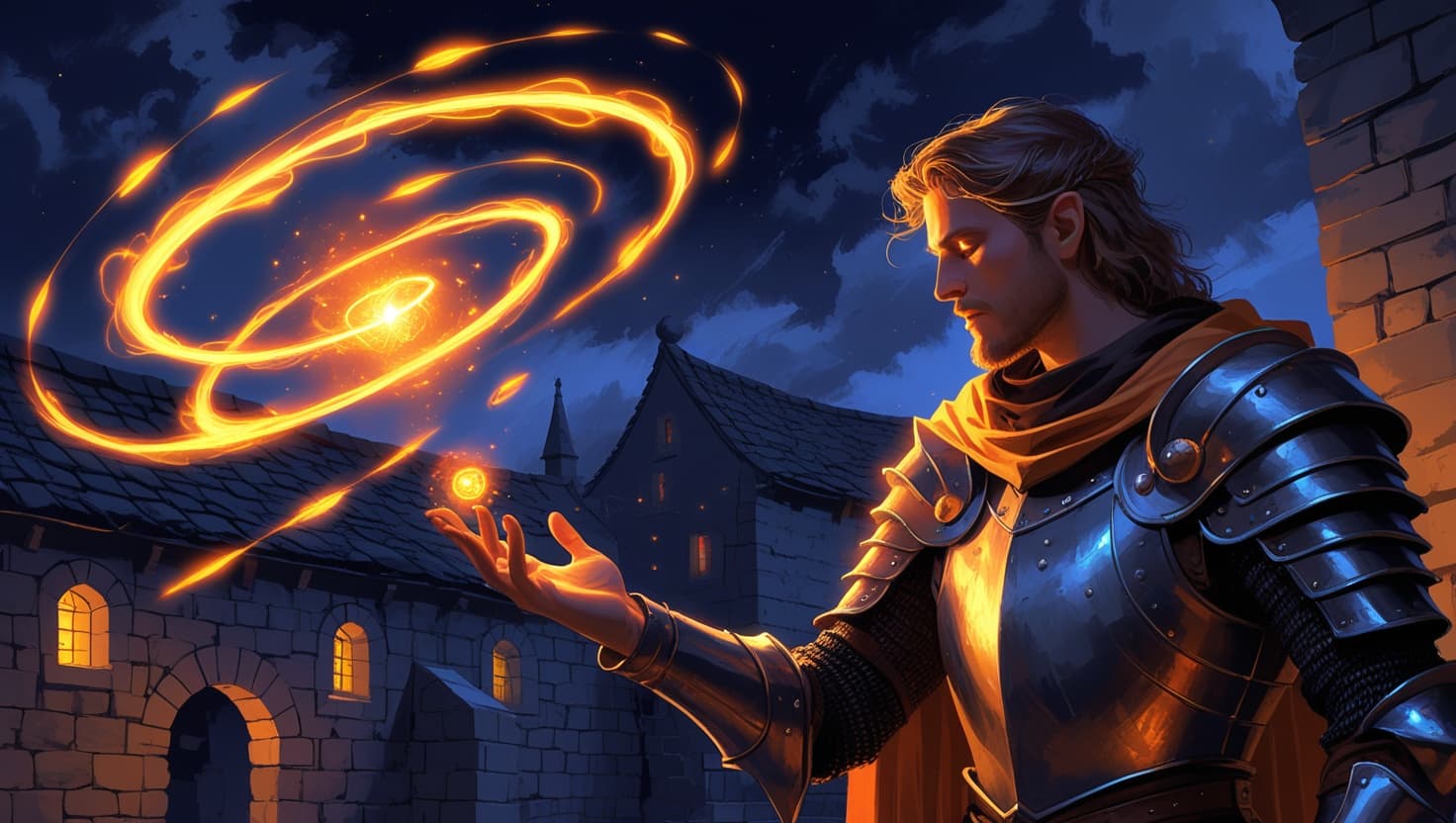
Enchantment Spells Ranked: The Best (and Worst) in D&D 5e
Every other school of magic changes the battlefield. Enchantment changes the mind standing on it. A guard waves you through a gate he'd normally die defending. A dragon's own bodyguard turns and attacks the dragon. A hostile interrogation ends because the target is, mechanically, incapable of lying. No damage roll in the game does what a good Enchantment spell does to the shape of a scene.
This is a full ranking of Enchantment spells worth a slot, from the ones that smooth over a single conversation to the ones that end an encounter before initiative finishes rolling. For raw damage and control that doesn't ask an enemy's Wisdom save to cooperate, see the best Evocation spells and Confusion's cousins in Illusion.
10. Charm Person
1st Level | Bard, Druid, Sorcerer, Warlock, Wizard
Charm Person makes one humanoid regard you as a friendly acquaintance for an hour, Wisdom save, with disadvantage on that save if you're not already in combat. It doesn't force any specific action and it ends the instant you or your allies do something harmful to the target.
That's a real limitation, and it's why Charm Person sits at the bottom of this list rather than off it entirely. But "friendly acquaintance" is doing more work than it looks like on the page. A charmed guard doesn't attack you unprompted. A charmed noble is inclined to help you rather than call for the watch. It's the cheapest possible insurance policy against a social encounter going sideways, and at 1st level, cheap insurance is worth preparing.
9. Bane
1st Level | Bard, Cleric, Warlock
Up to three creatures make a Charisma saving throw or subtract 1d4 from every attack roll and saving throw they make for up to a minute, concentration required. Charisma is a rare save to force, which means Bane lands against targets that shrug off most other debuffs.
The three-target spread is what earns it a slot over single-target alternatives at this level. A weakened attack roll on three separate enemies, sustained across several rounds, adds up to more prevented damage than most 1st-level spells manage against one target. It's not flashy, but it's efficient.
8. Heroism
1st Level | Bard, Fighter, Paladin
A willing creature becomes immune to being frightened and gains temporary hit points equal to your spellcasting ability modifier at the start of each of its turns, for up to a minute, concentration required. No save needed, since the target is willing by definition.
The fear immunity matters more than it looks like against any enemy that relies on frightening effects, and the recurring temp HP turns a front-liner into a small, steady damage sponge for the whole fight. It's not a spell that wins encounters on its own, but pairing it with a Fighter or Paladin who's already planning to stand in the front line is close to free value.
7. Command
1st Level | Cleric, Paladin
One word: Approach, Drop, Flee, Grovel, Halt, or a word your GM approves. Wisdom save, no concentration, and the effect resolves entirely on the target's next turn. It's the cheapest action-denial spell in the game.
Command's ceiling is lower than most spells on this list, since one word rarely wins a fight outright. Its floor is what makes it worth a slot: Drop can disarm a dangerous weapon, Flee removes an enemy from the fight for a full turn, and Halt can stop a charging monster in its tracks. No concentration means it stacks cleanly with everything else you're already maintaining.
6. Zone of Truth
2nd Level | Bard, Cleric, Paladin
A 15-foot-radius sphere in which anyone who fails a Charisma save cannot speak a deliberate lie for 10 minutes. No concentration required, and creatures know the zone is active before they choose to enter it, which makes bluffing your way in part of the fun.
This is the interrogation spell every mystery-driven campaign eventually reaches for. A suspicious NPC can still refuse to answer, still mislead through omission, still answer questions they weren't asked, but the moment they try to state something false, the spell stops them. That single mechanical guarantee turns a tense roleplay scene into a genuine information source instead of a guessing game.
5. Suggestion
2nd Level | Bard, Sorcerer, Warlock, Wizard
Suggestion compels one creature that can understand you to follow a course of action you describe in a few sentences, Wisdom save, concentration up to 8 hours or until the suggested activity is finished. Unlike Charm Person, it isn't limited to making someone friendly. It makes them act.
"Leave this tower and don't come back for a week." "Give me the key and go to sleep." "Tell your commander the east wall is secure." A well-worded Suggestion can end an entire planned encounter without a single die rolled for damage, and the 8-hour duration means the effect often outlasts the scene it was cast in. The catch is the writing: a suggestion that would obviously harm the target lets the spell fail outright, so the phrasing has to sound reasonable from the target's point of view.
4. Hold Person
2nd Level | Bard, Cleric, Druid, Sorcerer, Warlock, Wizard
One humanoid makes a Wisdom save or becomes paralyzed for up to a minute, repeating the save at the end of each of its turns, concentration required. A paralyzed creature auto-fails Strength and Dexterity saves, and any hit against it from within 5 feet is an automatic critical.
That crit interaction is why Hold Person shows up in nearly every optimized party's spell list. Land the paralysis and the next melee attack, from anyone at the table, does roughly double damage. The humanoid restriction is the only thing keeping it out of the top half of this ranking, since it does nothing against beasts, undead, fiends, or constructs.
Enchanter's Quick Reference
- The paralysis combo: Hold Person and Hold Monster both grant an automatic critical hit to any melee attack landed within 5 feet of the paralyzed target
- Charm Person vs. Suggestion vs. Dominate Person: Charm makes someone friendly with no forced action, Suggestion compels one described course of action, Dominate Person hands you full telepathic control
- Save-scaling Enchantment spells: most repeat their save every turn or on damage taken, so a long lockdown is never guaranteed on a single cast
- Charisma saves are rare: Bane and Zone of Truth both force Charisma saves, which most monsters are worse at than Wisdom or Constitution
3. Confusion
4th Level | Bard, Druid, Sorcerer, Wizard
Every creature in a 10-foot-radius sphere makes a Wisdom save or acts randomly on its turn, rolling on a table that ranges from wandering off to attacking the nearest creature, friend or foe. Concentration, up to a minute, with a new save each of the target's turns.
Confusion doesn't guarantee anything the way a single-target hold spell does, but against a cluster of enemies it doesn't need to. Even a partial hit rate means some fraction of the enemy group starts attacking each other instead of the party, every single round, for as long as concentration holds. Against mobs, minions, or any encounter with more bodies than the party can otherwise handle, that chaos is worth more than a single big damage spell.
2. Dominate Person
5th Level | Bard, Sorcerer, Wizard
One humanoid makes a Wisdom save (with advantage if you or your allies are already fighting it) or falls under your telepathic control for up to a minute. You choose its actions on its turn, including attacking its own allies, and it gets a fresh save whenever it takes damage and again once the spell has run a full minute.
This is the spell that turns an enemy spellcaster into your own personal artillery for a round or two. A dominated priest healing your party instead of theirs, a dominated captain calling off the guards, a dominated boss's own damage output turned against its escort: Dominate Person doesn't just remove a threat, it repurposes one. The saving throws on damage keep it from being a guaranteed full-fight takeover, but even a single hijacked turn from the right target can decide an encounter.
1. Hold Monster
5th Level | Bard, Sorcerer, Warlock, Wizard
Mechanically identical to Hold Person, Wisdom save or paralyzed for up to a minute with a repeat save each turn, concentration required. The difference is the target line: Hold Monster works on any creature, not just humanoids.
That single word change is why it tops this list. The auto-crit combo that makes Hold Person a party favorite now works on dragons, giants, oozes, fiends, anything without an outright immunity to being paralyzed or charmed. Land Hold Monster on a boss monster and the rest of the party's melee attacks turn into a string of guaranteed critical hits until the save is made. Few 5th-level spells create that much damage swing from a single successful cast.
The Dark Horse: Power Word Kill
9th Level | Bard, Sorcerer, Warlock, Wizard
No saving throw. No attack roll. If the target has 100 hit points or fewer remaining, it simply dies. You say the word, and it's over.
It doesn't crack the numbered ranking because a 9th-level slot is the rarest resource in the game, and 100 HP is a real ceiling that most true boss monsters sail past while at full health. But that ceiling is exactly the point: Power Word Kill isn't meant to open a fight, it's meant to end one. A dragon's elite bodyguard already worn down to half health, a lich's phylactery guardian, a rival spellcaster who's been trading spells with the party all session, Power Word Kill turns "almost dead" into "dead" with zero risk of the target shrugging it off. No other spell in the Enchantment school, or arguably in the Player's Handbook, closes out a fight that decisively.
How StoryRoll Handles Enchantment
Enchantment is the school where the rules and the roleplay are most tightly fused, which makes it a real test for any Game Master, human or AI. A charmed NPC isn't just a status effect on a sheet, it's a character who now has to act friendly toward someone they might have every reason to distrust, and someone has to play that convincingly for as long as the spell lasts.
StoryRoll's AI GM narrates the charm itself, not just the mechanical flag. A charmed guard doesn't robotically stop fighting, they visibly relax, their tone shifts, and the AI carries that change into every line of dialogue until the effect ends or something breaks it. When a Suggestion gets phrased cleverly enough to bend a target's usual behavior without technically harming them, the AI adjudicates that the way a fair human GM would: does this actually sound reasonable to the character hearing it, or is it asking for something no sane person would do?
Dominate Person and Hold Monster both lean on the same tracking StoryRoll already keeps for spell slots and active concentration: a lucky hit that breaks concentration on a dominated boss doesn't just quietly end, it becomes the moment control snaps back and the fight turns again. Bards get the deepest access to this school of any class, which pairs naturally with the utility spells covered in the Bard guide, while Wizards picking up Enchantment alongside their usual Evocation or Necromancy prep get a option for the fights that raw damage can't solve alone.
Bend a mind or two on StoryRoll and see how far a good Enchantment spell can carry a scene.
Enchantment doesn't offer a single big number the way Evocation does, or a single dramatic transformation the way Transmutation does. What it offers is control: over a conversation, over an enemy's next action, over an entire encounter's outcome, all without a damage roll in sight.
The best Enchantment spells share one trait: they change what a creature chooses to do, not what it can physically survive. Prepare a few, and watch how often the fight you were bracing for simply doesn't happen the way the enemy planned.
Try These Free Tools
Run your Enchantment spells smoothly with these resources:
- Spell List Filter - Filter by Enchantment school to see every mind-affecting spell available to your class.
- Spell Slot Tracker - Track Dominate Person, Hold Monster, and every other concentration slot across a long session.
- Dice Roller - Roll saving throws, auto-crit melee attacks, and everything else this school sets up.
Frequently Asked Questions
What is the best Enchantment spell in D&D 5e?
Hold Monster is the strongest Enchantment spell for its level. It paralyzes any creature, not just humanoids, which turns every melee attack against it into an automatic hit and an automatic critical hit. Few 5th-level spells swing a fight as hard when they land.
What's the difference between Charm Person and Suggestion?
Charm Person makes a humanoid regard you as a friendly acquaintance, but it doesn't make them do anything specific and it ends the instant you or your allies harm them. Suggestion actually compels a course of action you describe, lasting up to 8 hours, and it isn't limited to humanoids. Suggestion does more, which is why it costs a higher-level slot.
Is Hold Monster better than Hold Person?
Mechanically they work identically, both paralyze on a failed Wisdom save with a repeat save each turn, but Hold Monster targets any creature type while Hold Person only works on humanoids. Since Hold Monster is strictly the better version at one spell level higher, most parties prepare Hold Person early and upgrade to Hold Monster once they have 5th-level slots to spend.
Do Enchantment spells work on undead or constructs?
It depends on the individual spell, not the school as a whole. Charm Person, Suggestion, and Dominate Person all specify a humanoid target, so undead and constructs are immune outright. Hold Monster and Confusion don't have that restriction, but many undead and constructs are immune to being charmed or have other blanket immunities listed in their stat block, so always check the specific monster.
What is the best low-level Enchantment spell for social encounters?
Command and Zone of Truth both do heavy lifting outside combat for a single 1st- or 2nd-level slot. Command can end a standoff with one word, and Zone of Truth turns an interrogation into a guaranteed information source since the target physically cannot lie inside the area.
Does Dominate Person let you fully control an enemy?
Yes, for as long as you maintain concentration. You issue commands telepathically and the target carries them out, including attacking its own allies. The target gets a new saving throw whenever it takes damage, and again at the end of each of your turns once the spell has lasted a minute, so a long-term takeover isn't guaranteed, but a single decisive round almost always is.
Written by StoryRoll
Founder of StoryRoll. Building AI-powered tabletop RPGs.
Related Posts
Transmutation Spells Ranked: The Best (and Worst) in D&D 5e
Every Transmutation spell worth preparing in D&D 5e, ranked from situational to game-breaking. Haste, Polymorph, Fly, and the rest of the school of change.
The 10 Best Divination Spells in D&D 5e, Ranked
Divination trades damage for something rarer: information. These are the spells worth your prepared list, from Detect Magic to True Seeing.
D&D 5e Spell Slots Explained: How They Actually Work
Spell slots are the fuel system behind every spellcaster in D&D 5e. This guide breaks down how they work, how to get them back, and how to stop wasting them.