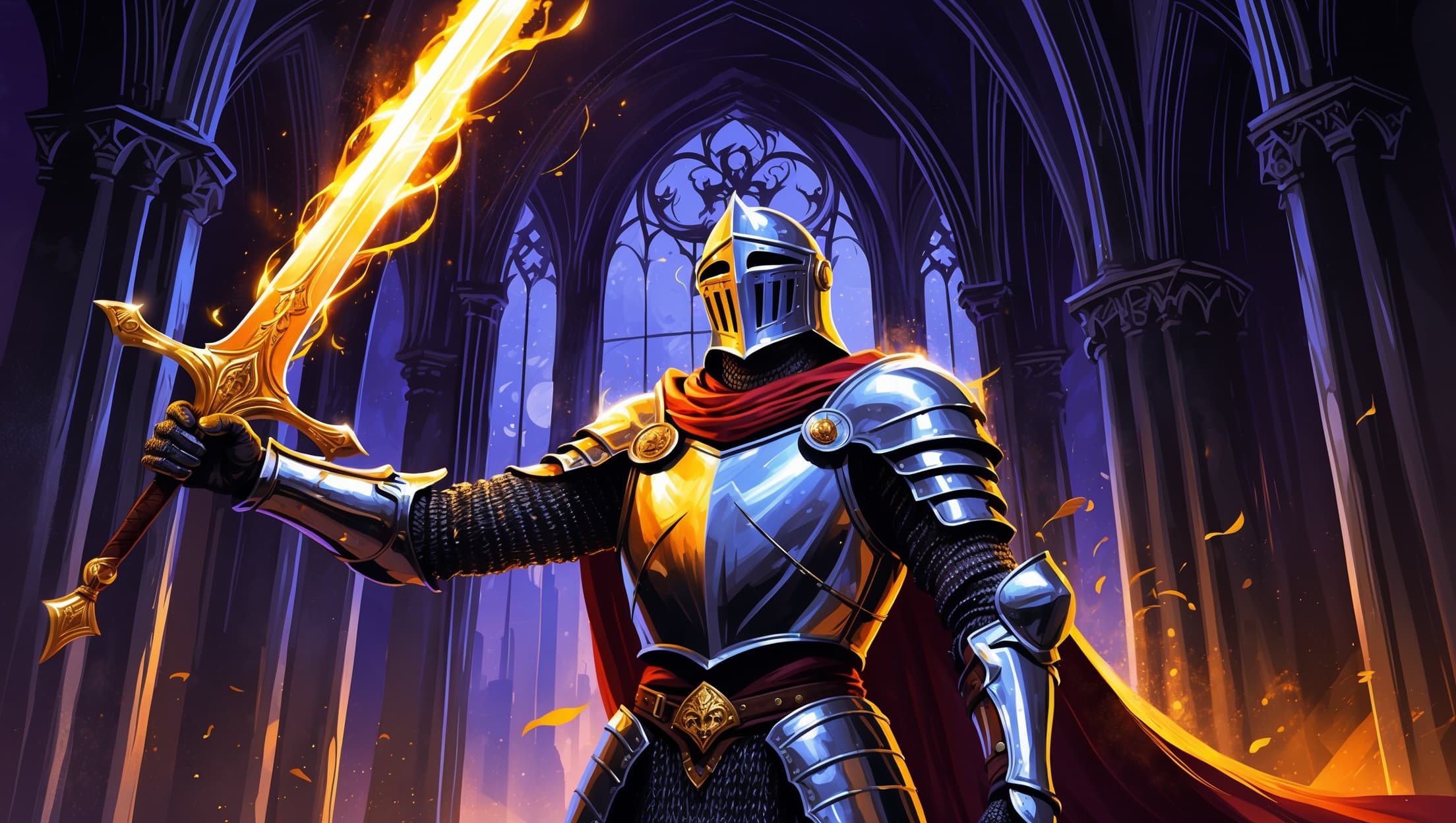
Best Oath of Devotion Paladin Build in 5e: The Classic Holy Knight for AI D&D
Every table has a player who wants their character to mean something beyond a stat block - someone whose word is worth more than their sword arm. That's the Oath of Devotion Paladin: the classic holy knight, built around Tenets clear enough to actually violate and a kit that backs those Tenets up with a glowing weapon and a genuine answer to the undead.
Devotion doesn't reinvent the Paladin. It sharpens it. Sacred Weapon turns a shaky Strength score into a non-issue for a full minute, and Turn the Unholy gives you a real tool against fiends and undead instead of just swinging harder. The catch is that Sacred Weapon runs on a duration and a resource most tables lose track of by round three - exactly the kind of bookkeeping an AI Game Master handles without blinking.
For the full Paladin class overview, check our Paladin class guide. This guide goes deep on building the strongest Oath of Devotion Paladin specifically.
Why Oath of Devotion Excels in AI Campaigns
Sacred Weapon's duration never quietly expires
Sacred Weapon lasts one minute - ten rounds of combat - or until you let go of the weapon. At a live table, that duration is one of the most commonly mismanaged effects in the game: it gets activated in round one and either forgotten about entirely by round eight, or assumed to still be running two encounters later when it actually lapsed between fights.
StoryRoll's AI GM tracks Sacred Weapon's duration to the round, adding your Charisma modifier to every attack roll while it's active and flagging the moment it expires so you know exactly when to reactivate it on your next Channel Divinity. You get the accuracy boost for the full minute it's supposed to last, not a few lucky rounds a distracted table happened to remember.
Divine Smite math is always exactly right
Divine Smite lets you burn a spell slot on a melee hit for 2d8 radiant damage at 1st level, plus 1d8 per slot level above 1st (capped at 5d8), plus one more d8 if the target is undead or a fiend. That's a lot of conditional math to run correctly in the middle of a combat round, and it's easy to shortchange yourself on the fiend-and-undead bonus die or misjudge which slot you're actually spending.
An AI GM applies the correct dice for the slot level and target type automatically the moment you say you're smiting, which means every Divine Smite you throw does exactly as much damage as the rules say it should - no undercounting, no arguing about whether that skeleton counts as undead.
Turn the Unholy resolves cleanly against a real weakness
Turn the Unholy forces fiends and undead within 30 feet to make a Wisdom save or be turned for a minute - a genuinely useful answer to two of 5e's most common enemy types that a lot of Paladin builds otherwise have no plan for. StoryRoll's AI GM runs the save for every valid target in range and tracks which creatures are turned and for how long, so the effect resolves the way it's written instead of quietly petering out after the first narrated reaction.
Save Sacred Weapon for the fight where your attack roll matters most, not the first enemy you see. With one Channel Divinity use per short or long rest at low levels, activating it against a single weak goblin wastes the minute you'd rather have against the boss two rooms later.
The Optimal Devotion Paladin Build
Ability scores
Charisma > Strength > Constitution > Wisdom > Dexterity > Intelligence
Charisma drives your spell save DC, your Channel Divinity uses, and - once Sacred Weapon is active - your attack rolls as well. Strength still matters for the rounds Sacred Weapon isn't running and for carrying heavy armor without a speed penalty. Constitution keeps you standing in melee, which is where a Devotion Paladin spends most of a session.
Using point buy: 15 Cha, 15 Str, 14 Con, 10 Wis, 8 Dex, 8 Int before racial bonuses. If ability scores are still new territory, our ability score guide covers the basics before you build.
Best race picks
Half-Elf - a flat Charisma increase plus two +1s of your choice, free to put into Strength and Constitution. Fey Ancestry gives you advantage against being charmed, which stacks with Devotion's own immunity once you hit 7th level. The default pick for a reason.
Dragonborn - +2 Strength, +1 Charisma, plus a breath weapon and damage resistance that give you options outside your weekly Sacred Weapon window. A strong pick if you'd rather lean on raw Strength early and let Charisma catch up through Ability Score Improvements.
Human - a flat +1 to every score smooths out the build's biggest weakness (low Dexterity and Intelligence) without sacrificing anything, a solid generalist choice if you're not committed to maximizing one specific line.
Dwarf - +2 Constitution and Dwarven Resilience make you meaningfully harder to kill, trading some of the Charisma-Strength synergy for a Paladin who can shrug off poison and stay in the fight longer.
Channel Divinity and spell selection
3rd level - Channel Divinity (choose per use). Sacred Weapon when your attack roll needs help or you want the bright-light utility; Turn the Unholy when fiends or undead are the actual problem in front of you. One use, regained on a short or long rest.
3rd level - Oath spells (always prepared, free). Protection from Evil and Good and Sanctuary - both defensive, both worth having ready without spending a prepared-spell slot on them.
5th level - Oath spells. Lesser Restoration and Zone of Truth join the free list, covering condition removal and interrogation without competing for your regular prepared spells.
Prepared spells beyond your Oath list: Shield of Faith (1st - cheap, reliable AC boost), Bless (1st - stacks with Sacred Weapon's accuracy for the whole party), Find Steed (2nd - if your table supports mounted combat), Aid (2nd - raises the whole party's HP pool before a hard fight).
Quick Build: The Sworn Sword
- Race: Half-Elf
- Ability Scores: 17 Cha (+2 racial), 16 Str (+1 racial), 15 Con (+1 racial), 10 Wis, 8 Dex, 8 Int
- Channel Divinity: Sacred Weapon saved for the fight that matters, Turn the Unholy the moment fiends or undead show up
- Divine Smite: Spend on confirmed hits against tough single targets, never on trash mobs
- Level 4 ASI: +2 Charisma (to 19)
- Playstyle: Open with Sacred Weapon against a real threat, smite on the hits that count, keep Lay on Hands in reserve for the moment someone drops
Playstyle Tips for AI Campaigns
Activate Sacred Weapon before the fight gets hard, not after
Sacred Weapon is an action to activate, which means using it mid-crisis costs you a full turn you'd rather spend attacking. Tell the AI you're activating it the moment a fight looks dangerous - "I raise my sword and call on my Oath" - rather than waiting until you're already losing.
Bank Divine Smite for hits that count
Divine Smite is a choice you make after you know an attack hit, which means you never waste a spell slot on a miss. Hold your slots for confirmed hits against real threats, and let the AI's separate roll-then-result narration give you the moment to decide before it moves on.
Let your Tenets steer real decisions
Devotion's Tenets - honesty, courage, compassion, honor, duty - are specific enough to create actual friction with a party that wants to lie to a guard or leave a wounded enemy behind. Tell the AI what your Paladin's Oath sounds like in their own words, not just "Oath of Devotion," and StoryRoll's narrator will hand you moments that test it directly instead of leaving it as background flavor.
Devotion Paladin solos unusually well for a melee-focused class. Lay on Hands is a self-refilling healing pool that costs nothing but a long rest, and Divine Smite means every hit can spike into real damage exactly when a fight turns dangerous. In solo campaigns, not needing an outside healer or a second front-liner matters even more.
Oath of Devotion vs Other Paladin Oaths
Devotion isn't the only strong Paladin pick, and it's worth knowing what the alternatives trade away.
Oath of Vengeance trades Devotion's broad utility for single-target focus. Vow of Enmity gives advantage on attacks against one chosen enemy, and Relentless Avenger lets you move after an opportunity attack connects. Vengeance wins if your table wants a Paladin who hunts one specific threat down. Devotion wins on being useful in every kind of scene, not just a chase or a duel.
Oath of the Ancients leans into nature and the fight against encroaching darkness. Nature's Wrath restrains an enemy without a weapon roll, and Undying Sentinel keeps you fighting at 1 hit point once per long rest. Ancients edges out Devotion in campaigns built around the Feywild or a long, grinding war against darkness, but it gives up the clean, classic knight identity that makes Devotion the easiest Oath to roleplay consistently.
For most groups, especially anyone who wants a straightforward holy knight with clear answers against fiends and undead, Oath of Devotion remains the most reliable and the easiest to pick up cold.
Common Build Mistakes
Burning Sacred Weapon on the first enemy you see. With one Channel Divinity use per rest at low levels, activating Sacred Weapon against a lone goblin wastes the minute you'd rather have against the fight that actually threatens the party.
Smiting on every hit regardless of target. Divine Smite is powerful precisely because it's optional. Spending a 3rd-level slot to smite a mook that was already going to die wastes resources you'll want against something tougher two rooms later.
Dumping Constitution for more Strength or Charisma. A Devotion Paladin lives in melee range. Low Constitution means failed concentration saves on Bless or Shield of Faith and a shorter fight before you're the one needing Lay on Hands.
Treating the Tenets as flavor text. Honesty, courage, compassion, honor, duty aren't decoration - they're supposed to create real friction with a party that wants to cut corners. A Devotion Paladin who never says no to the group isn't playing the Oath.
Forgetting Lay on Hands exists outside of emergencies. The pool refreshes on a long rest whether you use it or not. A few points spent curing a poisoned ally mid-dungeon costs you nothing you'll actually miss later.
Frequently Asked Questions
Is Oath of Devotion the best Paladin subclass in 5e?
It's the best starting point for most players. Devotion's Tenets - honesty, courage, compassion, honor, duty - are specific enough to actually guide roleplay, and Sacred Weapon plus Turn the Unholy cover both a weak-attack-roll problem and a fiends-and-undead problem in one subclass. Oath of Vengeance hits harder against a single target and Oath of the Ancients brings stronger defensive spells, but Devotion is the cleanest all-around build and the easiest Oath to play consistently.
How does Sacred Weapon actually work, and how often can you use it?
Sacred Weapon is a Channel Divinity option: as an action, you imbue one weapon you're holding with your Charisma modifier added to every attack roll for one minute, the weapon counts as magical if it wasn't already, and it sheds bright light in a 20-foot radius. Base Paladins get one Channel Divinity use, regained on a short or long rest, so at low levels you're using it once per rest window - pick the fight where a missed attack would hurt most, not the first enemy you see.
What race is best for a Devotion Paladin?
Half-Elf is the cleanest pick - a flat Charisma bonus plus two free +1s let you push Charisma and Strength together without touching Constitution, and Fey Ancestry adds resistance to being charmed, which stacks with Devotion's own charm immunity later. Dragonborn trades some of that flexibility for a Strength-forward spread plus a breath weapon and damage resistance, a strong pick if you want more raw melee power before Sacred Weapon covers your accuracy. Human works for anyone who wants a flatter, more generalist stat line.
How does an AI Game Master handle Sacred Weapon and Divine Smite?
StoryRoll's AI GM tracks Sacred Weapon's one-minute duration and Charisma-modifier bonus on every attack roll for as long as it's active, so you never have to recalculate the math mid-fight. Divine Smite works the same way: tell the AI you're smiting on a hit, name the spell slot you're spending, and it adds the correct radiant damage dice - including the extra die against undead and fiends - without you needing to double-check the table.
Is Devotion Paladin good for solo D&D campaigns?
Yes. Lay on Hands gives you a self-sustaining healing pool that doesn't compete with your spell slots, Divine Smite turns any weapon slot into burst damage exactly when a solo fight is at its most dangerous, and Turn the Unholy gives you a real answer to a fiend or undead encounter without needing a party member to back you up. A Devotion Paladin can go a full adventuring day without an outside healer.
What should a Devotion Paladin prioritize at low levels versus high levels?
At levels 1-4, prioritize Charisma and Strength together, since Sacred Weapon only comes online at 3rd level and you're relying on your own attack bonus before then. From 5th level on - once you have Extra Attack and access to higher-level spell slots for Divine Smite - shift your Ability Score Improvements toward Constitution or a defensive feat like Resilient (Constitution), since a Devotion Paladin standing in melee needs to survive long enough for Sacred Weapon and Divine Smite to matter.
Oath of Devotion is the Paladin subclass built for clarity - a code you can actually recite, backed by a glowing weapon and a real answer against the undead. The catch is that Sacred Weapon lives and dies on a duration a busy table loses track of by round five, which is exactly the kind of bookkeeping an AI GM never drops.
Build around Charisma and Strength together, save Sacred Weapon for the fight that actually needs it, and let your Tenets create the friction they're supposed to. That's the difference between a Paladin who wears a code and one who's just wearing armor.
Build your Devotion Paladin on StoryRoll and see what it feels like when your Oath is tracked as carefully as your hit points.
If you want to see how other classes hold up under the same build-optimization lens, College of Lore Bard and Totem Warrior Barbarian follow the same pattern of picking the strongest subclass and building around it.
Try These Free Tools
Gear up your Devotion Paladin build with these free resources:
- Spell Slot Tracker: keep track of the slots you're spending on Divine Smite versus the ones you're saving for spells.
- Ability Score Calculator: dial in Charisma and Strength for a Sworn Sword build.
- Short Rest Calculator: time your Channel Divinity recharge alongside the rest of the party's short rests.
Written by StoryRoll
Founder of StoryRoll. Building AI-powered tabletop RPGs.
Related Posts
Best College of Lore Bard Build in 5e: The Ultimate Generalist for AI D&D
College of Lore is the most flexible Bard subclass in 5e. Here's the optimal build, skill picks, and why Cutting Words shines under an AI Game Master.
Best Totem Warrior Barbarian Build in 5e: The Ultimate Survivor for AI D&D
Path of the Totem Warrior is the most survivable Barbarian subclass in 5e. Here's the optimal build, totem picks, and why it shines under an AI Game Master.
Best Battle Master Build in 5e: The Tactical Fighter for AI D&D
Battle Master turns every fight into a chess match. Here's how to build one that dominates AI-run campaigns - from maneuver picks to ability scores to the races that make it sing.